Compare
Nugget vs Clear Ice Makers
Two machines that solve opposite problems. One makes ice you chew, the other makes ice that refuses to dilute your drink.
Disclosure: we earn a commission if you buy through our links. It never affects which machines we recommend or how we rank them, and we take no sponsored placements. Read the full disclosure.
Quick picks
| # | Machine | Best for | Price |
|---|---|---|---|
| 1 | 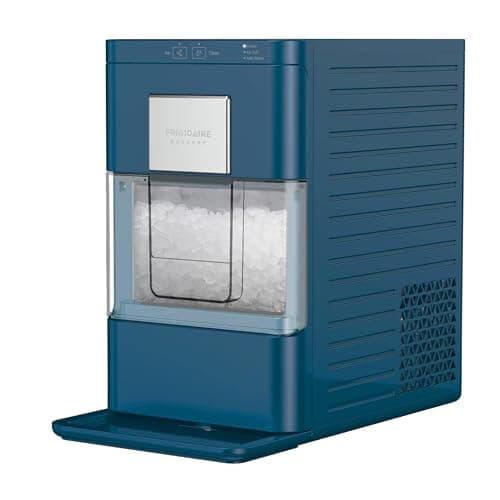 Frigidaire EFIC255 185 W published, 44 lbs a day, chewable pellets. | Best nugget machine |
#ad We earn a commission on purchases made through this link. How this is funded. Prices last checked October 19, 2026.
How each one is made
Nugget. Water is frozen into a thin layer of flakes on the inside of a chilled cylinder. A rotating auger scrapes the flakes off and forces them through a die, compressing them into soft pellets. The trapped air between the flakes is what makes the ice chewable and what makes it melt fast.
Clear. Water is frozen gradually, usually directionally, so dissolved air and minerals are pushed ahead of the advancing freeze front instead of being captured in it. What is left is dense and transparent. Freezer-tray ice is cloudy for the opposite reason: it freezes fast from every side and traps everything.
What the machines publish
| Machine | Rated output | Bin | Electrical | Max $/mo |
|---|---|---|---|---|
| Frigidaire EFIC255 | 44 lbs/day [src] | 3 lbs [src] | 185 W [src] | $4.00(published W) |
| Frigidaire EFIC452 | 39.7 lbs/day [src] | Not published | 120 W [src] | $2.59(published W) |
| GE Profile XPIO13SCSS | 38 lbs/day [src] | 3 lbs [src] | 3 A [src] | $7.78(nameplate) |
The Frigidaire pair is the cleanest comparison available, because it is the same manufacturer with the same documentation standard. 185 W and 20 kg a day for the nugget machine against 90 to 120 W and 18 kg a day for the clear-cube machine.
Clear ice is cheaper to run and slower to produce. That is exactly what the physics predicts and it is nice to see it in a manufacturer's own numbers rather than as an assertion.
Which one belongs in your glass
| Drink | Nugget | Clear cube |
|---|---|---|
| Iced tea, soda, water | Ideal. Chewable and it chills fast | Fine, and slower to chill |
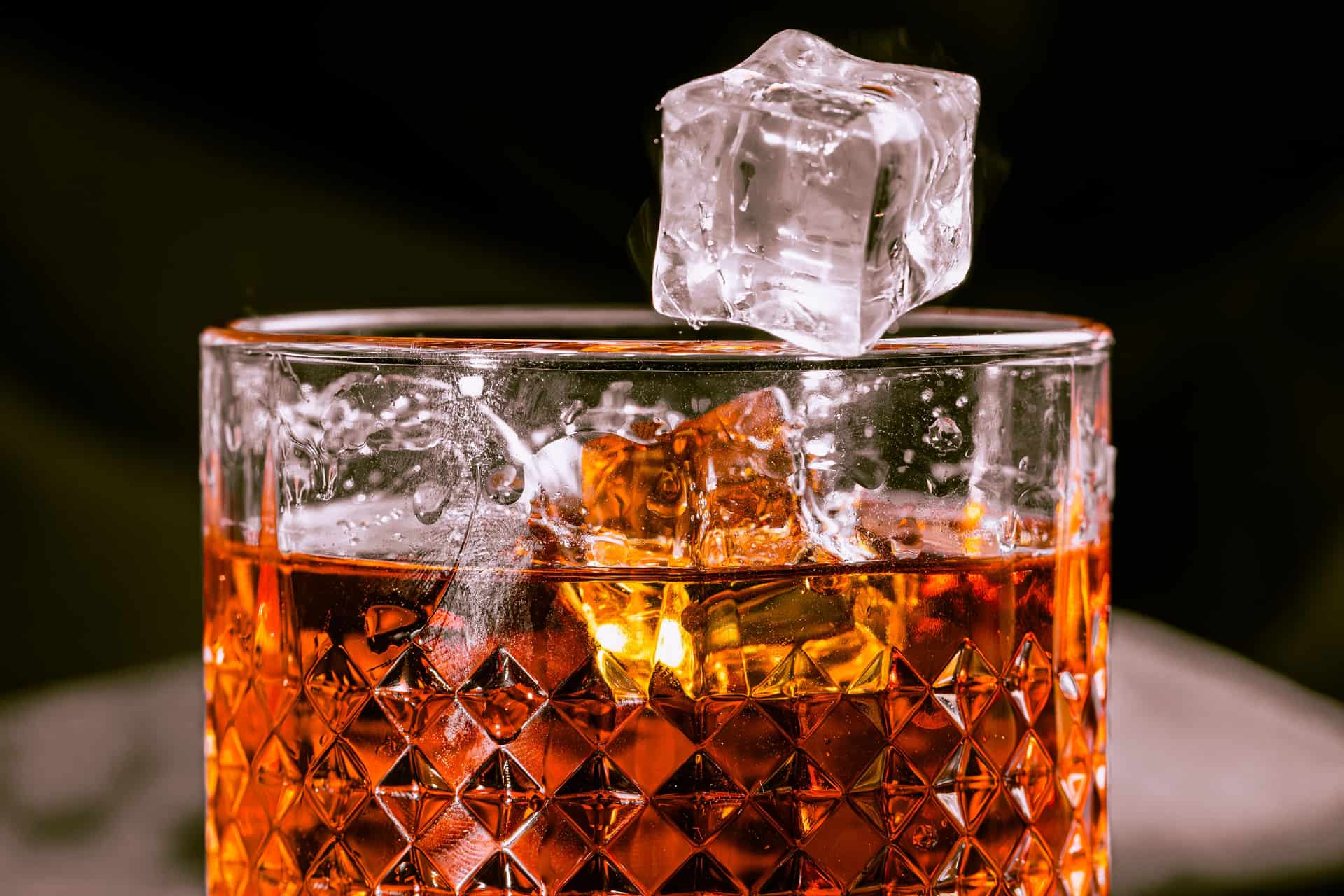
| Whisky, spirits neat over ice | Poor. Dilutes fast | Ideal. Minimal dilution |
| Stirred cocktails | Poor | Ideal |
| Blended and frozen drinks | Good. Already close to crushed | Needs crushing first |
| A cooler or an ice bath | Poor. Melts fast | Good, and slow to make in quantity |
| Chewing, straight from the bin | The entire point | Do not |
That ice-bath row is worth expanding on if a cold plunge is why you are shopping, because the shape is only half the problem and the volume is the other half: can you use a countertop ice maker for an ice bath runs the arithmetic.
The honest answer for most people
If you are here because you love chewable ice, buy a nugget machine and do not overthink it. The dilution argument is real and it matters in a glass of whisky, and it does not matter at all in a glass of iced tea, which is what most nugget ice actually goes into.
If you make cocktails seriously, buy the clear-cube machine and accept that it is slower. And if you want both, that is two machines and about 20 inches of counter, because nothing in this category does both.
The third option nobody mentions is a clear-cube machine plus a Lewis bag and a mallet, which turns clear cubes into crushed ice on demand. It is not nugget ice — crushed ice is sharp shards, nugget is soft compressed pellets — but for cocktails it is the traditional answer and it costs about fifteen dollars.
More on where nugget ice does and does not belong: nugget ice for cocktails and nugget versus bullet ice.
The picks in full
1. Best nugget machine
Frigidaire Gallery Countertop Nugget Ice Maker
The only nugget machine here whose maker publishes an actual power consumption instead of a nameplate ceiling, and it is a low one.
- Rated output
- 44 lbs/day
- Bin capacity
- 3 lbs
- Electrical
- 185 W published
- Ceiling at 4 hrs/day, $0.18/kWh
- $4.00/month (from published watts)
#ad We earn a commission on purchases made through this link. How this is funded. Prices last checked October 19, 2026.
185 W published means the running-cost figure for this machine is not a derived ceiling — it is arithmetic on a number Frigidaire printed. That is the strongest cost data on the site.
It is rated at 20 kg a day, which is 44 lbs — higher than the Opal 2.0's 38. Both numbers are measured under ideal conditions the manual does not describe.
Ten inches wide and 16.5 tall makes it the narrowest full-size nugget machine in this set.
Skip this if
You need a manufacturer-published bin capacity. Frigidaire's specification table omits it, so the 3 lb figure on this page comes from a retail listing rather than the manual.
Questions people actually ask
What is the difference between nugget ice and clear ice?
Nugget ice is compressed flakes: soft, chewable, full of trapped air, and high in surface area so it melts and dilutes quickly. Clear ice is water frozen gradually so dissolved air and impurities are pushed out rather than trapped, giving a dense transparent cube with low surface area that melts slowly.
Which ice melts slower, nugget or clear?
Clear, decisively. Melting is driven by surface area and density. Nugget ice is a loose aggregate of compressed flakes with enormous surface area and trapped air; a clear cube is dense and solid. In a spirit-forward drink that difference is the difference between a cocktail and a watery one.
Is a clear ice maker slower than a nugget one?
Usually, and by design. Frigidaire's clear-cube EFIC452 is rated at 18 kg per 24 hours against its nugget EFIC255's 20 kg, and it draws 90 to 120 W against the nugget machine's 185 W. Clarity comes from freezing gradually, so a fast clear-ice machine is close to a contradiction.
Can one machine make both nugget and clear ice?
Not among the countertop machines covered here. Nugget machines use an auger to compress flakes; clear-cube machines freeze water gradually in a tray. Those are different mechanisms, not different settings.
Sources
- Frigidaire EFIC452 Use & Care Manual, p.10 (read 2026-09-02)
- Frigidaire EFIC255 Use & Care Manual, p.12 (read 2026-09-02)
- GE Profile Opal 2.0 Owner's Manual 49-9000029 Rev. 6, p.17 (read 2026-09-02)
- EIA Electric Power Monthly, Table 5.6.A, June 2026 (read 2026-09-02)
Read next
- Nugget Ice vs Bullet Ice
Two mechanisms, two products. What actually separates chewable ice from hollow cylinders.
- Nugget Ice for Cocktails
Where nugget ice belongs behind a bar, and where a clear cube is the right answer.
- Frigidaire EFIC452
90 to 120 W published, 14.1 inches tall, and clear cubes that melt slowly.
- The Best Countertop Ice Makers
The whole countertop category ranked by ice type, with sourced specs and running costs.
- Frigidaire Gallery EFIC255
185 W published and 44 lbs a day rated. The best output-per-watt figure on the site.
- Do Countertop Ice Makers Keep Ice Frozen?
No. The bin is unrefrigerated and the meltwater recirculates. What to do instead.
- Bullet Ice vs Clear Ice Makers
Fast hollow cylinders against slow dense cubes, on published specs from both manuals.
- The Best Ice Makers for a Home Bar
Clear cubes for spirits, nugget for highballs, and the bin capacity that survives a party.