Troubleshooting
Nugget Ice Maker Not Making Ice
It hums, the fan runs, nothing arrives. Work through these in order. The first four are the ones Frigidaire lists in its own troubleshooting section, and they are free to check.
Disclosure: we earn a commission if you buy through our links. It never affects which machines we recommend or how we rank them, and we take no sponsored placements. Read the full disclosure.
Quick picks
| # | Machine | Best for | Price |
|---|---|---|---|
| 1 | 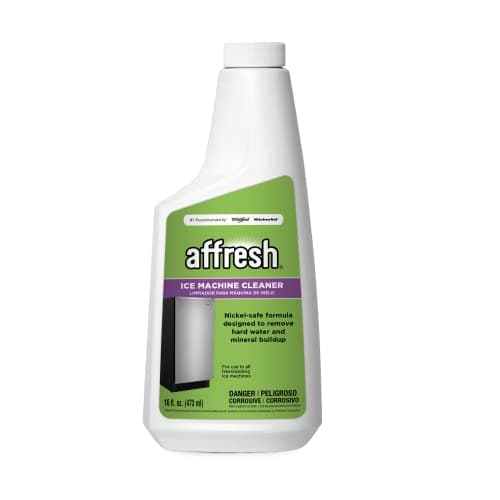 Affresh Not published Restricted flow from biofilm is a common cause of no ice. | For the water path | |
| 2 | 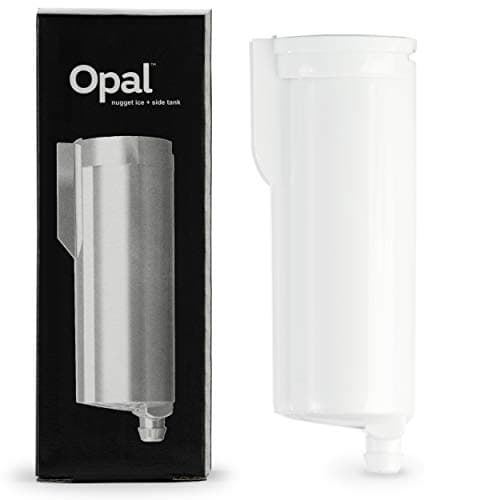 GE Profile Not published Scale is the slow-then-stop cause, and a filter reduces it. | Prevents the recurrence |
#ad We earn a commission on purchases made through this link. How this is funded. Prices last checked October 18, 2026.
The four free checks
1. Water level
Frigidaire lists lack of water first. Fill the reservoir to the line, then press the ICE/CLEAN button again to restart the unit. A pump drawing air makes no ice and, per GE's normal-sounds page, is noticeably louder while it tries.
2. The internal water tank baffle
Frigidaire's troubleshooting guide lists 'internal water tank baffle is not installed in place' as a cause of no ice, with the instruction to reinstall it. If you have taken the machine apart recently, check this before anything else.
3. The hot air outlet
Frigidaire specifies more than 15 cm of ventilation at the hot air outlet. GE's manuals ask for 3 inches of clearance at the sides and rear, 4 inches on the Opal 2.0 Ultra. A machine that cannot dump heat cannot freeze water.
4. Room and water temperature
Frigidaire's instruction is to run the ice maker below 90F ambient and pour colder water into the tank. The original Opal manual gives an operating range of 55F to 90F. A machine in a hot kitchen in August is not faulty, it is over-matched.
If any of those four was the problem, the machine will usually be producing again within one cycle. If all four check out, the cause is almost certainly in the water path.
Gradual or sudden? It matters
| Pattern | Most likely cause | First action |
|---|---|---|
| Slowed over weeks or months, then stopped | Scale on the freezing cylinder | Descale, with the full dwell time |
| Stopped immediately after cleaning | Baffle or a part not reinstalled | Strip and check every part you removed |
| Stopped in hot weather | Ambient temperature above the operating range | Move it or cool the room |
| Stopped after being moved | Not level, or clearance now blocked | Level it and give it its 3 to 4 inches |
| Ice looks wrong before it stopped | Restricted water flow | Clean the water path, then descale |
| No sound at all | Not an ice problem, a power problem | See the machine-will-not-turn-on page |
The scale case, which is most of them
A nugget machine freezes a thin layer of ice on the inside wall of a chilled cylinder. Everything depends on heat moving through that wall. Mineral scale is an insulator, so as it builds the machine runs longer and yields less, until what comes out is slush or nothing.
The tell is the timeline. Sudden failures are mechanical or installation problems; gradual decline is chemistry. If the machine has been getting slower for months, descale it before you conclude anything else, and give the descaler its full dwell time — a rushed descale is the most common reason people conclude descaling did not work.
Full procedure: how to descale a nugget ice maker.
The other water-path problem
Biofilm restricts flow. If the pump cannot move water past the restriction, the cylinder can be perfectly cold and still produce nothing. This usually arrives with a taste problem first, so if the ice was tasting wrong before it stopped, clean before you descale.
The cleaning procedure and why biofilm forms in the first place.
When to stop trying
If the machine has been descaled properly, cleaned properly, is level, has its clearance, is in a room inside its operating range and has water in it, and still produces nothing, the fault is mechanical.
At that point the question is whether the manufacturer publishes a service procedure and sells parts. GE does for the Opal line and KBice publishes a service manual. Most budget brands publish neither, and on those a mechanical failure is usually the end. That calculus is on how long these machines last.
The picks in full
1. For the water path
Affresh Ice Machine Cleaner
A widely stocked general-purpose ice machine cleaner for owners of machines whose manufacturer sells nothing.
- Rated output
- Not published
- Bin capacity
- Not published
- Electrical
- Not published
- Ceiling at 4 hrs/day, $0.18/kWh
- Not published
#ad We earn a commission on purchases made through this link. How this is funded. Prices last checked October 18, 2026.
Most nugget machines are sold by brands that publish no cleaning product of their own, which is exactly the gap a general-purpose cleaner fills.
Always check your own manual before using any third-party product. Some manufacturers void warranty cover for cleaners they have not specified, and the manual is the only place that will tell you.
As with every cleaning product here, we have not used it and we are not going to describe how well it works. What we can say is what the category is for.
Skip this if
Your machine's manufacturer publishes a cleaning procedure that names a specific product. Follow that instead, particularly while the machine is under warranty.
2. Prevents the recurrence
GE Profile Opal Ice Maker Water Filter
The consumable that reduces how often you have to descale, which is the maintenance job everyone puts off.
- Rated output
- Not published
- Bin capacity
- Not published
- Electrical
- Not published
- Ceiling at 4 hrs/day, $0.18/kWh
- Not published
#ad We earn a commission on purchases made through this link. How this is funded. Prices last checked October 18, 2026.
The FirstBuild Opal manual includes a water filter section, so a filter is part of the intended maintenance routine on this machine rather than an accessory bolted on afterwards.
What a filter does here is reduce the mineral load reaching the freezing cylinder. That is the load that becomes scale, and scale is the single most common cause of a nugget machine slowing down.
It does not eliminate descaling. It changes how often you need to do it, which in hard-water areas is the difference between a quarterly job and a monthly one.
Skip this if
Your water is soft, or you already fill the machine with filtered or distilled water. A filter on top of already-filtered water is a purchase without a job.
Questions people actually ask
Why is my nugget ice maker running but not making ice?
Frigidaire's own troubleshooting section lists four causes: ambient or water temperature too high, the hot air outlet blocked, lack of water, and the internal water tank baffle not installed in place. Check those four before anything else, because all four are free to fix and the baffle in particular catches people who have just cleaned the machine.
My ice maker was fine and has gradually stopped. What is it?
Gradual decline almost always means scale on the freezing cylinder. Scale insulates the surface that has to move heat out of the water, so cycles get longer and yield less until eventually nothing usable comes out. Descaling is the fix, and it is a different procedure from cleaning.
How warm is too warm for a nugget ice maker?
Frigidaire says to run the machine below 90 degrees Fahrenheit ambient. The original Opal manual specifies an operating environment of 55F to 90F. Above that the machine cannot shed heat fast enough, and ice melts as quickly as it forms.
I cleaned my ice maker and now it makes no ice.
Check the internal water tank baffle. Frigidaire's troubleshooting guide lists a baffle that is not reinstalled in place as a direct cause of no ice, and it is exactly the part people leave out after taking the machine apart to clean it.
Does a nugget ice maker need to be level?
Yes. The reservoir, the bin drain and the overflow all assume level. A machine on a sloped surface can starve the pump or drain water where it should not go, and neither produces ice.
Sources
Read next
- How to Descale a Nugget Ice Maker
Different chemistry from cleaning, and usually the fix for a machine making ice slowly.
- How to Clean a Nugget Ice Maker
A cross-brand cleaning procedure, and the cleaning-versus-descaling distinction nobody draws.
- How Long Does a Nugget Ice Maker Take?
First ice and full bin times, built from the one published hourly rate in the category.
- Why Is My Nugget Ice Maker Squealing?
Usually scale, not a dying motor. The normal noises, and the ones that mean something.
- Ice Maker Will Not Turn On
No lights, no sound. The checks in order, including the one about waiting.
- GE Opal Error Lights and Warnings
What the indicators mean, and why a full reservoir can still show add water.
- What Temperature Does an Ice Maker Need?
Every published operating range in the category, and what happens above and below them.