Troubleshooting
GE Opal Error Lights and Warnings
An indicator that will not clear is usually telling you something true about a sensor's view of the world rather than something false about the machine.
Disclosure: we earn a commission if you buy through our links. It never affects which machines we recommend or how we rank them, and we take no sponsored placements. Read the full disclosure.
Quick picks
| # | Machine | Best for | Price |
|---|---|---|---|
| 1 | 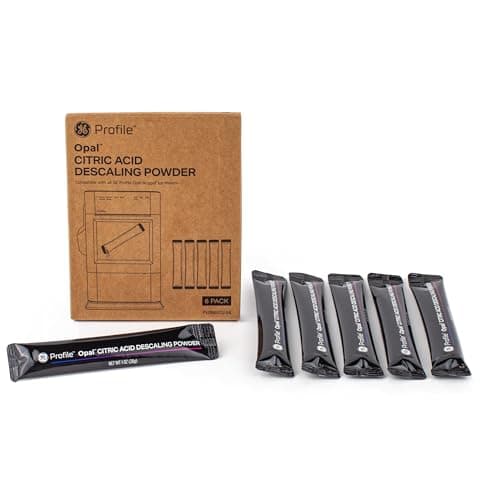 GE Profile Not published A steady Clean light is a descale request, and this is GE's own descaler. | For a steady Clean light | |
| 2 | 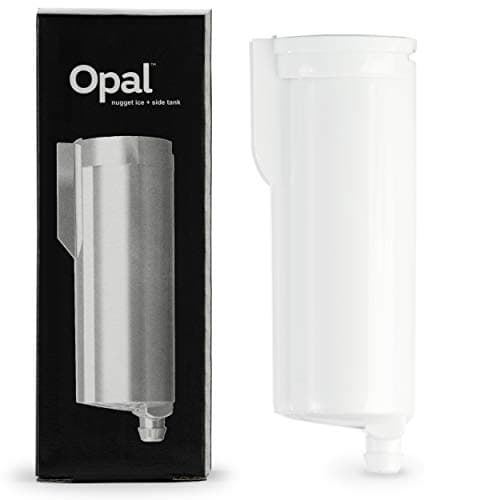 GE Profile Not published Scale drives most of the indicators that keep coming back. | For the recurring ones |
#ad We earn a commission on purchases made through this link. How this is funded. Prices last checked October 18, 2026.
Add water, with a full reservoir
The most-searched Opal complaint, and the logic is worth understanding: the machine is not reporting how much water is in the reservoir. It is reporting whether water is reaching where it needs to be.
- A part not correctly seated after cleaning. The most common cause by a distance. Frigidaire documents the equivalent on its machines — an internal water tank baffle not installed in place — and the principle is identical: a component out of position means water does not go where the machine expects.
- A restriction in the water path. Scale or biofilm reducing flow means the pump cannot draw properly, and the machine reads that as no water. Clean, then descale.
- The machine is not level. Water sits where gravity puts it, and a sensor positioned for a level machine can be sitting above the waterline on a sloped counter.
- The reservoir is genuinely low. Worth checking even when you are sure. The line is not the brim.
Cleaning reminders
These are timers rather than sensors. The machine does not know it is dirty; it knows how long it has been since the last clean cycle.
Which sounds dismissible and is not. A machine that recirculates its own meltwater at room temperature genuinely does need cleaning at roughly the interval it prompts for, and the alternative to running the cycle is the slime problem covered on mold and slime in a nugget ice maker. Run it, and use GE's own procedure and product where you can.
Resetting properly
1. Unplug at the outlet
Not just the switch on the machine. You want the whole thing without power.
2. Wait several minutes
This is the part people skip. A compressor needs internal pressures to equalize before it will restart, and rapid power cycling can leave the machine unable to start at all.
3. Check what the warning was about while you wait
Water level, seated parts, level surface, clearance. A reset that clears an indicator without addressing the cause just delays the indicator.
4. Plug back in and run a cycle
If the indicator returns immediately, the underlying condition is still present. Work through the cause list rather than resetting again.
Why Opal owners have an advantage here
GE publishes considerably more than anyone else in this category: an understanding-the-display section, a troubleshooting section, a normal sounds page and a full specification table. That documentation is a real reason to own one, and it is the strongest argument for the price difference over the machines that publish nothing.
If your machine is not a GE and there is no manual with a troubleshooting section, start with the general not-making-ice checklist, which is assembled from every manufacturer manual we could read.
The picks in full
1. For a steady Clean light
GE Profile Opal Descaling Powder (6-pack)
The manufacturer's own descaler for the machine with the most detailed published descale procedure, which is exactly what that procedure asks you to put in it.
- Rated output
- Not published
- Bin capacity
- Not published
- Electrical
- Not published
- Ceiling at 4 hrs/day, $0.18/kWh
- Not published
#ad We earn a commission on purchases made through this link. How this is funded. Prices last checked October 18, 2026.
GE's Opal procedure calls for a sachet of its own citric descaler in a full reservoir of hot water, so this is the manufacturer's product matched to the manufacturer's published procedure - the lowest-risk option on a machine still in warranty.
This is a descaler, not a cleaner. Descaling dissolves mineral scale; cleaning removes biofilm and residue. They are different jobs and doing one does not do the other, which is why this site also carries a cross-brand cleaner.
GE publishes no specification sheet for the powder, so its chemistry beyond 'citric' and its dose per sachet are not fields we can fill in. The listing describes a 6-pack.
Replaced the GE Profile Opal cleaning kit on this site on 2026-10-03: that product's listing went to 'Currently unavailable' with no offer, and GE's live Opal maintenance consumable is this descaling powder.
Skip this if
The problem is taste or smell rather than slow production. That is biofilm, and biofilm needs a detergent cleaner, which this is not.
2. For the recurring ones
GE Profile Opal Ice Maker Water Filter
The consumable that reduces how often you have to descale, which is the maintenance job everyone puts off.
- Rated output
- Not published
- Bin capacity
- Not published
- Electrical
- Not published
- Ceiling at 4 hrs/day, $0.18/kWh
- Not published
#ad We earn a commission on purchases made through this link. How this is funded. Prices last checked October 18, 2026.
The FirstBuild Opal manual includes a water filter section, so a filter is part of the intended maintenance routine on this machine rather than an accessory bolted on afterwards.
What a filter does here is reduce the mineral load reaching the freezing cylinder. That is the load that becomes scale, and scale is the single most common cause of a nugget machine slowing down.
It does not eliminate descaling. It changes how often you need to do it, which in hard-water areas is the difference between a quarterly job and a monthly one.
Skip this if
Your water is soft, or you already fill the machine with filtered or distilled water. A filter on top of already-filtered water is a purchase without a job.
Questions people actually ask
Why does my GE Opal say add water when the reservoir is full?
Because the machine's view of the water is not the same as yours. The usual causes are a part not correctly seated after cleaning so water is not reaching the sensor, a restriction from scale or biofilm stopping the pump drawing properly, or the machine not sitting level so water is not where the sensor expects it. Frigidaire lists a comparable cause on its machines: an internal water tank baffle not installed in place.
What does the yellow light on my Opal mean?
Indicator colors and meanings vary by Opal generation and model, and GE publishes the definitive list in the owner's manual for your specific unit. Rather than guess, read the indicator section of your own manual: GE's manuals for this line are unusually thorough and include both an understanding-the-display section and a troubleshooting section.
How do I reset a GE Opal ice maker?
Unplug it, wait several minutes, and plug it back in. Waiting matters on a refrigeration appliance: compressors need internal pressures to equalize before they will restart, and cycling power quickly can leave the machine unable to start. If an indicator returns immediately after a reset, the underlying condition is still there and the reset did not address it.
My Opal keeps asking to be cleaned. Do I have to?
The cleaning reminder is a timer, so it will fire whether or not the machine is dirty. That said, on a machine that recirculates its own water the interval it is prompting for is a sensible one, so the honest answer is to run the clean rather than to look for a way to dismiss it.
Sources
- GE Profile Opal 2.0 Owner's Manual 49-9000029 Rev. 6 (read 2026-09-02)
- FirstBuild Opal Use & Care manual (understanding the display, care and cleaning) (read 2026-09-02)
- Frigidaire EFIC255 Use & Care Manual (troubleshooting guide and FAQs) (read 2026-09-02)
Read next
- Nugget Ice Maker Not Making Ice
Ordered fault finding, starting with the four causes the manufacturers list themselves.
- GE Profile Opal 2.0 (XPIO13SCSS)
3.0 A, 38 lbs a day, 1.6 lbs an hour. The best-documented machine in the category.
- How to Clean a Nugget Ice Maker
A cross-brand cleaning procedure, and the cleaning-versus-descaling distinction nobody draws.
- How to Descale a Nugget Ice Maker
Different chemistry from cleaning, and usually the fix for a machine making ice slowly.
- Ice Maker Will Not Turn On
No lights, no sound. The checks in order, including the one about waiting.
- GE Opal vs GE Profile Opal 2.0
2.5 A versus 3.0 A, 24 lbs versus 38, 44 lbs versus 37.6. And the support page mix-up.