Guides
How to Descale a Nugget Ice Maker
The job people skip because they think they already did it when they cleaned the machine. It is different chemistry solving a different problem, and it is usually the fix for slow ice.
Disclosure: we earn a commission if you buy through our links. It never affects which machines we recommend or how we rank them, and we take no sponsored placements. Read the full disclosure.
Quick picks
| # | Machine | Best for | Price |
|---|---|---|---|
| 1 | 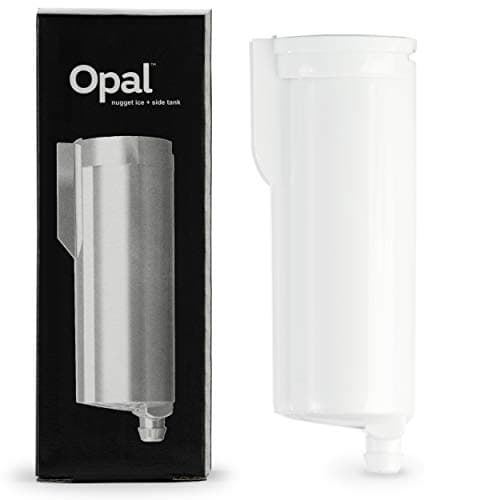 GE Profile Not published Less mineral load reaching the cylinder means scale builds more slowly. | Reduces how often you do this | |
| 2 | 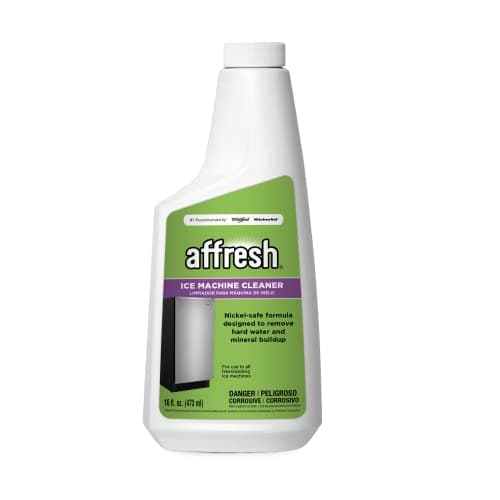 Affresh Not published Cleaning and descaling are different jobs and most machines need both. | For the cleaning half of the job |
#ad We earn a commission on purchases made through this link. How this is funded. Prices last checked October 19, 2026.
Why scale matters more here than elsewhere
A nugget machine works by freezing a thin layer of ice onto the inside wall of a chilled cylinder and scraping it off with an auger. Everything depends on heat moving efficiently through that wall.
Mineral scale is an insulator. A scaled cylinder transfers heat worse, so the machine has to run longer to make the same ice. Two things follow, and both show up as symptoms people misread:
- Production drops. The machine is not broken, it is working through an insulating layer. This is the most common reason a machine that was fine last year is slow this year.
- Running cost rises. Longer run time for the same ice is more kWh for the same ice. Descaling is a running-cost measure as well as a maintenance one — see what these machines cost to run.
- It can squeal. The auger runs against a rougher, tighter surface. That is the noise, and it is covered on the squealing page.
How often
| Your water | Interval | Signs you have left it too long |
|---|---|---|
| Soft (under about 60 ppm) | Every 4 to 6 months | Rarely an issue |
| Moderate | Quarterly | Slight slowdown, faint white film |
| Hard | Monthly to every 6 weeks | Noticeably slower, visible chalky deposit |
| Very hard, or you can see deposit on a kettle | Monthly | Squealing, production well down |
The procedure
1. Confirm it is scale
Slow production, a squeal, or visible white chalky deposit means scale. Bad taste with normal production means biofilm and you want the cleaning procedure instead.
2. Read your manual for an approved product
Manufacturers name specific descalers and some explicitly disallow household acids. Using an unapproved chemical can affect warranty cover, and this is a five-minute check.
3. Unplug and empty
Power off at the outlet, all ice out, reservoir drained. Remove the water filter if one is fitted: descaler will damage the filter medium and the filter will then hold residue.
4. Mix and fill
Follow the product's dilution exactly. Stronger is not better; it is harder to rinse out and more aggressive toward seals.
5. Run the cycle
Use the dedicated descale or clean cycle if the machine has one, so solution reaches the freezing cylinder and the full water path. Otherwise run a normal ice cycle and discard everything it makes.
6. Let it dwell
Acid needs contact time to dissolve deposit. Cutting the dwell short is the most common reason a descale does not fix a slow machine.
7. Rinse, twice at least
Drain the solution, refill with fresh water, run a full cycle, discard the ice. Repeat. On a machine that recirculates its own water, thorough rinsing is not optional.
8. Refit the filter last
Only after the final rinse, so it does not absorb descaler and hand it back to you later.
The vinegar question
Vinegar is dilute acetic acid, so it will dissolve light scale. It is cheap, it is in your cupboard, and it is the first thing everyone reaches for.
Two cautions. Manufacturers differ on whether they permit it, and some explicitly do not, so an unapproved descale on a machine still in warranty is a risk you should take knowingly rather than by accident. And vinegar is weak, so heavy scale often needs a purpose-made descaler and a proper dwell time rather than a longer soak in something mild.
If you do use it, rinse considerably more than you think you need to. Vinegar smell in ice is persistent and unpleasant, and it is a common complaint from people who ran one rinse cycle and called it done.
Preventing it in the first place
Scale comes from dissolved minerals in the water you pour in. That gives you three levers, in order of effectiveness:
- Change the water going in. Filtered or distilled water carries less mineral load, so less scale forms. See what water to use.
- Fit a filter if your machine takes one. The FirstBuild Opal manual includes a water filter section, so on that machine it is part of the intended routine rather than an accessory.
- Descale on schedule rather than on symptoms. A light regular descale is a five-minute job. A neglected one is an afternoon and sometimes a new machine. Only one manufacturer here prints an interval, which is one of the findings on the self-cleaning ice maker roundup.
The picks in full
1. Reduces how often you do this
GE Profile Opal Ice Maker Water Filter
The consumable that reduces how often you have to descale, which is the maintenance job everyone puts off.
- Rated output
- Not published
- Bin capacity
- Not published
- Electrical
- Not published
- Ceiling at 4 hrs/day, $0.18/kWh
- Not published
#ad We earn a commission on purchases made through this link. How this is funded. Prices last checked October 19, 2026.
The FirstBuild Opal manual includes a water filter section, so a filter is part of the intended maintenance routine on this machine rather than an accessory bolted on afterwards.
What a filter does here is reduce the mineral load reaching the freezing cylinder. That is the load that becomes scale, and scale is the single most common cause of a nugget machine slowing down.
It does not eliminate descaling. It changes how often you need to do it, which in hard-water areas is the difference between a quarterly job and a monthly one.
Skip this if
Your water is soft, or you already fill the machine with filtered or distilled water. A filter on top of already-filtered water is a purchase without a job.
2. For the cleaning half of the job
Affresh Ice Machine Cleaner
A widely stocked general-purpose ice machine cleaner for owners of machines whose manufacturer sells nothing.
- Rated output
- Not published
- Bin capacity
- Not published
- Electrical
- Not published
- Ceiling at 4 hrs/day, $0.18/kWh
- Not published
#ad We earn a commission on purchases made through this link. How this is funded. Prices last checked October 19, 2026.
Most nugget machines are sold by brands that publish no cleaning product of their own, which is exactly the gap a general-purpose cleaner fills.
Always check your own manual before using any third-party product. Some manufacturers void warranty cover for cleaners they have not specified, and the manual is the only place that will tell you.
As with every cleaning product here, we have not used it and we are not going to describe how well it works. What we can say is what the category is for.
Skip this if
Your machine's manufacturer publishes a cleaning procedure that names a specific product. Follow that instead, particularly while the machine is under warranty.
Questions people actually ask
How often should you descale a nugget ice maker?
Quarterly is a reasonable default, monthly in hard-water areas, and immediately if production has slowed or the machine has started to squeal. The right interval is set by your water rather than by a calendar, so if you find heavy deposit at three months, shorten it.
Can I descale an ice maker with vinegar?
Vinegar is a mild acid and will dissolve light scale, but manufacturers differ on whether they permit it and some explicitly do not. Check your own manual first, because using an unapproved chemical can affect warranty cover, and rinse far more thoroughly than you think is necessary afterwards.
What happens if you never descale an ice maker?
Scale builds on the freezing cylinder, which is the surface that has to transfer heat out of the water. As it thickens the machine runs longer for less ice, which raises the running cost, and the auger works harder against a rougher surface, which is where the squeal comes from. Eventually production drops far enough that people assume the machine has failed.
Is descaling the same as running a clean cycle?
Not necessarily. Some machines have one cycle used with either product; the cycle is just circulation. What matters is the chemistry you put in it: detergent for biofilm, acid for scale. Running a clean cycle with a cleaner does nothing to scale.
My ice maker squeals. Will descaling fix it?
Often, yes. A squeal from a nugget machine usually comes from the auger under load, and the most common cause of that load is scale on the cylinder wall. Descale first before assuming a mechanical failure.
Sources
Read next
- How to Clean a Nugget Ice Maker
A cross-brand cleaning procedure, and the cleaning-versus-descaling distinction nobody draws.
- Why Is My Nugget Ice Maker Squealing?
Usually scale, not a dying motor. The normal noises, and the ones that mean something.
- Nugget Ice Maker Not Making Ice
Ordered fault finding, starting with the four causes the manufacturers list themselves.
- What Water to Use in a Nugget Ice Maker
Tap, filtered or distilled: what each does to scale, taste and maintenance.
- Water Filters for Nugget Ice Makers
What a filter actually does, when it earns its place, and when it is a purchase without a job.
- Mold and Slime in a Nugget Ice Maker
Why biofilm grows in these machines, how to remove it, and the habit that prevents it.
- Can You Leave a Nugget Ice Maker On All the Time?
Safe, yes. Sensible, usually not. What a machine left running actually does, and what it costs.