Guides
What Water to Use in a Nugget Ice Maker
The water you pour in decides how often you descale, how the ice tastes, and how long the machine keeps up. It matters more than which machine you bought.
Disclosure: we earn a commission if you buy through our links. It never affects which machines we recommend or how we rank them, and we take no sponsored placements. Read the full disclosure.
Quick picks
| # | Machine | Best for | Price |
|---|---|---|---|
| 1 | 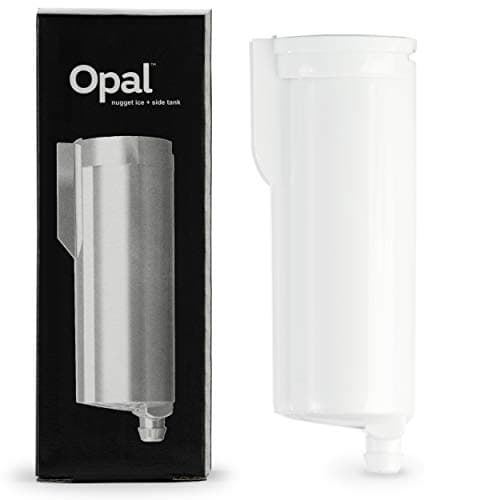 GE Profile Not published Reduces mineral load without a jug-carrying habit you will abandon. | The practical middle ground | |
| 2 | 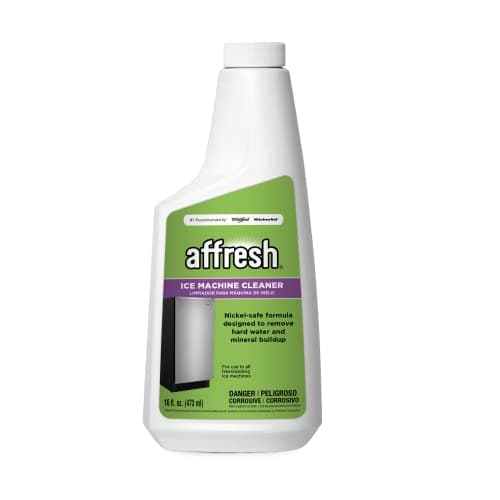 Affresh Not published Biofilm comes from standing water, whatever kind you poured in. | For what water cannot fix |
#ad We earn a commission on purchases made through this link. How this is funded. Prices last checked October 19, 2026.
The options, honestly
| Water | Scale | Taste | Practicality |
|---|---|---|---|
| Hard tap water | Fast build-up. Monthly descaling in bad areas | Mineral taste possible | Free and always available |
| Soft tap water | Slow build-up | Fine, occasionally salty to some palates | Free |
| Filtered tap water | Reduced. Longer intervals | Usually the best everyday result | Cheap, sustainable |
| Distilled water | Almost none | Neutral, flat to some people | You have to keep buying it |
| Spring or mineral water | Can be worse than tap, depending on mineral content | Varies | Expensive for no gain |
The thing that matters most is not which water
It is how long the water sits. These machines recirculate: meltwater from the unrefrigerated bin drains back into the reservoir to be frozen again. Water you poured in on Monday is still there on Friday, having been round the circuit several times at room temperature.
That is why the most effective habit is not choosing a fancier water, it is emptying and refilling rather than topping up. Topping up means the oldest water in the machine never leaves.
It is also the whole biofilm story: why slime grows in these machines.
Know your own water
- Look at your kettle. Visible white deposit inside it means hard water, and your ice maker will scale at a similar rate.
- Check your utility's water quality report. US suppliers publish an annual one, and it will give you hardness in grains per gallon or parts per million.
- Watch the machine. Production dropping over months, with no change in habits, is a scale symptom before it is anything else.
Hardness sets your descaling interval, and that interval is on the descaling page.
What better water cannot fix
- Biofilm. That comes from standing water and organic material, not from the water's mineral content. Distilled water in a machine left full for two weeks will still grow something.
- Existing scale. Once it is on the cylinder, only an acid removes it. Changing water slows the next build-up; it does not undo the last one.
- A machine that has been stored damp. Dry it before it goes in a cupboard.
- A saturated water filter. An old filter is worse than none, whatever you pour through it.
The recommendation
Filtered tap water, emptied and refilled rather than topped up, with a descaling interval set by your local hardness. That combination handles taste, scale and biofilm together, costs almost nothing, and is a habit people actually keep.
If your water is very hard and your machine takes a cartridge, fit one: when a filter is worth it.
The picks in full
1. The practical middle ground
GE Profile Opal Ice Maker Water Filter
The consumable that reduces how often you have to descale, which is the maintenance job everyone puts off.
- Rated output
- Not published
- Bin capacity
- Not published
- Electrical
- Not published
- Ceiling at 4 hrs/day, $0.18/kWh
- Not published
#ad We earn a commission on purchases made through this link. How this is funded. Prices last checked October 19, 2026.
The FirstBuild Opal manual includes a water filter section, so a filter is part of the intended maintenance routine on this machine rather than an accessory bolted on afterwards.
What a filter does here is reduce the mineral load reaching the freezing cylinder. That is the load that becomes scale, and scale is the single most common cause of a nugget machine slowing down.
It does not eliminate descaling. It changes how often you need to do it, which in hard-water areas is the difference between a quarterly job and a monthly one.
Skip this if
Your water is soft, or you already fill the machine with filtered or distilled water. A filter on top of already-filtered water is a purchase without a job.
2. For what water cannot fix
Affresh Ice Machine Cleaner
A widely stocked general-purpose ice machine cleaner for owners of machines whose manufacturer sells nothing.
- Rated output
- Not published
- Bin capacity
- Not published
- Electrical
- Not published
- Ceiling at 4 hrs/day, $0.18/kWh
- Not published
#ad We earn a commission on purchases made through this link. How this is funded. Prices last checked October 19, 2026.
Most nugget machines are sold by brands that publish no cleaning product of their own, which is exactly the gap a general-purpose cleaner fills.
Always check your own manual before using any third-party product. Some manufacturers void warranty cover for cleaners they have not specified, and the manual is the only place that will tell you.
As with every cleaning product here, we have not used it and we are not going to describe how well it works. What we can say is what the category is for.
Skip this if
Your machine's manufacturer publishes a cleaning procedure that names a specific product. Follow that instead, particularly while the machine is under warranty.
Questions people actually ask
Should I use distilled water in a nugget ice maker?
Distilled water carries essentially no dissolved minerals, so it produces almost no scale, and for an occasionally used machine it is a genuinely good answer. For daily use it means buying and carrying water indefinitely, which most people give up on. Filtered tap water is the sustainable version of the same idea.
Can you use tap water in a nugget ice maker?
Yes, and most people do. What tap water costs you is a shorter descaling interval where the water is hard, and sometimes a chlorine taste in the ice. Neither is a reason not to use it, but both are reasons to know your own water.
Does the water you use affect how ice tastes?
It does, but it is rarely the main cause of bad-tasting ice from one of these machines. Because meltwater recirculates, water sitting in the reservoir for days is a far more common culprit than the water you originally poured in. Empty and refill rather than topping up.
Will softened water damage an ice maker?
Softened water exchanges hardness minerals for sodium, so it produces less scale but is not mineral-free, and it tastes different to some people. Check your machine's manual, since a few manufacturers state a preference. It is generally acceptable, and it is not the same thing as filtered.
Sources
Read next
- Water Filters for Nugget Ice Makers
What a filter actually does, when it earns its place, and when it is a purchase without a job.
- How to Descale a Nugget Ice Maker
Different chemistry from cleaning, and usually the fix for a machine making ice slowly.
- Why Does My Ice Taste or Smell Bad?
Almost always stale recirculated water, not the water you pour in. Diagnosed in order.
- Mold and Slime in a Nugget Ice Maker
Why biofilm grows in these machines, how to remove it, and the habit that prevents it.
- How to Clean a Nugget Ice Maker
A cross-brand cleaning procedure, and the cleaning-versus-descaling distinction nobody draws.
- How Long Do Nugget Ice Makers Last?
No manufacturer publishes a lifespan. What actually fails, and what you control.
- How Much Water Does a Nugget Ice Maker Use?
Recirculation, three published reservoir volumes in the whole category, and why minerals concentrate.