Guides
Sonic Ice at Home
Yes, it is nugget ice, and yes, you can make it at home. What you cannot replicate is the machine's scale, and that turns out to matter more than the ice does.
Disclosure: we earn a commission if you buy through our links. It never affects which machines we recommend or how we rank them, and we take no sponsored placements. Read the full disclosure.
Quick picks
| # | Machine | Best for | Price |
|---|---|---|---|
| 1 | 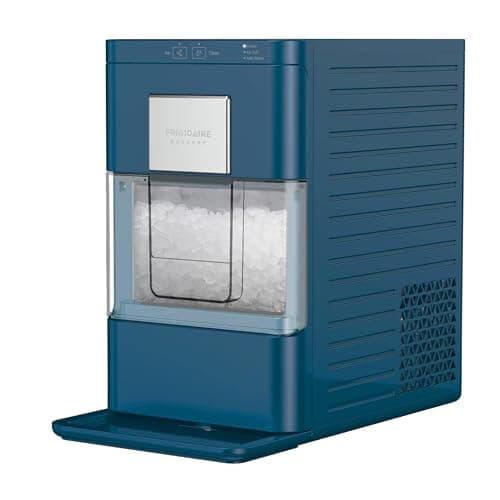 Frigidaire EFIC255 44 lbs a day rated at a published 185 W. | Best value route |
#ad We earn a commission on purchases made through this link. How this is funded. Prices last checked October 19, 2026.
The question gets asked constantly, and the answer being a flat yes is why most pages about it are padded out to a thousand words of throat-clearing. The genuinely useful part is the second question: what is different about the drive-through version, and can you close the gap.
What is actually different about the commercial version
- Turnover. A commercial machine dispenses its entire output constantly, so the ice you get was made minutes ago. At home, ice sits in an unrefrigerated bin melting and being replaced, which changes its texture. This is the biggest difference and it is a workflow problem, not a machine problem.
- Water. Commercial machines run on filtered, plumbed water. A home machine runs on whatever you pour in, and then recirculates it. Stale reservoir water is the most common reason home nugget ice tastes worse than the drive-through version.
- Volume. A commercial unit makes hundreds of pounds a day into a large refrigerated bin. The best home machine we can source publishes 44 lbs a day into a 3 lb bin.
- The drink. Ice at a drive-through arrives with a very cold drink poured over it, in a cup that keeps it that way. At home, room-temperature soda over ice that has been sitting is a different experience with identical ice.
Not on that list: the ice itself. It is the same compressed-flake pellet, and no home machine needs to do anything different to produce it.
Closing the gap
1. Use good water and change it often
Filtered water in, and empty the reservoir rather than topping it up indefinitely. On a recirculating machine, the water you leave in it is the water your ice is made from tomorrow.
2. Harvest into the freezer
Move ice out of the unrefrigerated bin as it is made. Fresh nugget ice held in a freezer keeps its texture far better than nugget ice sitting in a melting bin.
3. Chill the drink, not just the glass
Nugget ice melts fast by design. Pouring a warm drink over it produces a diluted drink and disappointing ice. Cold liquid over fresh ice is the actual trick.
4. Keep the machine clean
Biofilm and scale both change how ice tastes, and both build up quietly in a machine that recirculates its own water. The procedure is on our cleaning page.
Which machine gets you closest
Every nugget machine makes the same ice, so the differences are speed and capacity rather than authenticity. GE's Opal 2.0 publishes 38 lbs a day and 1.6 lbs an hour, which is the only published hourly rate in the category and the best guide to how quickly a batch arrives. Frigidaire's EFIC255 publishes 20 kg a day, which is 44 lbs and the highest rating we can source.
The full field is on the nugget roundup, and the budget end is on the budget page.
The honest economics
If you want nugget ice occasionally, bagged nugget ice from a drive-through or a convenience store is cheaper than any machine and always will be. A machine makes sense when the trip stops being worth making — when it is a daily habit rather than a treat.
The running cost of the machine itself is modest: between about $3.67 and $7.78 a month on our figures, which is less than a couple of drive-through visits. The purchase price is the real cost, and it is why whether these machines are worth it has its own page.
The picks in full
1. Best value route
Frigidaire Gallery Countertop Nugget Ice Maker
The only nugget machine here whose maker publishes an actual power consumption instead of a nameplate ceiling, and it is a low one.
- Rated output
- 44 lbs/day
- Bin capacity
- 3 lbs
- Electrical
- 185 W published
- Ceiling at 4 hrs/day, $0.18/kWh
- $4.00/month (from published watts)
#ad We earn a commission on purchases made through this link. How this is funded. Prices last checked October 19, 2026.
185 W published means the running-cost figure for this machine is not a derived ceiling — it is arithmetic on a number Frigidaire printed. That is the strongest cost data on the site.
It is rated at 20 kg a day, which is 44 lbs — higher than the Opal 2.0's 38. Both numbers are measured under ideal conditions the manual does not describe.
Ten inches wide and 16.5 tall makes it the narrowest full-size nugget machine in this set.
Skip this if
You need a manufacturer-published bin capacity. Frigidaire's specification table omits it, so the 3 lb figure on this page comes from a retail listing rather than the manual.
Questions people actually ask
Is Sonic ice the same as nugget ice?
Yes. Sonic ice is nugget ice, also called pebble ice or chewblet ice: soft, chewable pellets made by compressing ice flakes with an auger. The brand association is about where a lot of people first encountered it, not about it being a different product.
Can you make Sonic ice at home?
Yes. Any countertop nugget ice maker produces the same kind of ice by the same mechanism. What a commercial machine has over a home one is scale and a plumbed water supply, not a different process.
Why does Sonic ice taste different?
It usually is not the ice, it is everything around it: a very cold drink poured over a large volume of fresh ice, with filtered water in the machine and constant turnover so nothing sits. Replicate those conditions at home and the difference largely disappears. Stale reservoir water is the most common reason home nugget ice tastes worse.
What is the closest home machine to a commercial nugget ice maker?
Mechanically, all of them, because they use the same auger process. On rates printed in a manual, the GE Profile Opal 2.0 is the fastest we can source at 38 lbs a day and 1.6 lbs an hour, and the Frigidaire Gallery EFIC255 is rated highest overall at 20 kg a day, which is 44 lbs. GoveeLife's product page lists 60 lbs a day for its Smart Nugget Ice Maker Pro, the highest figure of any maker here but not one from a manual.
Can I buy nugget ice instead of making it?
Many drive-throughs and convenience stores sell bagged nugget ice, and for occasional use that is cheaper than any machine. A machine makes sense when you want it daily and the round trip stops being worth it.
Sources
- GE Profile Opal 2.0 Owner's Manual 49-9000029 Rev. 6, p.17 (read 2026-09-02)
- Frigidaire EFIC255 Use & Care Manual, p.12 (read 2026-09-02)
Read next
- Nugget Ice vs Bullet Ice
Two mechanisms, two products. What actually separates chewable ice from hollow cylinders.
- The Best Nugget Ice Makers
Six machines ranked on published specs, each with a sourced monthly running-cost ceiling.
- Why Does My Ice Taste or Smell Bad?
Almost always stale recirculated water, not the water you pour in. Diagnosed in order.
- What Water to Use in a Nugget Ice Maker
Tap, filtered or distilled: what each does to scale, taste and maintenance.
- How Long Does a Nugget Ice Maker Take?
First ice and full bin times, built from the one published hourly rate in the category.
- Is Nugget Ice Bad for Your Teeth?
Softer than a cube, still ice. What that changes and where a website should stop.