Guides
How to Clean a Nugget Ice Maker
Assembled from the manufacturers' own manuals rather than from a single brand's support page. The distinction between cleaning and descaling is the part everyone skips.
Disclosure: we earn a commission if you buy through our links. It never affects which machines we recommend or how we rank them, and we take no sponsored placements. Read the full disclosure.
Quick picks
| # | Machine | Best for | Price |
|---|---|---|---|
| 1 | 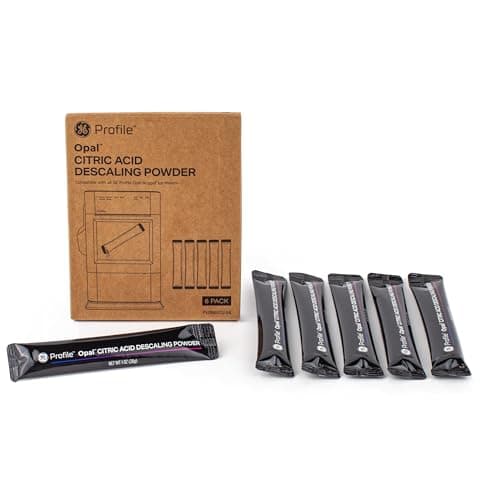 GE Profile Not published GE's own citric descaler, which is what its published descale procedure asks for. | Best for Opal descaling | |
| 2 | 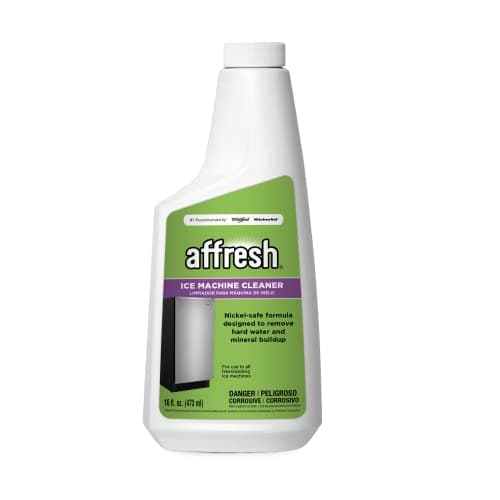 Affresh Not published For the many machines whose makers sell nothing of their own. | Best cross-brand option | |
| 3 | 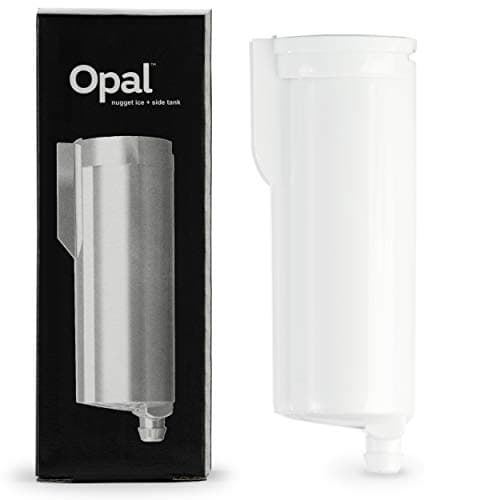 GE Profile Not published Less mineral load reaching the cylinder means less scale to remove. | Reduces how often you do this |
#ad We earn a commission on purchases made through this link. How this is funded. Prices last checked October 19, 2026.
Manufacturer cleaning instructions in this category are brand-specific and scattered, and the machines that most need a written procedure — the budget ones — are the ones whose makers publish the least. What follows is assembled from the manuals we could read, with the brand-specific details called out where they differ.
The procedure
1. Unplug it
Frigidaire's manual states this before any cleaning or maintenance. It applies to every machine in this category, and it is not optional on an appliance with a motor-driven auger inside it.
2. Empty everything
All ice out of the bin, all water out of the reservoir. Water you leave behind carries whatever you are trying to remove, and on a recirculating machine that water goes straight back into the next batch of ice.
3. Take out the removable parts
Ice basket or drawer, water tank, and the internal baffle if your machine has one. Frigidaire's troubleshooting section specifically lists a missing internal water tank baffle as a cause of a machine not making ice, so note how it comes out.
4. Wash them properly
Warm water, diluted detergent, soft cloth, per Frigidaire's instructions. Rinse until no detergent remains. Nothing abrasive, and nothing that will scratch plastic that then holds biofilm better than it did before.
5. Wipe the interior
Same warm water and diluted detergent on the interior surfaces. Reach what you can reach; do not force cloths or brushes into the auger housing.
6. Run the cleaning cycle
If your machine has a CLEAN function, this is the part that matters, because it circulates solution through the water path you cannot reach by hand. Use the product your manual names, and follow its dwell time.
7. Rinse it out
Fill with fresh water, run a full cycle, and throw the ice away. Then do it again. Residual cleaning product ends up in ice you are going to put in a drink.
8. Dry before storing
If the machine goes into a cupboard, leave the lid open until it is dry inside. A sealed damp machine is how you find a science experiment in three weeks.
Where the brands differ
- GE Opal. The most complete published procedure in the category, plus a documented water filter section in the original manual. GE sells its own cleaning solution and names it in the procedure. If you own an Opal, follow GE's procedure over this page.
- Frigidaire. The Use & Care manual gives an explicit cleaning sequence — unplug, remove the drawer water tank and ice basket, clean the interior with diluted detergent, warm water and a soft cloth — and its troubleshooting section flags the internal water tank baffle, which is the part people leave out after cleaning.
- NewAir. The manuals include cleaning and maintenance sections alongside the specification table, but no CLEAN button — which machines actually have a clean cycle, and what it does, is set out on the self-cleaning ice maker roundup.
- Euhomy, ecozy, KBice. Manuals with cleaning sections but no specification tables. The procedure above is your best reference, and this page exists largely because those owners have nowhere else to look.
How often, honestly
| Job | How often | Why |
|---|---|---|
| Empty and dry when idle | Every time it sits unused for a day or more | Standing water is the entire biofilm problem |
| Wipe bin and reservoir | Weekly in regular use | Catches residue before it becomes slime |
| Full cleaning cycle | Monthly | Reaches the water path you cannot wipe |
| Descale | Quarterly, or monthly in hard water | Different job, different chemistry |
| Replace the water filter | Per your manufacturer's interval | Reduces the scale load in the first place |
What not to do
- Do not use bleach unless your manufacturer specifically approves it. It is effective against biofilm and it is aggressive toward the seals and metals in a machine you cannot fully rinse by hand.
- Do not put components in a dishwasher unless the manual says they are dishwasher safe. Warped plastic in an auger housing is not repairable.
- Do not use abrasive pads on interior surfaces. Scratches hold biofilm better than smooth plastic does, so you make the next problem worse while solving this one.
- Do not skip the rinse. Two full discarded batches is not excessive on a machine whose entire water supply recirculates.
- Do not treat a descale as a clean, or a clean as a descale. They are different jobs.
The thing that halves the work
Empty the machine when you are not using it. That single habit removes the standing water that biofilm needs, and it is worth more than any cleaning product. The second-best habit is paying attention to what you put in: hard water becomes scale, and scale is what makes a machine slow down and squeal. See what water to use and whether a filter is worth it.
The picks in full
1. Best for Opal descaling
GE Profile Opal Descaling Powder (6-pack)
The manufacturer's own descaler for the machine with the most detailed published descale procedure, which is exactly what that procedure asks you to put in it.
- Rated output
- Not published
- Bin capacity
- Not published
- Electrical
- Not published
- Ceiling at 4 hrs/day, $0.18/kWh
- Not published
#ad We earn a commission on purchases made through this link. How this is funded. Prices last checked October 19, 2026.
GE's Opal procedure calls for a sachet of its own citric descaler in a full reservoir of hot water, so this is the manufacturer's product matched to the manufacturer's published procedure - the lowest-risk option on a machine still in warranty.
This is a descaler, not a cleaner. Descaling dissolves mineral scale; cleaning removes biofilm and residue. They are different jobs and doing one does not do the other, which is why this site also carries a cross-brand cleaner.
GE publishes no specification sheet for the powder, so its chemistry beyond 'citric' and its dose per sachet are not fields we can fill in. The listing describes a 6-pack.
Replaced the GE Profile Opal cleaning kit on this site on 2026-10-03: that product's listing went to 'Currently unavailable' with no offer, and GE's live Opal maintenance consumable is this descaling powder.
Skip this if
The problem is taste or smell rather than slow production. That is biofilm, and biofilm needs a detergent cleaner, which this is not.
2. Best cross-brand option
Affresh Ice Machine Cleaner
A widely stocked general-purpose ice machine cleaner for owners of machines whose manufacturer sells nothing.
- Rated output
- Not published
- Bin capacity
- Not published
- Electrical
- Not published
- Ceiling at 4 hrs/day, $0.18/kWh
- Not published
#ad We earn a commission on purchases made through this link. How this is funded. Prices last checked October 19, 2026.
Most nugget machines are sold by brands that publish no cleaning product of their own, which is exactly the gap a general-purpose cleaner fills.
Always check your own manual before using any third-party product. Some manufacturers void warranty cover for cleaners they have not specified, and the manual is the only place that will tell you.
As with every cleaning product here, we have not used it and we are not going to describe how well it works. What we can say is what the category is for.
Skip this if
Your machine's manufacturer publishes a cleaning procedure that names a specific product. Follow that instead, particularly while the machine is under warranty.
3. Reduces how often you do this
GE Profile Opal Ice Maker Water Filter
The consumable that reduces how often you have to descale, which is the maintenance job everyone puts off.
- Rated output
- Not published
- Bin capacity
- Not published
- Electrical
- Not published
- Ceiling at 4 hrs/day, $0.18/kWh
- Not published
#ad We earn a commission on purchases made through this link. How this is funded. Prices last checked October 19, 2026.
The FirstBuild Opal manual includes a water filter section, so a filter is part of the intended maintenance routine on this machine rather than an accessory bolted on afterwards.
What a filter does here is reduce the mineral load reaching the freezing cylinder. That is the load that becomes scale, and scale is the single most common cause of a nugget machine slowing down.
It does not eliminate descaling. It changes how often you need to do it, which in hard-water areas is the difference between a quarterly job and a monthly one.
Skip this if
Your water is soft, or you already fill the machine with filtered or distilled water. A filter on top of already-filtered water is a purchase without a job.
Questions people actually ask
How often should you clean a nugget ice maker?
Empty and dry it any time it will sit unused for more than a day or two, wipe the bin and reservoir weekly in regular use, and run a full cleaning cycle at least monthly. If the ice starts tasting or smelling off, that is not a schedule question, that is now.
Can I use vinegar to clean a nugget ice maker?
Vinegar is a mild acid, so it addresses scale rather than biofilm, which makes it a descaler rather than a cleaner. Some manufacturers permit a diluted vinegar descale and some do not, and using an unapproved product can affect warranty cover. Check your own manual first, and do not treat a vinegar rinse as a substitute for cleaning.
What is the difference between cleaning and descaling an ice maker?
Cleaning removes biofilm, slime and residue, and it uses a detergent or a cleaning solution. Descaling dissolves mineral deposits left by hard water, and it uses an acid. They are different problems with different chemistry, and doing one does not do the other. A machine that is slowing down usually needs descaling; a machine whose ice smells usually needs cleaning.
Why does my nugget ice maker have slime in it?
Standing water plus warmth plus organic material equals biofilm, and a machine that recirculates its own meltwater is an ideal environment for it. It is not a sign of a faulty machine, it is a sign of a maintenance interval that is too long. Empty the machine when it is not in use, and that is most of the problem solved.
Do I have to remove the water filter before cleaning?
Yes on machines that have one. A cleaning solution circulated through a filter can damage the filter medium and leave residue in it. Take it out, clean the machine, rinse thoroughly, then refit it.
Sources
- Frigidaire EFIC255 Use & Care Manual (cleaning instructions and troubleshooting) (read 2026-09-02)
- FirstBuild Opal Use & Care manual (care and cleaning, water filter) (read 2026-09-02)
- GE Profile Opal 2.0 Owner's Manual 49-9000029 Rev. 6 (read 2026-09-02)
Read next
- How to Descale a Nugget Ice Maker
Different chemistry from cleaning, and usually the fix for a machine making ice slowly.
- Mold and Slime in a Nugget Ice Maker
Why biofilm grows in these machines, how to remove it, and the habit that prevents it.
- Choosing an Ice Maker Cleaner
Cleaner or descaler? Work out which problem you have before you buy either.
- Why Does My Ice Taste or Smell Bad?
Almost always stale recirculated water, not the water you pour in. Diagnosed in order.
- Nugget Ice Maker Not Making Ice
Ordered fault finding, starting with the four causes the manufacturers list themselves.
- What Water to Use in a Nugget Ice Maker
Tap, filtered or distilled: what each does to scale, taste and maintenance.
- How to Drain and Store a Nugget Ice Maker
Drain, dry, stow upright, and the manufacturer-stated wait before you switch it on again.