Countertop Ice Makers
The Best Self-Cleaning Countertop Ice Makers
Six machines here have a clean control their manufacturer actually documents. Only one of those cycles is told to use detergent, and that gap is the part worth knowing before you pay extra for the feature.
Disclosure: we earn a commission if you buy through our links. It never affects which machines we recommend or how we rank them, and we take no sponsored placements. Read the full disclosure.
Quick picks
| # | Machine | Best for | Price |
|---|---|---|---|
| 1 | 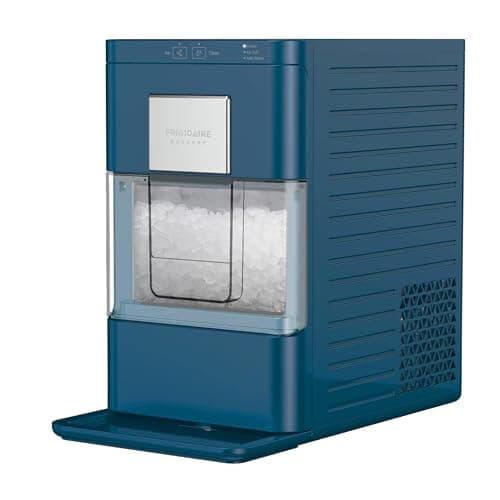 Frigidaire EFIC255 One CLEAN button, at least 20 minutes, plain water in the tank. | Simplest cycle to run | |
| 2 | 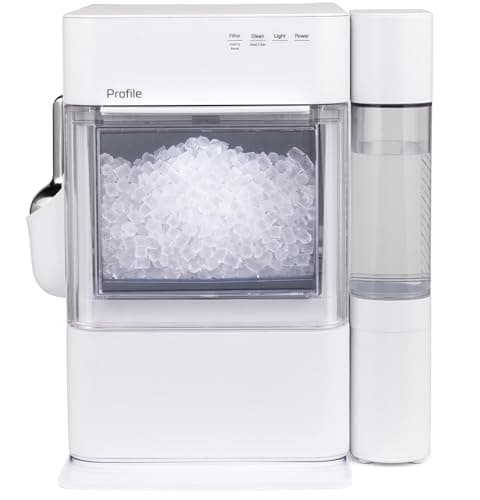 GE Profile XPIO43SCSS The only manual here that names an interval: descale every 4 weeks. | Clearest descaling schedule | |
| 3 | 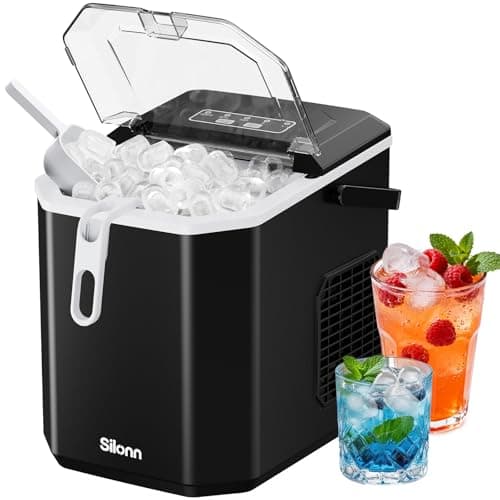 Silonn SLIM21 A documented 30-minute cycle and the only stated weekly schedule. | Best compact machine with a clean cycle |
#ad We earn a commission on purchases made through this link. How this is funded. Prices last checked October 18, 2026.
A self-cleaning countertop ice maker is not a machine that cleans itself. It is a machine with a button that circulates whatever you put in the reservoir through the pump and the internal water lines for a fixed number of minutes, and then stops. That is genuinely worth having, because the water path is the one part of these machines you cannot reach with a cloth. It is also nothing like the self-cleaning cycle on an oven, and the distance between those two ideas is where almost all disappointment with this feature comes from.
So this page does two things. It says which machines have a clean control that their own manufacturer documents, quoting what the manual says the control does. And it says plainly which machines do not have one, because "self-cleaning" appears in marketplace listings far more often than it appears in manuals.
How a machine earned a place on this page
The criteria came first and the list came second, because "self-cleaning" is a marketing phrase before it is a feature. A machine is on this page only if all five of these hold.
- The control appears in the manufacturer's own manual. Not in a retail bullet point, not in a product title. If the only evidence for a clean cycle is a listing, it is not evidence.
- The manual says what the cycle does. A button named CLEAN with no described behavior tells a buyer nothing. We want the manual to describe circulation, a duration, or both.
- The cycle reaches the water path. The pump, the tubing and the reservoir feed are the parts a cloth cannot get to, and they are the entire point of the feature.
- The machine is currently sold new. Every machine named as a pick here was on sale at Amazon when this page was written on 2 September 2026.
- What is still manual is stated. No machine here descales itself. A page that leaves that out is selling the feature rather than explaining it.
One thing deliberately is not a criterion: how well the cycle works. We have not run these machines, so we do not know, and we are not going to rank a feature we have only read about as though we had watched it.
What each clean cycle actually does
| Machine | What the control is called | How you start it | How long | What goes in | Stated frequency |
|---|---|---|---|---|---|
| GE Profile Opal 2.0 | Clean | Hold the Clean button for 3 seconds | Not stated | Descaling solution or a bleach mixture, per the manual | Not stated |
| GE Profile Opal 2.0 Ultra | Clean | Press the Clean button | Not stated | Rinse cycle runs on the water in the tank | Descale every 4 weeks |
| Frigidaire Gallery EFIC255 | CLEAN | Press CLEAN | At least 20 minutes | Water | Before first use and after a long idle period |
| NewAir NIM044BS00 | CLEAN | Press CLEAN | 15 minutes | Not stated on the control-panel page | Not stated |
| NewAir NIM030SS00 | CLEAN | Hold the CLEAN key for about 3 seconds | 8 minutes | Water AND detergent, then repeat rinse cycles on clean water | Not stated |
| Silonn SLIM21 | ON/OFF/CLEAN | Hold the button for 5 seconds | 30 minutes | Water to the MAX line, basket removed | Once per week |
Read that table across rather than down and the useful pattern appears. The two machines that tell you how long the cycle runs are the Frigidaire and the Silonn, and both run on plain water. The machine that gives you the most complete procedure is the Opal 2.0, and its procedure is largely something you do rather than something it does.
GE Profile Opal 2.0
The Opal 2.0 has a Clean function on the control panel with its own indicator, started by holding the Clean button for 3 seconds. What makes GE's documentation the best here is not the cycle, it is the section around it: pour solution into the reservoir up to the fill line, run the cycle, then let the unit soak for 18 hours, wiping the inner walls with a cloth dipped in the same solution, then rinse thoroughly with clean water.
Eighteen hours of soaking and hand-wiping is the honest shape of descaling an Opal. It is also the reason this machine wins the page: GE is the manufacturer least willing to pretend the button is the whole job. The trade-off is that no interval is printed, so you are left to decide when, which is covered on descaling a nugget ice maker.
Frigidaire Gallery EFIC255
The EFIC255 is sold as an auto self-cleaning machine, and its manual is more modest about what that means: fill the tank with water, press the CLEAN button, and the procedure runs for at least 20 minutes, stopping early if you press the button again. Frigidaire recommends it before first use and after the machine has sat unused, and adds a second habit that matters more than the cycle does: change the water in the reservoir every 24 hours.
This is the simplest cycle on the page and the easiest to actually run, which is not nothing. A twenty-minute plain-water flush you will do every week beats an eighteen-hour descale you keep postponing. It is also, on its own, a rinse: no detergent, no acid, no biofilm removal. Pair it with the products on what to clean an ice maker with and it becomes a real cleaning routine.
GE Profile Opal 2.0 Ultra
The Ultra's manual is the only document in this set that commits to a number. It describes the Clean button as running a rinse cycle that defrosts the ice maker and then starts making ice again, and states that descaling should be performed every 4 weeks, depending on water hardness.
That single sentence is why the Ultra is on this page rather than being folded into the standard 2.0. If you are on hard water, a manufacturer-stated interval is worth more than a slightly different bin, because the failure mode of these machines is scale on the freezing cylinder and the most common reason people do not descale is that nobody told them when. What the Ultra will not tell you is its ice-making rate, which its specification table does not legibly print, so the review page for it says Not published and means it.
Where the manuals disagree with each other
This is the half of the question no roundup seems to answer, so here it is directly, including the part we got wrong the first time.
One machine on this site genuinely has no clean control, and two more categories of machine cannot be checked at all.
- Frigidaire EFIC452. The clear-cube machine, and the one Frigidaire documents as hand cleaning only: diluted detergent, warm water and a soft cloth, plus periodic cleaning of the water separator pipe and the filters. The company that gives the EFIC255 a CLEAN button did not give this one the same feature.
- The budget brands. Euhomy, ecozy and KBice publish no specification table at all, which is documented on the budget nugget roundup. Some of their listings advertise self-cleaning. We could not confirm it from a manufacturer document, so this page does not count it, in either direction.
None of that makes those machines bad buys. It makes them machines where the flush is a manual job, which is worth knowing on the day you buy rather than the day the ice starts tasting wrong.
The compact machine with the longest cycle
The Silonn SLIM21 is the machine that documents its clean cycle best, and it is now covered in full on its own review page. Remove the basket, fill to the MAX line, hold the ON/OFF/CLEAN button for five seconds, and the machine runs a 30-minute self-cleaning cycle on plain water. Drain afterwards over a sink. Silonn recommends it once a week.
Thirty minutes and a stated weekly interval is the most specific cleaning guidance any manufacturer in this comparison gives, and it comes from the cheapest brand in it. Silonn also publishes a full specification table, which almost no budget brand does.
| Spec | Silonn SLIM21 |
|---|---|
| Model | SLIM21 |
| Ice type | Bullet |
| Rated output | 26 lbs/day [src] |
| Rated output per hour | Not published |
| Bin capacity | 1.32 lbs [src] |
| Published power | Not published |
| Nameplate current | 1.5 A [src] |
| Voltage | 115 V [src] |
| Dimensions (W x D x H) | 8.7 x 11.4 x 11.6 in (axes not labeled in the manual) [src] |
| Weight, empty | 13.7 lbs [src] |
| Clearance required | Not published |
| Operating range | 50F to 90F [src] |
| Refrigerant | Not published |
| Noise | Not published |
| Warranty | 12 months [src] |
| Max $/mo | $3.73(nameplate) |
The catch is the size of the thing. It makes hard bullet cubes rather than nugget ice, the basket holds 1.32 lbs against the 3 lbs that is standard on the larger machines, and 26 lbs a day is the lowest rated output on this site. This is a machine for a desk, a camper or a small kitchen, not a household that drinks ice all day.
$69.95 - Silonn SLIM21 at Amazon#ad We earn a commission on purchases made through this link. How this is funded. Prices last checked October 18, 2026.
The one cycle that is told to use detergent
Line the six manuals up and one of them is doing something different. NewAir's NIM030SS00 does not say to fill the tank with water. It says to add water and detergent to the reservoir, hold the CLEAN key for about three seconds, and let the machine run for eight minutes. Then you drain the dirty water, refill with clean water, and press CLEAN again — repeating until, in the manual's words, the detergent inside the appliance is removed.
That is a cleaning cycle. Everything else on this page is a rinse cycle with a cleaning name on the button. The distinction is not pedantry: detergent is what lifts biofilm, and biofilm is the reason ice starts tasting like the inside of a machine. A twenty or thirty-minute circulation of plain water moves the problem around.
The practical read-across is that you can usually run any of these cycles with a proper ice machine cleaner in the tank instead of plain water, provided your own manual does not forbid it — GE's certainly expects a solution rather than water. Check your manual first, because an unapproved chemical is a warranty question, and see what to clean an ice maker with.
Cleaning and descaling are not the same job
This is the single most useful thing to understand before buying for this feature. Cleaning removes biofilm, the slippery organic film that grows in standing water, and it wants a detergent. Descaling removes mineral scale left behind as water freezes and evaporates, and it wants an acid. The circulation cycle is just circulation: run it with water and you have rinsed the machine, which is useful and is not either of those two jobs.
That is why GE's procedure asks for a descaling solution or a bleach mixture depending on which problem you are solving, and why Frigidaire's twenty-minute water cycle is a flush rather than a treatment. The full chemistry, and what to buy for each, is on descaling and mold and slime in a nugget ice maker.
What no cycle on this page reaches
- The ice bin. On every machine here the bin is unrefrigerated and the meltwater drains back to the reservoir. Circulating solution through the water path does not wipe the bin, and the bin is where you can see the problem.
- The auger housing and the freezing surface. On a nugget machine this is where scale forms first, and it is the reason a machine slows down before it stops.
- The reservoir corners and the lid seal. Standing water plus a warm kitchen is the whole biofilm problem, and it is hand work every time.
- Anything you did not put in the tank. The cycle is only as good as the liquid you gave it. Water rinses. Only detergent cleans and only acid descales.
The full hand procedure, in the order that wastes the least time, is on how to clean a nugget ice maker.
Choosing, in four steps
- Decide the ice first. A clean cycle is a maintenance feature, not a reason to buy the wrong shape of ice. Nugget, bullet and clear cube are three different machines.
- Check the manual, not the listing. If the manufacturer does not document a clean control, assume the machine does not have one.
- Prefer a machine that states a duration or an interval. The EFIC255 states 20 minutes, the Silonn states 30 minutes and weekly, GE states descale every 4 weeks on the Ultra. Everything else is your judgment.
- Budget for the manual work anyway. A descaling product and twenty minutes a month is the real cost of owning any of these, self-cleaning or not.
If the shape of the ice is still open, start at the main countertop roundup. If you already know you want chewable ice, the field is on the nugget roundup.
The picks in full
1. Simplest cycle to run
Frigidaire Gallery Countertop Nugget Ice Maker
The only nugget machine here whose maker publishes an actual power consumption instead of a nameplate ceiling, and it is a low one.
- Rated output
- 44 lbs/day
- Bin capacity
- 3 lbs
- Electrical
- 185 W published
- Ceiling at 4 hrs/day, $0.18/kWh
- $4.00/month (from published watts)
#ad We earn a commission on purchases made through this link. How this is funded. Prices last checked October 18, 2026.
185 W published means the running-cost figure for this machine is not a derived ceiling — it is arithmetic on a number Frigidaire printed. That is the strongest cost data on the site.
It is rated at 20 kg a day, which is 44 lbs — higher than the Opal 2.0's 38. Both numbers are measured under ideal conditions the manual does not describe.
Ten inches wide and 16.5 tall makes it the narrowest full-size nugget machine in this set.
Skip this if
You need a manufacturer-published bin capacity. Frigidaire's specification table omits it, so the 3 lb figure on this page comes from a retail listing rather than the manual.
2. Clearest descaling schedule
GE Profile Opal 2.0 Ultra Nugget Ice Maker
Mechanically the 2.0 with a bigger tank and a wider clearance requirement, and GE does not publish a production rate for it in the manual we could read.
- Rated output
- Not published
- Bin capacity
- 3 lbs
- Electrical
- 3 A at 120 V (360 VA nameplate)
- Ceiling at 4 hrs/day, $0.18/kWh
- $7.78/month (from the nameplate ceiling)
#ad We earn a commission on purchases made through this link. How this is funded. Prices last checked October 18, 2026.
Same 3.0 A rating and same 37.6 lb empty weight as the standard 2.0, so the electricity math is identical.
It wants 4 inches of clearance rather than 3. If you are fitting this under a cabinet run, that inch is the difference between working and not.
We could not read an ice-making rate on the Ultra's specification page and are not going to substitute the 2.0's 38 lbs a day for it. That field says Not published, and it means it.
Skip this if
You need a published ice rate before you buy. The Ultra's owner's manual specification table did not print a legible ice-making rate in the copy we read, and we will not carry over the standard 2.0's number.
3. Best compact machine with a clean cycle
Silonn Countertop Bullet Ice Maker with Handle
The smallest machine on this site and one of only three budget-brand ones whose maker publishes a real specification table, including a documented 30-minute self-clean cycle.
- Rated output
- 26 lbs/day
- Bin capacity
- 1.32 lbs
- Electrical
- 1.5 A at 115 V (172.5 VA nameplate)
- Ceiling at 4 hrs/day, $0.18/kWh
- $3.73/month (from the nameplate ceiling)
#ad We earn a commission on purchases made through this link. How this is funded. Prices last checked October 18, 2026.
Silonn publishes what almost no other budget brand does: voltage, ice-making and ice-harvesting current, working power, rate, basket capacity, weight and size, all in one table.
The self-clean cycle is documented in the same manual — hold the ON/OFF/CLEAN button for five seconds, run 30 minutes on plain water, weekly. That is a longer cycle and a clearer frequency than either GE or Frigidaire commits to.
Silonn advertises a '35db low-noise design' on its product page. There is no test standard or measuring distance behind that number, so it is not recorded as a specification here and the noise field still reads Not published.
Skip this if
You want nugget ice or a bin that holds more than a couple of glasses. It makes hard bullet cubes and the basket is 1.32 lbs.
Questions people actually ask
Do self-cleaning ice makers really clean themselves?
No. On every countertop machine whose manual we read, the clean control circulates whatever is in the reservoir through the pump and water lines for a fixed period and then stops. It reaches the water path you cannot get a cloth into, which is genuinely worth having, but it does not scrub the bin, it does not empty itself, and it does not dissolve mineral scale unless you put a descaling solution in the tank first.
What does the clean cycle on a countertop ice maker actually do?
It circulates liquid, and on most machines that liquid is plain water. The Frigidaire EFIC255 manual has you fill the tank with water and press CLEAN for at least 20 minutes. The Silonn SLIM21 manual has you remove the basket, fill to the MAX line and hold ON/OFF/CLEAN for five seconds for a 30-minute cycle. The GE Profile Opal 2.0 Ultra manual describes the Clean button as running a rinse cycle that defrosts the ice maker and then resumes making ice. The NewAir NIM030SS00 is the exception: its manual tells you to add water AND detergent, run the 8-minute cycle, then repeat with clean water until the detergent is gone. That is the only cycle here the manufacturer treats as actual cleaning rather than rinsing.
Which countertop ice makers have a self-cleaning cycle?
Of the machines documented on this site, six have a clean control we could find in a manufacturer manual: the GE Profile Opal 2.0, the GE Profile Opal 2.0 Ultra, the Frigidaire Gallery EFIC255, the NewAir NIM044BS00, the NewAir NIM030SS00 and the Silonn SLIM21. One does not have one at all: the Frigidaire EFIC452, whose manual describes hand cleaning only. For the budget brands that publish no specification table, we could not confirm the feature either way and do not assume it.
How often should you run the clean cycle on an ice maker?
Most manufacturers do not say. Silonn is the exception on cleaning, recommending the 30-minute cycle once a week, and GE is the exception on descaling, recommending it every 4 weeks on the Opal 2.0 Ultra depending on water hardness. Frigidaire recommends the EFIC255 cycle before first use and after any long period of disuse, and separately advises changing the reservoir water every 24 hours. In the absence of a stated interval, monthly is the schedule this site uses.
Is a self-cleaning ice maker worth paying more for?
It is worth having, but it is not worth a large premium on its own. The cycle saves you from trying to flush the pump and internal tubing by hand, which is the part of the job you genuinely cannot do with a cloth. Everything else, including the bin, the reservoir corners and the mineral scale on the freezing surface, is still manual work on every machine covered here.
Sources
- GE Profile Opal 2.0 Owner's Manual 49-9000029 Rev. 6, p.7 (Care and Cleaning) (read 2026-09-02)
- GE Profile Opal 2.0 Ultra Owner's Manual 49-9000058 Rev. 6 (contents and Care and Cleaning, p.7) (read 2026-09-02)
- Frigidaire EFIC255 Use & Care Manual, p.8 (the CLEAN procedure) (read 2026-09-02)
- Frigidaire EFIC452 Use & Care Manual (contents and Operating Procedures & Maintenance) (read 2026-09-02)
- NewAir NIM044BS00 Owner's Manual, p.13 (Operation and Display Areas, the CLEAN button) (read 2026-09-06)
- NewAir NIM030SS00 Owner's Manual, p.16 (Cleaning & Maintenance, the CLEAN key) (read 2026-09-06)
- Silonn SLIM21 Instruction Manual, p.9 (SELF-CLEANING, 30-MIN PROCESS) (read 2026-09-02)
- Silonn SLIM21 Instruction Manual, p.11 (PRODUCT SPECIFICATIONS) (read 2026-09-02)
- Silonn product page, Countertop Bullet Ice Maker with Handle (26 Lbs), SLIM21T (read 2026-09-02)
Read next
- How to Clean a Nugget Ice Maker
A cross-brand cleaning procedure, and the cleaning-versus-descaling distinction nobody draws.
- How to Descale a Nugget Ice Maker
Different chemistry from cleaning, and usually the fix for a machine making ice slowly.
- Choosing an Ice Maker Cleaner
Cleaner or descaler? Work out which problem you have before you buy either.
- Mold and Slime in a Nugget Ice Maker
Why biofilm grows in these machines, how to remove it, and the habit that prevents it.
- The Best Countertop Ice Makers
The whole countertop category ranked by ice type, with sourced specs and running costs.
- The Best Nugget Ice Makers
Six machines ranked on published specs, each with a sourced monthly running-cost ceiling.
- The Best Ice Makers for an Office
Throughput at the rush, who refills it, and who cleans it. The three things an office machine is actually judged on.
- Smart Nugget Ice Makers
Which ice makers have WiFi, the four things the app really does, and whether it is worth the money.