Guides
How Long Do Nugget Ice Makers Last?
No manufacturer publishes a lifespan and we have not owned one long enough to tell you. What we can do is name what actually fails and what you control.
Disclosure: we earn a commission if you buy through our links. It never affects which machines we recommend or how we rank them, and we take no sponsored placements. Read the full disclosure.
Quick picks
| # | Machine | Best for | Price |
|---|---|---|---|
| 1 | 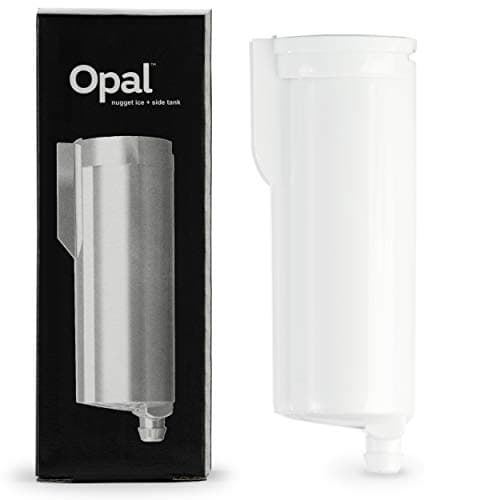 GE Profile Not published Scale is the main degradation path and a filter slows it. | Best life extender | |
| 2 | 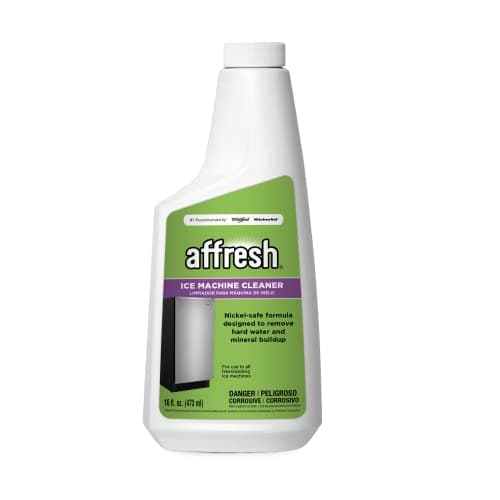 Affresh Not published Biofilm is the other one, and it is entirely preventable. | Best maintenance habit |
#ad We earn a commission on purchases made through this link. How this is funded. Prices last checked October 18, 2026.
What actually degrades, in order
- Scale on the freezing cylinder. This is first, and it is gradual rather than sudden. Scale insulates the surface that has to move heat, so the machine runs longer for less ice. Most people experience this as "it got slow" rather than as a fault, and many replace the machine over it. It is reversible with an acid descale.
- Biofilm in the water path. Second, and entirely preventable. Ice tastes wrong, then the reservoir looks wrong, then flow restricts. Reversible with cleaning, and prevented outright by emptying the machine when it is idle.
- The pump. Third, and usually a consequence of the first two rather than an independent event. A pump pushing water through restricted tubing works harder than one that is not.
- The auger assembly. The expensive part, and the one people worry about first. A squeal is usually the auger under load from scale rather than a failing motor, so descale before concluding anything. See why it squeals.
- The refrigeration system. Last, rarest, and effectively terminal on a countertop appliance. If a sealed system fails, the economics of repair almost never work.
The useful pattern here: the first three are maintenance, not failures. Which means the honest answer to "how long will it last" is largely "how well will you look after it", and that is genuinely within your control rather than a platitude.
What you control
| Habit | What it prevents | Effort |
|---|---|---|
| Empty when idle | Biofilm, the number one water-path problem | 30 seconds |
| Descale on your water's schedule | Scale, the number one performance loss | 20 minutes, quarterly |
| Filter the water going in | Slows scale materially in hard water | One purchase |
| Respect the clearance | Overworked compressor and fan | Free, at setup |
| Keep the room in range | The original Opal manual specifies 55F to 90F | Free |
| Clean monthly | Restricted flow and bad taste | 20 minutes |
What you choose at purchase
One thing at purchase genuinely affects longevity, and it is not build quality, which you cannot assess from a listing anyway. It is whether the manufacturer publishes procedures and supplies parts.
- GE publishes cleaning procedures, error-code meanings and a normal-sounds page for the Opal line, and filters and its own descaling powder are widely stocked.
- KBice publishes a service manual as well as a user manual, which is unusual at its price point and is a genuine signal.
- Frigidaire and NewAir publish specification tables and cleaning sections.
- Euhomy and ecozy publish neither specification tables nor, as far as we can find, service documentation. A failure on one of those machines is likely the end of it.
That is the strongest longevity argument for spending more in this category, and it is more defensible than any claim about build quality. It is also part of why these machines cost what they do.
When to stop repairing
Descale first, always: a slow machine is a scaled machine far more often than it is a dying one. Clean second. If production is still badly down after both, and the machine has no published service procedure or available parts, you are looking at replacement.
If it stopped entirely, work through the not-making-ice checklist before spending anything. A surprising share of dead machines are a missing baffle, a blocked outlet or an ambient temperature problem.
The picks in full
1. Best life extender
GE Profile Opal Ice Maker Water Filter
The consumable that reduces how often you have to descale, which is the maintenance job everyone puts off.
- Rated output
- Not published
- Bin capacity
- Not published
- Electrical
- Not published
- Ceiling at 4 hrs/day, $0.18/kWh
- Not published
#ad We earn a commission on purchases made through this link. How this is funded. Prices last checked October 18, 2026.
The FirstBuild Opal manual includes a water filter section, so a filter is part of the intended maintenance routine on this machine rather than an accessory bolted on afterwards.
What a filter does here is reduce the mineral load reaching the freezing cylinder. That is the load that becomes scale, and scale is the single most common cause of a nugget machine slowing down.
It does not eliminate descaling. It changes how often you need to do it, which in hard-water areas is the difference between a quarterly job and a monthly one.
Skip this if
Your water is soft, or you already fill the machine with filtered or distilled water. A filter on top of already-filtered water is a purchase without a job.
2. Best maintenance habit
Affresh Ice Machine Cleaner
A widely stocked general-purpose ice machine cleaner for owners of machines whose manufacturer sells nothing.
- Rated output
- Not published
- Bin capacity
- Not published
- Electrical
- Not published
- Ceiling at 4 hrs/day, $0.18/kWh
- Not published
#ad We earn a commission on purchases made through this link. How this is funded. Prices last checked October 18, 2026.
Most nugget machines are sold by brands that publish no cleaning product of their own, which is exactly the gap a general-purpose cleaner fills.
Always check your own manual before using any third-party product. Some manufacturers void warranty cover for cleaners they have not specified, and the manual is the only place that will tell you.
As with every cleaning product here, we have not used it and we are not going to describe how well it works. What we can say is what the category is for.
Skip this if
Your machine's manufacturer publishes a cleaning procedure that names a specific product. Follow that instead, particularly while the machine is under warranty.
Questions people actually ask
How long does a nugget ice maker last?
No manufacturer in this category publishes a lifespan figure, and no specification table we read includes a warranty term either. We have not owned one long enough to tell you from experience, and we are not going to repeat a number from somewhere else as if we knew. What we can say is what fails and why.
What usually fails first on a nugget ice maker?
By the pattern of what owners report and what the mechanism suggests, water-path problems come first: scale on the freezing cylinder reducing output, biofilm in the reservoir, and pumps struggling with either. Outright compressor or auger-motor failure is what people fear, and it is not what usually happens.
Is it worth repairing a nugget ice maker?
It depends on whether the manufacturer publishes a service procedure and sells parts. GE publishes procedures and error codes for the Opal line and KBice publishes a service manual, which makes repair a realistic option. For machines whose makers publish neither, a failure is usually the end of the machine.
Does running a nugget ice maker constantly shorten its life?
It runs the compressor, auger and pump more hours, so in a wear sense yes. The bigger effect is indirect: a machine left on continuously cycles all day replacing melted ice, which means more hours of water moving through the system and more opportunity for scale to build.
Sources
- GE Profile Opal 2.0 Owner's Manual 49-9000029 Rev. 6, p.17 (no warranty term in the spec table) (read 2026-09-02)
- Frigidaire EFIC255 Use & Care Manual, p.12 (no warranty term in the spec table) (read 2026-09-02)
- NewAir NIM030SS00 Owner's Manual, p.5 (no warranty term in the spec table) (read 2026-09-02)
Read next
- How to Descale a Nugget Ice Maker
Different chemistry from cleaning, and usually the fix for a machine making ice slowly.
- How to Clean a Nugget Ice Maker
A cross-brand cleaning procedure, and the cleaning-versus-descaling distinction nobody draws.
- Nugget Ice Maker Not Making Ice
Ordered fault finding, starting with the four causes the manufacturers list themselves.
- Why Is My Nugget Ice Maker Squealing?
Usually scale, not a dying motor. The normal noises, and the ones that mean something.
- Why Are Nugget Ice Makers So Expensive?
One component explains the price gap: a motor-driven auger inside a refrigerated cylinder.
- What Water to Use in a Nugget Ice Maker
Tap, filtered or distilled: what each does to scale, taste and maintenance.
- How to Drain and Store a Nugget Ice Maker
Drain, dry, stow upright, and the manufacturer-stated wait before you switch it on again.
- Which Ice Maker Brand Should You Buy?
Brands ranked on what they publish, who supports them, and what you can actually buy today.