Guides
Why Are Nugget Ice Makers So Expensive?
One component explains almost all of it, and it is not the compressor. Here is the mechanical answer, and where the price is genuinely justified.
Disclosure: we earn a commission if you buy through our links. It never affects which machines we recommend or how we rank them, and we take no sponsored placements. Read the full disclosure.
Quick picks
| # | Machine | Best for | Price |
|---|---|---|---|
| 1 | 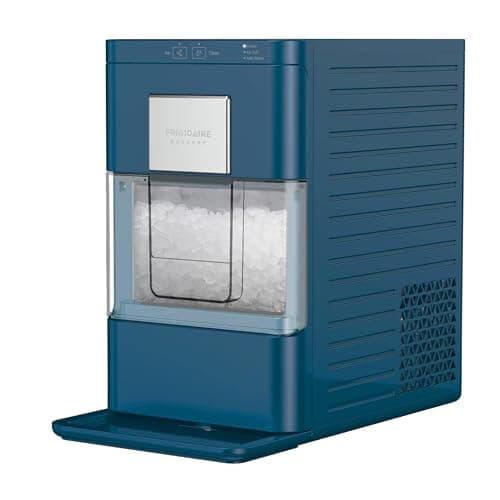 Frigidaire EFIC255 The cheapest documented route to chewable ice, at 185 W. | Best value nugget | |
| 2 | 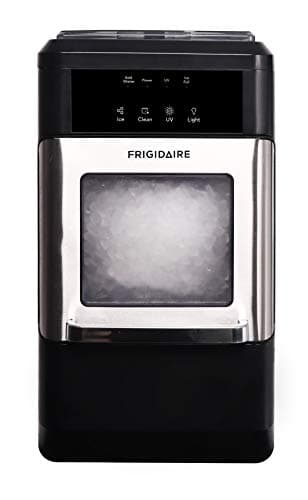 Frigidaire EFIC235 Same rated output, far cheaper, and the ice is not chewable. | The cheap alternative |
#ad We earn a commission on purchases made through this link. How this is funded. Prices last checked October 18, 2026.
The two mechanisms, cost by cost
| Component | Bullet machine | Nugget machine |
|---|---|---|
| Compressor and refrigeration | Yes | Yes |
| Water pump | Yes | Yes |
| Condenser fan | Yes | Yes |
| Freezing surface | Metal prongs in a tray | Chilled vertical cylinder |
| Harvest method | Briefly warm the prongs; ice drops off | Motor-driven auger scrapes the wall |
| Compression stage | None | Die that forms the pellet |
| Moving parts inside the cold zone | None | The auger, turning constantly |
| Sealing and bearings under refrigeration | Minimal | Required, and they are the wear items |
The last two rows are the whole story. A rotating shaft inside a refrigerated, permanently wet cylinder needs bearings, seals and a gearmotor that can push compacted ice through a die. Those parts are expensive to make, expensive to make reliable, and they are what a bullet machine simply does not have.
What is not the answer
- Not the compressor. Published figures put these machines within a few tens of watts of each other. Frigidaire's nugget machine draws 185 W and its bullet machine draws 200 W, both rated at 20 kg a day. Comparable refrigeration, very different prices.
- Not brand markup alone. Budget brands sell nugget machines too, and they still cost more than budget bullet machines from the same kind of manufacturer. The floor is set by the mechanism.
- Not output. Both Frigidaire machines are rated at exactly 20 kg a day. You are not buying more ice.
- Not efficiency. On those same figures the nugget machine is the marginally more efficient of the two.
So what are you paying for
Texture. That is it, and it is a perfectly good reason. Nugget ice is soft enough to chew because it is compressed flakes with air trapped between them, and no amount of engineering will make a bullet machine produce it. If chewable ice is what you want, the auger is the price of entry.
What you should not believe is that the extra money buys speed, efficiency or capacity. On the published data it buys none of those. The comparison is on nugget ice versus bullet ice.
What the budget end actually saves
Cheap nugget machines exist and they make real nugget ice by the same auger mechanism. What comes off the price, in our research, is documentation: Euhomy, ecozy and KBice publish no specification tables at all, while GE, Frigidaire and NewAir do.
Whether that is a saving or a hidden cost depends on you. It is covered properly on the budget roundup.
The cost after the purchase
Two things follow from the auger being the expensive part.
First, maintenance matters more than build quality here. The failures people report are overwhelmingly water-related — scale on the freezing cylinder, biofilm in the reservoir, a pump struggling with either — and a squeal from the auger is usually a symptom of scale rather than a dying motor. See why it squeals.
Second, running costs are low relative to the purchase price: between about $3.67 and $7.78 a month on our figures. The machine is the expense, not the electricity, and the full arithmetic is here.
The picks in full
1. Best value nugget
Frigidaire Gallery Countertop Nugget Ice Maker
The only nugget machine here whose maker publishes an actual power consumption instead of a nameplate ceiling, and it is a low one.
- Rated output
- 44 lbs/day
- Bin capacity
- 3 lbs
- Electrical
- 185 W published
- Ceiling at 4 hrs/day, $0.18/kWh
- $4.00/month (from published watts)
#ad We earn a commission on purchases made through this link. How this is funded. Prices last checked October 18, 2026.
185 W published means the running-cost figure for this machine is not a derived ceiling — it is arithmetic on a number Frigidaire printed. That is the strongest cost data on the site.
It is rated at 20 kg a day, which is 44 lbs — higher than the Opal 2.0's 38. Both numbers are measured under ideal conditions the manual does not describe.
Ten inches wide and 16.5 tall makes it the narrowest full-size nugget machine in this set.
Skip this if
You need a manufacturer-published bin capacity. Frigidaire's specification table omits it, so the 3 lb figure on this page comes from a retail listing rather than the manual.
2. The cheap alternative
Frigidaire Countertop Bullet Ice Maker
A bullet-ice machine, not a nugget one — and the fastest route to a full bin if the ice shape does not matter to you.
- Rated output
- 44 lbs/day
- Bin capacity
- Not published
- Electrical
- 200 W published
- Ceiling at 4 hrs/day, $0.18/kWh
- $4.32/month (from published watts)
#ad We earn a commission on purchases made through this link. How this is funded. Prices last checked October 18, 2026.
44 lbs a day at 200 W published. Bullet machines make ice by freezing water onto chilled prongs, which is a far simpler and faster process than extruding nugget ice.
This is the machine to buy if you want a lot of ice for a cooler, and the machine to avoid if you want ice you can chew.
At 19 inches tall it does not fit under a standard 18-inch upper cabinet gap. Measure first.
Skip this if
You came here for chewable ice. Bullet ice is hollow, hard cylinders. It is not nugget ice and no setting will make it nugget ice.
Questions people actually ask
Why are nugget ice makers so expensive?
Because of the auger. A bullet ice machine freezes water onto chilled prongs and drops it, which needs no moving parts inside the cold zone. A nugget machine has to freeze water into flakes on a chilled cylinder wall, scrape those flakes off with a motor-driven auger, and force them through a die to compress them into pellets. That auger assembly runs continuously inside a refrigerated cylinder, and it is the reason for most of the price difference.
Is a nugget ice maker worth the extra money over a bullet one?
Only if you want chewable ice. That is the entire difference in the product. On published figures the two machine types are comparable on output and running cost: Frigidaire's nugget EFIC255 and bullet EFIC235 are both rated 20 kg a day, at 185 W and 200 W respectively. You are paying for the ice texture, not for performance.
Will nugget ice makers get cheaper?
Budget brands have already brought entry prices down substantially. What has not come down with them is documentation: the cheapest machines publish no specifications at all, so the saving comes partly from buying something you cannot check. Whether that counts as cheaper is a judgment call.
What breaks on a nugget ice maker?
The failure modes owners report most are water-related rather than mechanical: scale on the freezing cylinder slowing production, biofilm in the reservoir, and pumps struggling with either. That is why maintenance matters more than build quality in this category, and why a squeal usually means a descale rather than a repair.
Sources
- Frigidaire EFIC255 Use & Care Manual, p.12 (nugget: 185 W, 20 kg/24h) (read 2026-09-02)
- Frigidaire EFIC235 User Manual, p.9 (bullet: 200 W, 20 kg/24h) (read 2026-09-02)
- GE Profile Opal 2.0 Owner's Manual 49-9000029 Rev. 6, p.17 (read 2026-09-02)
Read next
- Nugget Ice vs Bullet Ice
Two mechanisms, two products. What actually separates chewable ice from hollow cylinders.
- Best Budget Nugget Ice Makers
The cheap end of the category, ranked by what their makers are willing to publish.
- Are Countertop Ice Makers Worth It?
When one earns its place and when it does not, with the cost computed rather than asserted.
- How Long Do Nugget Ice Makers Last?
No manufacturer publishes a lifespan. What actually fails, and what you control.
- Why Is My Nugget Ice Maker Squealing?
Usually scale, not a dying motor. The normal noises, and the ones that mean something.
- The Best Nugget Ice Makers
Six machines ranked on published specs, each with a sourced monthly running-cost ceiling.