Troubleshooting
Why Is My Nugget Ice Maker Squealing?
Usually the auger working against scale rather than a dying motor. Here are the four noises GE documents as normal, and the ones that are telling you something.
Disclosure: we earn a commission if you buy through our links. It never affects which machines we recommend or how we rank them, and we take no sponsored placements. Read the full disclosure.
Quick picks
| # | Machine | Best for | Price |
|---|---|---|---|
| 1 | 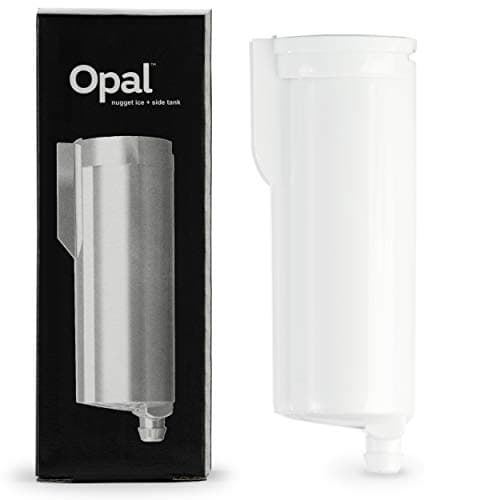 GE Profile Not published Less mineral load reaching the cylinder means less scale for the auger to fight. | Prevents the cause | |
| 2 | 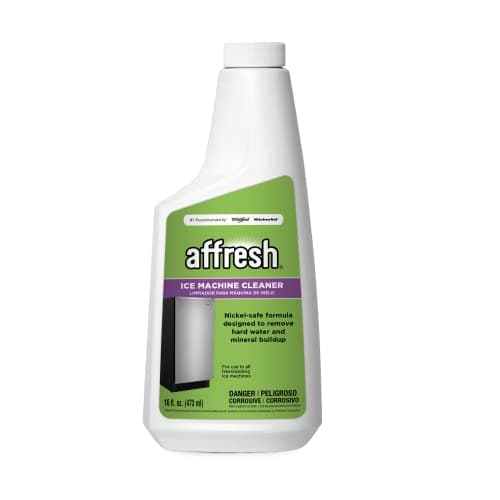 Affresh Not published Restricted flow makes a pump work harder and noisier. | For the other half |
#ad We earn a commission on purchases made through this link. How this is funded. Prices last checked October 19, 2026.
The four noises GE says are normal
The original Opal manual has a whole normal sounds page, which is more documentation than any other manufacturer in this category provides and applies to every auger-driven machine, not just GE's.
- Whir. The condenser fan spinning. Constant background, present whenever the machine runs.
- Buzz. The water pump. GE notes it may be "dry and slightly noisy" when it first turns on, and that once it fills with water "the noise reduces significantly". A buzz at startup that settles is the pump priming.
- Rattle. Refrigerant flowing through the cooling system. GE says these noises "should reduce significantly once the refrigerant system has stabilized".
- Gurgle. Also refrigerant and water movement.
Plus one GE does not name: the auger scraping and pellets dropping into a hard plastic bin. That is intermittent, mechanical, and inherent to how nugget ice is made.
The noises that mean something
| Noise | Usual cause | First action |
|---|---|---|
| High continuous squeal | Auger under load, usually from scale | Descale with a full dwell time |
| Squeal that started with slower ice | Definitely scale | Descale, then reassess |
| Grinding or crunching | Something solid in the auger path | Stop, unplug, empty and inspect before running again |
| Loud buzz that never settles | Pump running dry or starved by a restriction | Check water level, then clean the water path |
| Fan noise that rises and stays high | Restricted airflow or a hot room | Restore the 3 to 4 inches of clearance |
| Knocking or a rhythmic thump | Machine not level, or an obstruction | Level it, then inspect |
Why scale makes it squeal
The auger runs against the inside wall of the freezing cylinder, scraping off a thin layer of ice. That clearance is small by design, because it has to be to scrape effectively.
Mineral scale deposits on the same wall. It roughens the surface and reduces the clearance, so the auger is now pushing against something harder and tighter than the ice it was designed to scrape. The noise is the mechanical consequence, and the reduced ice production you probably also noticed is the thermal one.
Both symptoms have one cause and one fix: descale the machine.
What to do, in order
1. Rule out the pump
Check the water level. A pump running dry buzzes loudly, and GE documents that it quietens once it fills. If the noise stops when you top up the reservoir, you are done.
2. Rule out something in the auger
Unplug, empty the bin, and look. If something solid has found its way in, running the machine will make it worse.
3. Descale properly
Full dwell time, not a quick rinse. A rushed descale is the most common reason people conclude descaling did not fix a squeal.
4. Run a cycle and listen
If the squeal is gone or much reduced, that was it. Shorten your descaling interval so it does not come back.
5. If it persists after a proper descale
That is a mechanical fault in the auger assembly or its motor. Whether it is worth repairing depends on whether your manufacturer publishes a service procedure and sells parts.
The decibel question we cannot answer
People searching about noise usually want a number, and there is not one to give. Not a single manufacturer in this category publishes a decibel rating, and we are not going to take one from another site whose measurement method we cannot check.
What we can offer instead is what each noise is and which of them is a fault, which is on this page, plus the placement advice on the quietest nugget ice maker page.
The picks in full
1. Prevents the cause
GE Profile Opal Ice Maker Water Filter
The consumable that reduces how often you have to descale, which is the maintenance job everyone puts off.
- Rated output
- Not published
- Bin capacity
- Not published
- Electrical
- Not published
- Ceiling at 4 hrs/day, $0.18/kWh
- Not published
#ad We earn a commission on purchases made through this link. How this is funded. Prices last checked October 19, 2026.
The FirstBuild Opal manual includes a water filter section, so a filter is part of the intended maintenance routine on this machine rather than an accessory bolted on afterwards.
What a filter does here is reduce the mineral load reaching the freezing cylinder. That is the load that becomes scale, and scale is the single most common cause of a nugget machine slowing down.
It does not eliminate descaling. It changes how often you need to do it, which in hard-water areas is the difference between a quarterly job and a monthly one.
Skip this if
Your water is soft, or you already fill the machine with filtered or distilled water. A filter on top of already-filtered water is a purchase without a job.
2. For the other half
Affresh Ice Machine Cleaner
A widely stocked general-purpose ice machine cleaner for owners of machines whose manufacturer sells nothing.
- Rated output
- Not published
- Bin capacity
- Not published
- Electrical
- Not published
- Ceiling at 4 hrs/day, $0.18/kWh
- Not published
#ad We earn a commission on purchases made through this link. How this is funded. Prices last checked October 19, 2026.
Most nugget machines are sold by brands that publish no cleaning product of their own, which is exactly the gap a general-purpose cleaner fills.
Always check your own manual before using any third-party product. Some manufacturers void warranty cover for cleaners they have not specified, and the manual is the only place that will tell you.
As with every cleaning product here, we have not used it and we are not going to describe how well it works. What we can say is what the category is for.
Skip this if
Your machine's manufacturer publishes a cleaning procedure that names a specific product. Follow that instead, particularly while the machine is under warranty.
Questions people actually ask
Why is my nugget ice maker squealing?
Most often the auger under load. The auger scrapes ice off the inside of a chilled cylinder, and when scale roughens or narrows that surface it has to push harder, which is where the squeal comes from. Descaling fixes it far more often than a repair does.
What noises are normal on a nugget ice maker?
GE's own manual documents four: a whir from the condenser fan, a buzz from the water pump which is loudest when the pump is dry and reduces significantly once it fills with water, a rattle from refrigerant flowing through the cooling system which settles as the system stabilizes, and a gurgle. Plus the mechanical sound of pellets dropping into a plastic bin, which is inherent to the design.
How loud is a nugget ice maker in decibels?
No manufacturer in this category publishes a tested decibel rating. We read the specification tables for the GE Opal 2.0, the Opal 2.0 Ultra, the original Opal, the Frigidaire EFIC255 and both NewAir nugget machines, and not one includes a noise figure. Anyone quoting a dB number for these machines either measured it themselves or is repeating someone who did.
Should I stop using a squealing ice maker?
Not necessarily, but do not ignore it. Descale the machine and see whether the noise goes. A squeal that persists after a proper descale, or one accompanied by grinding, is a mechanical issue worth stopping for rather than running through.
Sources
- FirstBuild Opal Use & Care manual, p.11 (normal sounds) (read 2026-09-02)
- Frigidaire EFIC255 Use & Care Manual (troubleshooting guide and FAQs) (read 2026-09-02)
- GE Profile Opal 2.0 Owner's Manual 49-9000029 Rev. 6, p.17 (read 2026-09-02)
Read next
- How to Descale a Nugget Ice Maker
Different chemistry from cleaning, and usually the fix for a machine making ice slowly.
- The Quietest Nugget Ice Maker
One published dB ceiling, no tested ratings anywhere. What to do about that, and what actually makes the noise.
- Nugget Ice Maker Not Making Ice
Ordered fault finding, starting with the four causes the manufacturers list themselves.
- How to Clean a Nugget Ice Maker
A cross-brand cleaning procedure, and the cleaning-versus-descaling distinction nobody draws.
- How Long Do Nugget Ice Makers Last?
No manufacturer publishes a lifespan. What actually fails, and what you control.
- Nugget Ice Coming Out Small, Wet or Slushy
Wrong-looking pellets mean a freezing problem. The causes in order, free ones first.