Nugget Ice Makers
The Quietest Nugget Ice Maker
One maker publishes a 42 dB ceiling with no test method behind it, and nobody publishes a tested rating. Rather than invent one, here is what actually makes these machines noisy and how to buy around it.
Disclosure: we earn a commission if you buy through our links. It never affects which machines we recommend or how we rank them, and we take no sponsored placements. Read the full disclosure.
Quick picks
| # | Machine | Best for | Price |
|---|---|---|---|
| 1 | 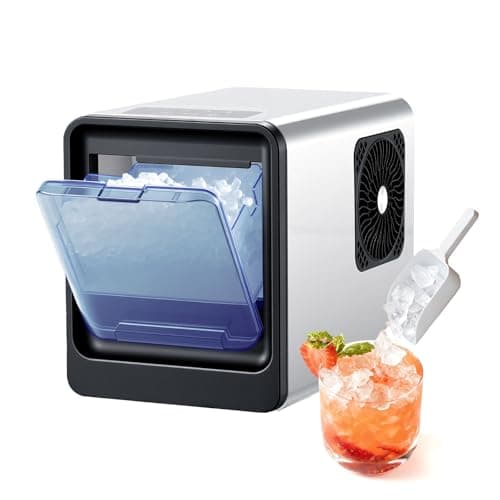 VEVOR HZB-15N/S A 42 dB ceiling in a specification block - unverifiable, but the only number in the category. | The only published dB figure | |
| 2 | 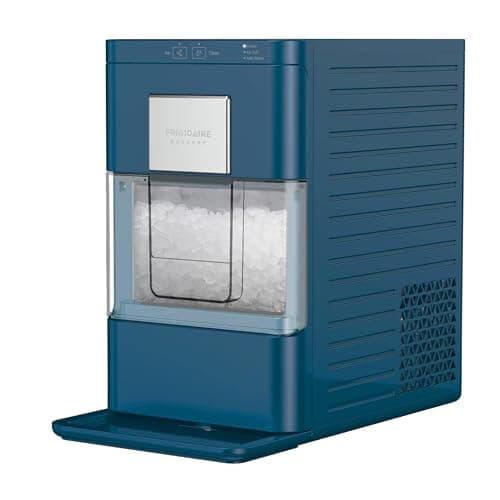 Frigidaire EFIC255 185 W for a 44 lb rating means less compressor and fan work per pound than the alternatives. | Lowest published power at full output |
#ad We earn a commission on purchases made through this link. How this is funded. Prices last checked October 19, 2026.
That is an unsatisfying answer to a real question, so the rest of this page is the useful version: what actually makes a nugget machine noisy, which of those noises are faults and which are the machine working correctly, and what you can change.
What is actually published now
For most of this site's life the answer here was "nothing". That has changed by one machine, and the change is worth stating precisely because it is smaller than it looks.
| Machine | Figure | Where it appears | Test method stated? |
|---|---|---|---|
| VEVOR HZB-15N/S | <=42 dB | Product-page specification block | No |
| Silonn SLIM21 (bullet) | 35 dB | Product-page marketing copy | No |
| Silonn SLIM17B (nugget) | 47 dB | Product-page marketing copy | No |
| GoveeLife H8120 | 40 dB average | Product-page marketing copy | No |
| Every GE, Frigidaire and NewAir machine | Not published | — | — |
So the honest position has shifted from "nobody publishes anything" to "one maker publishes a ceiling you cannot verify". It is recorded on the VEVOR review and it still cannot rank machines, because a number without a method is not a measurement.
The four noises, named
GE is the only manufacturer here that documents this, and the first-generation Opal manual has an entire normal sounds page. It names four, and they apply to every auger-driven nugget machine, not just GE's.
- Whir. The condenser fan. Runs whenever the machine is making ice and is the constant background note.
- Buzz. The water pump. GE notes it is "slightly noisy" when dry and that the noise "reduces significantly" once it fills with water. If your machine buzzes at startup and then settles, that is the pump priming.
- Rattle. Refrigerant moving through the cooling system. GE says these reduce significantly once the refrigerant system stabilizes.
- The auger. Not in GE's list under that name, but it is the sound people mean when they say a nugget machine is loud: ice being scraped off the freezing cylinder and pellets dropping into a hard plastic bin. Intermittent, mechanical, and unavoidable in a machine that makes ice this way.
What you can legitimately infer
Without a dB rating, the only sound-related signal in the published data is how hard a machine has to work. That is a weak proxy and we will not pretend otherwise, but it is a real one: a machine that draws less power and produces less ice runs its compressor and fan less often.
| Machine | Rated output | Bin | Electrical | Max $/mo |
|---|---|---|---|---|
| NewAir NIM030SS00 | 30 lbs/day [src] | Not published | 170 W [src] | $3.67(published W) |
| Frigidaire EFIC255 | 44 lbs/day [src] | 3 lbs [src] | 185 W [src] | $4.00(published W) |
| NewAir NIM044BS00 | 44 lbs/day [src] | 3.3 lbs [src] | 2.7 A [src] | $6.71(nameplate) |
| GE Profile XPIO13SCSS | 38 lbs/day [src] | 3 lbs [src] | 3 A [src] | $7.78(nameplate) |
Read that table as what it is. It says the NIM030SS00 does less work per hour than the Opal 2.0. It does not say the NIM030SS00 is quieter, because auger and bin design affect the noise you actually notice more than compressor duty does, and nobody publishes anything about auger or bin design either.
Noises that are not normal
There is one sound that is genuinely diagnostic, and it is the one people search for most: a squeal. A high, continuous squeal from a nugget machine is usually the auger under load, and it usually means scale or a jam rather than a dying motor. We have a full page on it: why a nugget ice maker squeals.
Grinding, knocking, and a fan noise that rises and does not fall are the other three worth paying attention to. Everything else on the list above is the machine doing its job.
Placement does more than model choice
- Give it its clearance. The Opal 2.0 wants 3 inches, the 2.0 Ultra wants 4, the original Opal wants 3 with 0 at the top. A blocked hot-air outlet makes the fan run longer and the compressor work harder. Both of those are noise.
- Do not put it against a hard corner. Two reflective surfaces at right angles will make any appliance sound louder than it is.
- Keep the reservoir full. A pump running low on water is louder than a pump running in water, per GE's own note.
- Run it on a schedule, not continuously. These machines refill the bin as ice melts, so left on they cycle all day. If noise matters, run it in the hour before you want ice.
What we would actually do
Buy for documentation and running cost, place it well, and accept that any auger-driven nugget machine makes an intermittent mechanical noise when it drops ice. If silence in that room is genuinely non-negotiable, a nugget machine is the wrong appliance category, and a bag of ice from the store is the honest alternative.
The picks in full
1. The only published dB figure
VEVOR Countertop Nugget Ice Maker
The only machine on this site whose maker puts a decibel figure in a specification block, on a body that also turns up badged as a Cowsar and an AGLucky.
- Rated output
- 33 lbs/day
- Bin capacity
- 1.5 lbs
- Electrical
- 160 W published
- Ceiling at 4 hrs/day, $0.18/kWh
- $3.46/month (from published watts)
#ad We earn a commission on purchases made through this link. How this is funded. Prices last checked October 19, 2026.
VEVOR's specification block is unusually well labeled for this price: it names the model number, calls the daily rating a maximum, gives the storage capacity in pounds and kilograms, and states the housing steel grade.
It publishes no voltage, no current, no refrigerant and no operating temperature range, so there is no nameplate here and no documented advice about a cold or hot room.
The 42 dB figure is a ceiling with no test method attached. It is recorded because it appears in a specification block rather than in marketing copy, and it should not be read as a measurement.
Skip this if
You want an electrical rating you can size a circuit from, or a bin that serves more than three glasses. VEVOR publishes a wattage but no voltage or current, and the storage is 1.5 lbs.
2. Lowest published power at full output
Frigidaire Gallery Countertop Nugget Ice Maker
The only nugget machine here whose maker publishes an actual power consumption instead of a nameplate ceiling, and it is a low one.
- Rated output
- 44 lbs/day
- Bin capacity
- 3 lbs
- Electrical
- 185 W published
- Ceiling at 4 hrs/day, $0.18/kWh
- $4.00/month (from published watts)
#ad We earn a commission on purchases made through this link. How this is funded. Prices last checked October 19, 2026.
185 W published means the running-cost figure for this machine is not a derived ceiling — it is arithmetic on a number Frigidaire printed. That is the strongest cost data on the site.
It is rated at 20 kg a day, which is 44 lbs — higher than the Opal 2.0's 38. Both numbers are measured under ideal conditions the manual does not describe.
Ten inches wide and 16.5 tall makes it the narrowest full-size nugget machine in this set.
Skip this if
You need a manufacturer-published bin capacity. Frigidaire's specification table omits it, so the 3 lb figure on this page comes from a retail listing rather than the manual.
Questions people actually ask
What is the quietest nugget ice maker?
Nobody can tell you honestly, because no manufacturer in this category publishes a tested decibel rating. GE, Frigidaire and NewAir publish nothing at all. One budget brand, VEVOR, prints 'Noise Level: <=42dB' in its product-page specification block, which is a ceiling with no test standard, distance or operating condition attached. Any site quoting a dB figure for a nugget ice maker is either measuring it themselves, in which case they should say how, or repeating a number from somewhere else. We publish Not published rather than pick one.
Why is my nugget ice maker so loud?
Four separate sources, and GE's own manual names them: the condenser fan spinning, the water pump (loudest when dry, quieter once primed), refrigerant flowing through the cooling system, and the auger scraping ice off the cylinder wall and dropping pellets into a plastic bin. That last one is the noise people notice, and it is intermittent by design rather than a fault.
Do nugget ice makers get quieter over time?
The pump gets quieter within the first minutes of each run as it fills with water, and the refrigerant rattle typically settles once the system stabilizes. GE documents both of these as normal. A machine that gets louder over time, particularly a squeal or a grinding sound, is telling you something different.
Where should I put a nugget ice maker so it is less annoying?
Away from hard reflective surfaces where possible, and never in a closed alcove: these machines need 3 inches of clearance (4 inches for the Opal 2.0 Ultra) and blocking the hot air outlet makes the fan work harder and longer. A machine that is short of ventilation runs more, and running more is the same as being noisier.
Sources
- GE Profile Opal 2.0 Owner's Manual 49-9000029 Rev. 6, p.17 (product specifications) (read 2026-09-02)
- FirstBuild Opal Use & Care manual, Ver. 2/13/2017, p.12 (product specifications) (read 2026-09-02)
- GE Appliances Opal support specification page (read 2026-09-02)
- Frigidaire EFIC255 Use & Care Manual, p.12 (product specifications) (read 2026-09-02)
- NewAir NIM044BS00 Owner's Manual, p.5 (specifications) (read 2026-09-02)
- NewAir NIM030SS00 Owner's Manual, p.5 (specifications) (read 2026-09-02)
- EIA Electric Power Monthly, Table 5.6.A, June 2026 (US residential average price) (read 2026-09-02)
- FirstBuild Opal Use & Care manual, p.11 (normal sounds) (read 2026-09-02)
Read next
- The Best Nugget Ice Makers
Six machines ranked on published specs, each with a sourced monthly running-cost ceiling.
- Why Is My Nugget Ice Maker Squealing?
Usually scale, not a dying motor. The normal noises, and the ones that mean something.
- Electrical Requirements for a Nugget Ice Maker
Published current ratings, dedicated circuits, and what a nameplate figure really means.
- What a Nugget Ice Maker Costs to Run
Per-model monthly costs with the wattage sourced, the duty cycle stated and the arithmetic shown.
- GE Profile Opal 2.0 (XPIO13SCSS)
3.0 A, 38 lbs a day, 1.6 lbs an hour. The best-documented machine in the category.
- How Long Does a Nugget Ice Maker Take?
First ice and full bin times, built from the one published hourly rate in the category.