Guides
Which Ice Maker Brand Should You Buy?
The machines are more alike than the badges suggest. What genuinely separates these brands is how much they publish, who answers the phone, and whether you can still buy the thing at all.
Disclosure: we earn a commission if you buy through our links. It never affects which machines we recommend or how we rank them, and we take no sponsored placements. Read the full disclosure.
Quick picks
| # | Machine | Best for | Price |
|---|---|---|---|
| 1 | 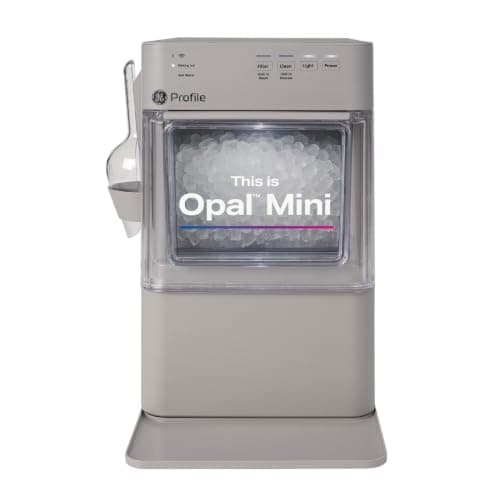 GE Profile P4NM20 series GE publishes a full specification table, a clearance figure and an operating range. | Best documented brand | |
| 2 | 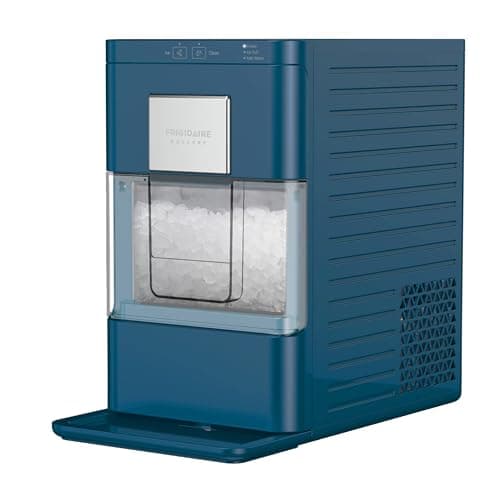 Frigidaire EFIC255 Frigidaire prints an actual wattage where GE prints only a nameplate. | Best published running cost | |
| 3 | 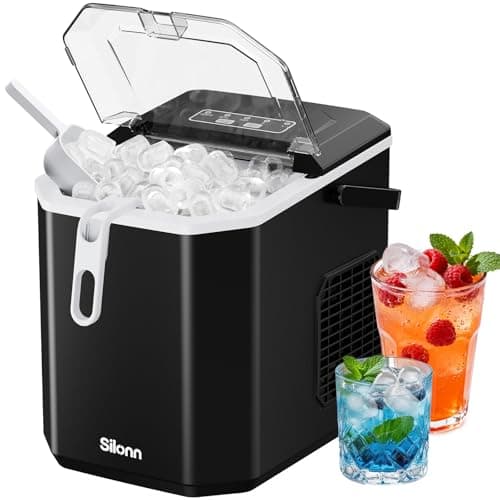 Silonn SLIM21 A full specification table from a cheap brand, including a documented weekly clean cycle. | Best budget brand |
#ad We earn a commission on purchases made through this link. How this is funded. Prices last checked October 18, 2026.
Brand is a strange thing to shop on in this category, because the mechanism barely varies. A nugget machine freezes water into flakes on a chilled cylinder, scrapes them off with an auger and compresses them into pellets, whether the badge says GE or a name you have never heard of. So the badge is not buying you a different kind of ice.
What it is buying you is information, a support path and the odds the machine still exists in two years. Those are judgeable, and this page judges them from published documents rather than impressions.
How the brands were judged
- What they publish. A specification table with electrical data, bin capacity and dimensions is the difference between buying and gambling.
- Whether the cost figure is real. A published wattage gives you a cost close to your bill. A nameplate current gives you a ceiling you will never reach.
- Whether maintenance is documented. Cycles, intervals and a named cleaning product, versus a cleaning chapter that says wipe it.
- Who handles a warranty claim. On licensed brands this is not the company on the front of the box.
- Whether you can buy it today. The newest criterion, and the one that has moved most.
Explicitly not a criterion: reliability rankings or star ratings. We have not used these machines, nobody publishes failure data, and borrowing somebody else's review scores would be pretending to knowledge this site does not have.
The scorecard
| Brand | Specification table | Electrical figure | Maintenance documented | Connectivity |
|---|---|---|---|---|
| GE Profile | Yes, the fullest here — current, bin, clearance, weight, and an operating range on some models | Nameplate current only, never a wattage | Yes. Named cycles, and the only descaling interval printed in a manual | Yes, documented in the manuals |
| Frigidaire | Yes — voltage, power, output, refrigerant, dimensions | A real published wattage, the most useful figure any brand prints | Partly. A CLEAN cycle with a duration, but no interval | None published |
| Silonn | Yes for its bullet machine, barely anything for its nugget machine | A working-power maximum plus ice-making and harvesting currents | Yes. A 30-minute cycle and a stated weekly interval | None on the model covered here |
| GoveeLife | On the product page only — basket, tanks, daily rate, voltage, wattage, dimensions, weight | A 210 W wattage, without saying whether it is a running draw or a maximum | Two cycles and a 100-hour reminder, described on the product page | Yes: app, Alexa and Google Home, per the product page |
| Gevi | Yes — power, refrigerant and charge, weight, size, climate class, operating range | A rated 170 W alongside a 3.0 A nameplate, which almost nobody prints | A cleaning program, with no stated interval | None published |
| Kismile | None. The manual has no specifications section, and no listing names a model | Not published | Procedures only, no figures | None published |
| Igloo | Yes — voltage, watts, amps, refrigerant, output, cycle time, basket, reservoir, clearance and a room-temperature range | 120 W and 2 A, both printed | Cleaning by hand in this manual; a separate self-cleaning variant exists | None published |
| Cowsar | A four-line block on the product page: dimensions, capacity, wattage — but no model number | 136 W, the lowest published in the nugget field | A 15-minute cycle, described but not documented | None published |
| NewAir | Yes — power, refrigerant, weight, dimensions | Varies by model: a real wattage on one, a current rating on the other | Yes, and the only manual that specifies detergent in the cycle | None published |
| Euhomy, ecozy, KBice | None. Manuals exist and cover setup and cleaning, but carry no specification section | Not published | Procedures only, no figures | Advertised on some models, not documented |
GE Profile: buy it for the paperwork
GE documents its machines better than anyone else in this category and it is not close. The Opal manuals publish current, ice storage capacity, installation clearance and empty weight, and the newest model adds an operating environment of 55F to 90F. GE is also the only brand whose manuals document an app and a descaling interval, and the only one selling the descaler its own published procedure calls for. It no longer lists a cleaning kit of its own, so biofilm on an Opal means a cross-brand cleaner.
The honest cons. GE never publishes a wattage, only a nameplate current, so every GE running-cost figure on this site is an upper bound rather than a bill. Its newest machines have quietly stopped publishing an ice-making rate at all — neither the Opal 2.0 Ultra nor the Opal Mini prints one. And GE is the most expensive brand here by a wide margin.
GoveeLife: the connected alternative to GE
GoveeLife is the only brand besides GE that documents a connected nugget machine, the Smart Nugget Ice Maker Pro, and on paper it is the biggest machine in the category: a 3.5 lb basket and 60 lbs a day, two water tanks, Alexa and Google Home control and a three-year limited warranty.
The honest cons. All of it is on a product page. We could not read GoveeLife's manual, and the product page prints no current rating, clearance or operating range. The machine has only been listed on GoveeLife's own store since January 2026, so there is little ownership history to judge it on, and it sits at the top of the price range alongside the Opal 2.0 Ultra.
Igloo: the cheapest machine with real paperwork
Igloo is worth separating out because it breaks the assumption that cheap means undocumented. The manual for its 26 lb countertop machine publishes voltage, wattage, current, refrigerant, daily output, cycle time, basket capacity, reservoir volume, clearance and a recommended room temperature of 45F to 90F — the widest window in the category, from the cheapest machine on this site.
The honest cons. It makes bullet ice rather than nugget, so it is not competing with the Opals on the thing most people come here for. The manual publishes no dimensions or weight at all. And Igloo sells the same 26 lb claim across variants with different reservoirs, different wattages and even different refrigerants, so the spec sheet you read has to match the box you buy.
Gevi and Kismile: the two ends of the budget market
The cheap end of this category is usually written off as undocumented, and that is only half right. Gevi's V2.0 prints a rated power, a refrigerant charge, a climate class, a footprint and an operating range — more of the engineering template than GE fills in. Kismile, selling at similar money, publishes no specifications at all and no model number on any listing.
One more caution about reading a brand as a whole: Silonn documents its bullet machine properly and its nugget machine barely at all, so a brand's best manual is not a promise about its other models.
The honest cons. Gevi publishes no ice rate and no bin capacity, and asks for six inches of clearance on every side. Kismile leaves you unable to compute a running cost or measure a counter. Cowsar sits between them: it publishes the lowest wattage in the nugget field and the smallest body, and then contradicts its own daily rating across its listings. Which of those trades is worth making is argued on Kismile versus Gevi.
Frigidaire: buy it for the one number that matters
Frigidaire does the single most useful thing any manufacturer in this category does: it publishes an actual power consumption. The EFIC255 prints 185 W against a 20 kg per 24 hour rating, which means its roughly $4.00 a month is arithmetic on a real figure rather than a ceiling derived from a nameplate. Nobody else except NewAir and Gevi does this in a manual.
The honest cons. Frigidaire's specification tables omit bin capacity entirely, so the 3 lb figure this site carries for the EFIC255 comes from a retail listing and is flagged as the weakest source tier. Its clean cycle runs on plain water, which rinses rather than cleans. And there is a wrinkle on the badge, below.
The thing to know about Frigidaire
Frigidaire countertop ice makers are not made by the company whose name is on them. The manuals carry a trademark notice saying FRIGIDAIRE is used under license from Electrolux Home Products, Inc., and route warranty claims and service to Curtis International Ltd. of Mississauga, Ontario.
That is not a reason to avoid them — plenty of good appliances are built under license — but it is worth knowing before you buy, because it tells you who you will actually be dealing with if the machine fails, and it explains why Frigidaire's documentation style differs so much from Electrolux's major appliances.
Silonn: the budget brand that publishes
Most cheap brands in this category publish nothing. Silonn is the exception, and it is a genuine one: the SLIM21 manual prints voltage, working power, ice-making current, ice-harvesting current, rate, basket capacity, ice shape, material, weight and size in a single table — more fields than GE publishes for the Opal 2.0, on a machine that costs a fraction as much. It also documents a 30-minute clean cycle and tells you to run it weekly.
The honest cons. The model covered here makes bullet ice, not nugget, so it is a different product for a different drinker. It is small — a 1.32 lb basket and 26 lbs a day. And Silonn advertises a 35 dB noise figure with no test standard behind it, which this site records as marketing rather than a specification.
The brands that tell you nothing
Euhomy, ecozy and KBice publish manuals covering setup, operation and cleaning, and no specification section at all. No voltage, no current, no rated output, no bin capacity. Every numeric field for those machines on this site reads Not published, and no running cost is computed for them.
That is not an accusation. Those machines may be perfectly good, and they are much cheaper. It is a statement about what you can know in advance, which is nothing, and about what you can check a listing claim against, which is also nothing. The detail is on the budget nugget roundup.
NewAir: the best documentation you cannot currently buy
NewAir deserves a section because on paper it competes with anyone here. Its manuals publish a specification table, one of its machines prints a real rated power of 170 W rather than a nameplate, and its cleaning chapter is the only one in the entire category that tells the owner to put detergent through the cycle rather than plain water and then rinse it back out.
It also, on the model that supports it, documents connecting an external water supply with a quarter-inch tube, which almost nothing else in this category offers.
The problem is availability. Checking live listings in September 2026 found no NewAir nugget machine purchasable new. That is not a judgment on the machines, which are good, and it may change. It does mean the brand cannot be recommended to somebody shopping today, and it is the clearest illustration on this page of why availability now sits in the criteria list at all.
What brand does not buy you
Worth stating plainly, because a lot of category coverage implies otherwise. Three things do not meaningfully vary by badge.
- The ice. Every nugget machine here uses the same mechanism. A premium badge does not produce a superior pellet, and the mechanical explanation is on nugget ice versus bullet ice.
- Keeping the ice frozen. No bin in this category is refrigerated, at any price. Every machine melts and recirculates, which surprises people who spent more expecting otherwise. Detail on do countertop ice makers keep ice frozen.
- Escaping maintenance. Every machine here recirculates standing water and every one of them needs descaling and cleaning on a schedule. The expensive brands document the job better; none of them removes it.
The newest brand risk: can you buy it at all
This used to be a non-question and it is not any more. Checking every machine on this site against live listings in September 2026 found that several well-documented, well-regarded models had simply stopped being available new — including both NewAir nugget machines and the KBice self-dispensing unit, all of which were purchasable a fortnight earlier.
This site now verifies a listing before recommending anything, and shows a live price from a daily feed rather than a remembered number. The practical advice for a buyer: treat a brand's current catalog as part of the brand. A machine with excellent documentation you cannot buy is worth less than an average machine you can.
Choosing, in three steps
- Decide whether you need to know what you are buying. If yes, that narrows you to GE, Frigidaire, NewAir and Silonn immediately.
- Then pick the axis you care about: documentation and app support point to GE, an honest running-cost figure points to Frigidaire, and price with real specs points to Silonn.
- Then check it is actually in stock before you fall in love with a spec sheet. That is now the step that eliminates the most candidates.
If you would rather compare machines than brands, the ranked field is on the nugget roundup.
The picks in full
1. Best documented brand
GE Profile Opal Mini Nugget Ice Maker
The smallest and lowest-draw Opal GE has built, and the first one whose specification table omits the ice rate entirely.
- Rated output
- Not published
- Bin capacity
- 2.6 lbs
- Electrical
- 2 A at 120 V (240 VA nameplate)
- Ceiling at 4 hrs/day, $0.18/kWh
- $5.18/month (from the nameplate ceiling)
#ad We earn a commission on purchases made through this link. How this is funded. Prices last checked October 18, 2026.
2.0 A at 120 V is a 240 VA nameplate, against 360 VA for both full-size Opal 2.0 models. On the site's standard four-hours-a-day scenario that is roughly $5.18 a month as a ceiling rather than $7.78.
The 2.6 lb bin is smaller than the 3.0 lbs every full-size machine here publishes, which is about one tall glass less before the machine has to catch up.
GE's own specification table carries no ice-making rate for the Mini, exactly as it carries none for the Opal 2.0 Ultra. The 36 lbs a day in GE's press release and on the retail listing is a claim, not a published specification, and this site does not promote it to one.
Skip this if
You want a published ice-making rate. GE's specification table for the Mini prints no rate at all, so the 36 lbs a day on the box is a marketing figure with no spec-sheet backing.
2. Best published running cost
Frigidaire Gallery Countertop Nugget Ice Maker
The only nugget machine here whose maker publishes an actual power consumption instead of a nameplate ceiling, and it is a low one.
- Rated output
- 44 lbs/day
- Bin capacity
- 3 lbs
- Electrical
- 185 W published
- Ceiling at 4 hrs/day, $0.18/kWh
- $4.00/month (from published watts)
#ad We earn a commission on purchases made through this link. How this is funded. Prices last checked October 18, 2026.
185 W published means the running-cost figure for this machine is not a derived ceiling — it is arithmetic on a number Frigidaire printed. That is the strongest cost data on the site.
It is rated at 20 kg a day, which is 44 lbs — higher than the Opal 2.0's 38. Both numbers are measured under ideal conditions the manual does not describe.
Ten inches wide and 16.5 tall makes it the narrowest full-size nugget machine in this set.
Skip this if
You need a manufacturer-published bin capacity. Frigidaire's specification table omits it, so the 3 lb figure on this page comes from a retail listing rather than the manual.
3. Best budget brand
Silonn Countertop Bullet Ice Maker with Handle
The smallest machine on this site and one of only three budget-brand ones whose maker publishes a real specification table, including a documented 30-minute self-clean cycle.
- Rated output
- 26 lbs/day
- Bin capacity
- 1.32 lbs
- Electrical
- 1.5 A at 115 V (172.5 VA nameplate)
- Ceiling at 4 hrs/day, $0.18/kWh
- $3.73/month (from the nameplate ceiling)
#ad We earn a commission on purchases made through this link. How this is funded. Prices last checked October 18, 2026.
Silonn publishes what almost no other budget brand does: voltage, ice-making and ice-harvesting current, working power, rate, basket capacity, weight and size, all in one table.
The self-clean cycle is documented in the same manual — hold the ON/OFF/CLEAN button for five seconds, run 30 minutes on plain water, weekly. That is a longer cycle and a clearer frequency than either GE or Frigidaire commits to.
Silonn advertises a '35db low-noise design' on its product page. There is no test standard or measuring distance behind that number, so it is not recorded as a specification here and the noise field still reads Not published.
Skip this if
You want nugget ice or a bin that holds more than a couple of glasses. It makes hard bullet cubes and the basket is 1.32 lbs.
Questions people actually ask
What is the best ice maker brand?
For documentation, GE Profile: its Opal manuals publish current, bin capacity, installation clearance and, on some models, an operating temperature range. For running-cost transparency, Frigidaire, because it prints an actual power consumption in watts where GE prints only a nameplate current. For budget buyers, Silonn, Gevi and Igloo all publish a full specification table rather than nothing at all, and Igloo's covers the widest temperature range in the category.
Is GE Opal better than Frigidaire?
They are better at different things, and the ice is comparable. GE documents its machines more completely, and unlike Frigidaire it documents app connectivity and a descaling interval. Frigidaire publishes a real wattage, which makes its running-cost figure closer to what you will actually pay rather than an upper bound, and its machines usually cost less. Neither is a bad buy; they lose on different axes.
Are cheap ice maker brands worth buying?
It depends entirely on whether the brand publishes anything. Silonn publishes a full specification table including working power, ice-making current, basket capacity and dimensions, which makes it a real option rather than a gamble. Euhomy, ecozy and KBice publish manuals with no specification section at all, so every numeric field for them on this site reads Not published. That is not a claim that those machines are bad; it is a statement that you cannot know what you are buying before it arrives.
Who actually makes Frigidaire countertop ice makers?
Not Electrolux directly. Frigidaire's countertop ice maker manuals carry a trademark notice stating that FRIGIDAIRE is used under license from Electrolux Home Products, Inc., and route warranty and service to Curtis International Ltd. in Mississauga, Ontario. That is worth knowing before you buy, because it tells you who you will be dealing with if something fails.
Does brand affect how long an ice maker lasts?
Nobody publishes an expected lifespan in this category, so there is no sourced answer and this site will not invent one. What brand does affect is whether you can get parts, filters and a cleaning product matched to a published procedure, and whether there is a documented service path. On that narrower question GE is clearly ahead, and it is the closest thing to a lifespan argument the evidence supports.
Sources
- GoveeLife product page, Smart Nugget Ice Maker Pro (model H8120): Specs table and product description (read 2026-09-16)
- GE Profile Opal Mini Owner's Manual 49-9000083 Rev. 0, p.15 (read 2026-09-13)
- GE Profile Opal 2.0 Owner's Manual 49-9000029 Rev. 6, p.17 (read 2026-09-02)
- Frigidaire EFIC255 Use & Care Manual, p.12 (product specifications) (read 2026-09-02)
- Silonn SLIM21 Instruction Manual, p.11 (PRODUCT SPECIFICATIONS) (read 2026-09-02)
- EIA Electric Power Monthly, Table 5.6.A, June 2026 (read 2026-09-02)
Read next
- The Best Nugget Ice Makers
Six machines ranked on published specs, each with a sourced monthly running-cost ceiling.
- GE Profile Opal Mini (P4NM20 series)
2.0 A, a 2.6 lb bin, 8.59 inches wide, and no published ice rate at all.
- Frigidaire Gallery EFIC255
185 W published and 44 lbs a day rated. The best output-per-watt figure on the site.
- Silonn Countertop Ice Maker (SLIM21)
26 lbs a day, a 1.32 lb basket, a documented 30-minute clean cycle, and a 50F to 90F operating window.
- Best Budget Nugget Ice Makers
The cheap end of the category, ranked by what their makers are willing to publish.
- What a Nugget Ice Maker Costs to Run
Per-model monthly costs with the wattage sourced, the duty cycle stated and the arithmetic shown.
- GE Profile Opal Mini vs Frigidaire Gallery EFIC255
Frigidaire publishes the rate and the watts. GE publishes the clearance and the temperature range. Neither publishes both.
- Iceman by Chefman Pebble Ice Maker (RJ56-PB18-SS and RJ56-PB-V2)
The best-documented nugget machines under $250, and the first-ice claim that runs backwards.
- SIMZLIFE Nugget Ice Maker
Four machines, three output ratings, no wattage and no model number. What is knowable before it arrives.