Compare
GE Profile Opal Mini vs Frigidaire Gallery EFIC255
The two nugget machines most people are actually choosing between right now, separated by about forty dollars. What separates them on paper is stranger: each one publishes exactly what the other one hides.
Disclosure: we earn a commission if you buy through our links. It never affects which machines we recommend or how we rank them, and we take no sponsored placements. Read the full disclosure.
Quick picks
| # | Machine | Best for | Price |
|---|---|---|---|
| 1 | 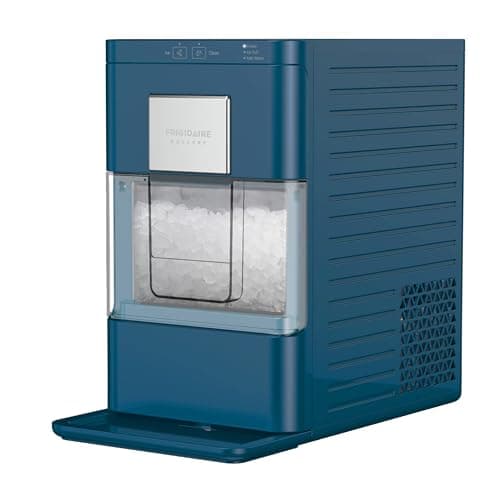 Frigidaire EFIC255 44 lbs a day and 185 W, both printed in the specification table. | Best documented buy | |
| 2 | 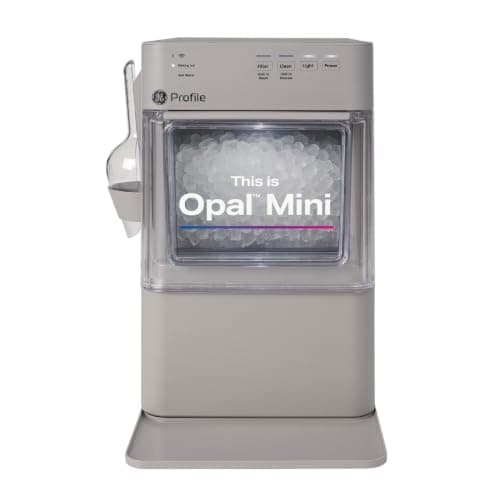 GE Profile P4NM20 series Narrower, shorter, 27 lbs, and the only one with an app. | Best if space is the constraint |
#ad We earn a commission on purchases made through this link. How this is funded. Prices last checked October 19, 2026.
These are the two nugget machines most people are choosing between at the moment, and not because they are similar. They are similar in price. On paper they are almost mirror images: each manufacturer publishes, in detail, precisely the thing the other one leaves out.
That makes this an unusually clean comparison to write and an unusually annoying one to shop, because there is no single table that answers every question. Below is what each one actually commits to in writing.
Both specification tables
| Spec | GE Profile P4NM20 series | Frigidaire EFIC255 |
|---|---|---|
| Model | P4NM20 series | EFIC255 |
| Ice type | Nugget | Nugget |
| Rated output | Not published | 44 lbs/day [src] |
| Rated output per hour | Not published | Not published |
| Bin capacity | 2.6 lbs [src] | 3 lbs [src] |
| Published power | Not published | 185 W [src] |
| Nameplate current | 2 A [src] | Not published |
| Voltage | 120 V [src] | 115 V [src] |
| Dimensions (W x D x H) | 8.59" W x 15.59" D x 14.56" H [src] | 10" W x 14.6" D x 16.5" H [src] |
| Weight, empty | 27 lbs [src] | Not published |
| Clearance required | 4" [src] | Not published |
| Operating range | 55F to 90F [src] | Not published |
| Refrigerant | Not published | R600a [src] |
| Noise | Not published | Not published |
| Warranty | Not published | Not published |
| Max $/mo | $5.18(nameplate) | $4.00(published W) |
Read down the two columns and the pattern is immediate. The Frigidaire column has numbers where performance goes. The GE column has numbers where installation goes. Very few rows have a figure on both sides.
Only one of them tells you how much ice it makes
Frigidaire prints Daily Ice Output: 20 KGS/24H in its specification table, which converts to 44.1 lbs a day. That is a specification: a number the manufacturer put in the document it stands behind.
GE prints no ice-making rate for the Opal Mini anywhere in its specification table. The 36 lbs a day you will see on the box, on the retail listing and in GE's press release is a marketing figure, and this site records the Mini's rate as Not published rather than promoting it.
It would be easy to present that as "44 versus 36" and call the Frigidaire the faster machine. That comparison is not available. What is available is the observation that one manufacturer will commit to a number and the other will not, and if throughput is what you are buying on, that asymmetry is the finding.
The electricity, and why the gap is smaller than it looks
Frigidaire publishes Power Consumption: 185 W — an actual consumption figure, which almost nobody in this category provides. GE publishes a 2.0 A current rating at 120 V, which is a 240 VA nameplate.
| Frigidaire EFIC255 | GE Opal Mini | |
|---|---|---|
| What is published | 185 W consumption | 2.0 A at 120 V, no wattage |
| What that is | A measured draw | A nameplate ceiling |
| Monthly figure | About $4.00 | About $5.18 |
| How to read it | Close to a real bill | An upper bound it rarely reaches |
The honest reading: the Frigidaire is probably cheaper to run, and the margin is certainly smaller than $1.18 a month, because a nameplate overstates. At this scale neither figure should decide a purchase. What should register is that only one of these manufacturers gives you a number you can do arithmetic with.
Size, where the Mini wins and then gives some back
GE publishes 8.59 inches wide by 15.59 deep by 14.56 tall, and 27 lbs empty. Frigidaire publishes 10 inches wide by 14.6 deep by 16.5 tall, and no weight at all.
- Width goes to the Mini, by nearly an inch and a half. On a crowded counter that is real.
- Height goes to the Mini, by about two inches, and this is the one that matters most. A standard counter-to-cabinet gap is about 18 inches: at 14.56 inches the Mini leaves room to open the lid where it stands, and at 16.5 the Frigidaire does not.
- Depth goes to the Frigidaire, by about an inch. Depth is usually the binding dimension on a standard counter, so this is not a throwaway.
- Clearance goes to nobody, and that favors the Frigidaire in practice. GE requires 4 inches at the sides and back. Frigidaire publishes no clearance figure for the EFIC255 at all. A published requirement you must honor can cost you more counter than an unpublished one you can only guess at.
Net: if the constraint is a cabinet overhead, the Mini wins clearly. If the constraint is counter depth, it is closer than the headline dimensions suggest. Fitting numbers across the nugget field are on nugget ice makers for small kitchens.
The bin, and a caveat on the Frigidaire's number
GE publishes an ice storage capacity of 2.6 lbs for the Mini. The 3 lb figure this site carries for the EFIC255 does not come from Frigidaire's specification table, which omits bin capacity entirely — it comes from a retail listing and is flagged on this site as the weakest source tier.
So the apparent four-tenths of a pound in the Frigidaire's favor is one manual-sourced figure against one listing-sourced figure. A tall glass is roughly half a pound, so even taken at face value it is most of one extra glass, not a category difference.
Cleaning: two cycles against one
This is the clearest functional gap between them, and it runs the GE's way.
- GE Opal Mini. Two distinct cycles on one button: hold Clean for three seconds to start a 55-minute descale with GE's citric sachet in a full reservoir of hot water, or tap Clean for a 3-minute rinse, three rinses recommended. The Clean light glows steady when a descale is due and pulses when a rinse is. It also has a rear air filter GE says to check every two months.
- Frigidaire EFIC255. One CLEAN button running a cycle of at least 20 minutes on plain water, recommended before first use and after a long idle period. The manual separately advises changing the reservoir water every 24 hours.
Twenty minutes of plain water is a rinse. A 55-minute cycle with an acid in it is a descale. Those are different jobs, and only one of these machines distinguishes them for you — which matters because confusing the two is the most common maintenance mistake in this category. The chemistry is on descaling, and the cross-category comparison is on the self-cleaning roundup.
What only one of them has
- An operating temperature range (GE). The Mini's table publishes 55F to 90F. Frigidaire publishes none for the EFIC255, so if the machine is going in a garage or a camper only one of these two can be checked against the room. More on what temperature an ice maker needs.
- An app (GE). Filter tracking, descale-versus-rinse alerts and ice scheduling. Worth most to owners who would otherwise forget maintenance, and argued through on smart nugget ice makers.
- A published refrigerant and a published rate (Frigidaire). R600a and 20 kg per 24 hours, both in the table. GE publishes neither for the Mini.
Which one to buy
- Buy the Frigidaire EFIC255 if you want to know what you are getting. It is the cheaper machine, it is the only one of the two that commits to an ice rate, and its 185 W is the most trustworthy running-cost figure on this site.
- Buy the GE Opal Mini if the machine has to fit under a cabinet and still open, if it is going somewhere you need a temperature range for, or if you want the maintenance alerts. It is the better-engineered small machine and the worse-documented performer.
- Do not decide on the running cost. The two figures are measured differently and the real gap is around a dollar a month either way.
If you would rather compare the two GE machines than cross brands, the other matchup is the Opal Mini against the Opal 2.0 Ultra. If you are choosing a badge rather than a machine, the brands are ranked on what they publish on which ice maker brand to buy.
The picks in full
1. Best documented buy
Frigidaire Gallery Countertop Nugget Ice Maker
The only nugget machine here whose maker publishes an actual power consumption instead of a nameplate ceiling, and it is a low one.
- Rated output
- 44 lbs/day
- Bin capacity
- 3 lbs
- Electrical
- 185 W published
- Ceiling at 4 hrs/day, $0.18/kWh
- $4.00/month (from published watts)
#ad We earn a commission on purchases made through this link. How this is funded. Prices last checked October 19, 2026.
185 W published means the running-cost figure for this machine is not a derived ceiling — it is arithmetic on a number Frigidaire printed. That is the strongest cost data on the site.
It is rated at 20 kg a day, which is 44 lbs — higher than the Opal 2.0's 38. Both numbers are measured under ideal conditions the manual does not describe.
Ten inches wide and 16.5 tall makes it the narrowest full-size nugget machine in this set.
Skip this if
You need a manufacturer-published bin capacity. Frigidaire's specification table omits it, so the 3 lb figure on this page comes from a retail listing rather than the manual.
2. Best if space is the constraint
GE Profile Opal Mini Nugget Ice Maker
The smallest and lowest-draw Opal GE has built, and the first one whose specification table omits the ice rate entirely.
- Rated output
- Not published
- Bin capacity
- 2.6 lbs
- Electrical
- 2 A at 120 V (240 VA nameplate)
- Ceiling at 4 hrs/day, $0.18/kWh
- $5.18/month (from the nameplate ceiling)
#ad We earn a commission on purchases made through this link. How this is funded. Prices last checked October 19, 2026.
2.0 A at 120 V is a 240 VA nameplate, against 360 VA for both full-size Opal 2.0 models. On the site's standard four-hours-a-day scenario that is roughly $5.18 a month as a ceiling rather than $7.78.
The 2.6 lb bin is smaller than the 3.0 lbs every full-size machine here publishes, which is about one tall glass less before the machine has to catch up.
GE's own specification table carries no ice-making rate for the Mini, exactly as it carries none for the Opal 2.0 Ultra. The 36 lbs a day in GE's press release and on the retail listing is a claim, not a published specification, and this site does not promote it to one.
Skip this if
You want a published ice-making rate. GE's specification table for the Mini prints no rate at all, so the 36 lbs a day on the box is a marketing figure with no spec-sheet backing.
Questions people actually ask
Is the Opal Mini or the Frigidaire EFIC255 better?
For knowing what you are buying, the Frigidaire: its manual publishes both a daily ice rate of 20 kg per 24 hours, which is 44.1 lbs, and an actual power consumption of 185 W. GE publishes neither figure for the Opal Mini. For fitting a small kitchen, the GE: it is 8.59 inches wide and 14.56 inches tall against the Frigidaire's 10 by 16.5, and it weighs 27 lbs. They are about forty dollars apart, so the decision is about which set of facts you need rather than about budget.
Does the Opal Mini make less ice than the EFIC255?
There is no published basis for answering that, which is itself the answer. Frigidaire prints 20 KGS/24H in its specification table. GE prints no ice-making rate for the Opal Mini at all; the 36 lbs a day on the box comes from a press release and the retail listing, not from a specification table. Comparing a published 44.1 against an unpublished 36 would be comparing a specification with a marketing claim, and this site will not do that.
Which is cheaper to run?
The Frigidaire, and it is the only one of the two where the figure means much. Frigidaire publishes a real consumption of 185 W, which at four running hours a day and 18 cents per kWh is about $4.00 a month. GE publishes only a 2.0 A nameplate at 120 V, a 240 VA ceiling, which gives about $5.18 a month as an upper bound the machine does not continuously draw. Those two numbers are not measured the same way, so the gap between them is smaller than it looks.
Which one fits a smaller counter?
The Opal Mini on width and height, the Frigidaire on depth. GE publishes 8.59 inches wide by 15.59 deep by 14.56 tall; Frigidaire publishes 10 wide by 14.6 deep by 16.5 tall. So the Mini is nearly an inch and a half narrower and almost two inches shorter, and the Frigidaire is about an inch shallower. GE also requires 4 inches of clearance at the sides and back, which Frigidaire does not publish at all, so the Mini's real footprint on a counter may be larger than its dimensions suggest.
Does either one have WiFi?
Only the Opal Mini. Its manual documents a WIFI indicator and an app covering registration, updates, alerts, ice scheduling and bin lighting, and it distinguishes a descale from a rinse with two different light behaviors. Frigidaire publishes no connectivity for the EFIC255. Whether that is worth the price difference is covered on the smart ice maker page.
Sources
- GE Profile Opal Mini Owner's Manual 49-9000083 Rev. 0, p.15 (Ice Maker Product Specifications) (read 2026-09-13)
- GE Profile Opal Mini Owner's Manual 49-9000083 Rev. 0, p.10 (Care and Cleaning) (read 2026-09-13)
- Frigidaire EFIC255 Use & Care Manual, p.12 (product specifications) (read 2026-09-02)
- Frigidaire EFIC255 Use & Care Manual, p.8 (the CLEAN procedure) (read 2026-09-02)
- EIA Electric Power Monthly, Table 5.6.A, June 2026 (read 2026-09-02)
Read next
- GE Profile Opal Mini (P4NM20 series)
2.0 A, a 2.6 lb bin, 8.59 inches wide, and no published ice rate at all.
- Frigidaire Gallery EFIC255
185 W published and 44 lbs a day rated. The best output-per-watt figure on the site.
- GE Profile Opal Mini vs Opal 2.0 Ultra
2.0 A against 3.0 A, 2.6 lbs of bin against 3.0, and one published footprint between them.
- Smart Nugget Ice Makers
Which ice makers have WiFi, the four things the app really does, and whether it is worth the money.
- Which Ice Maker Brand Should You Buy?
Brands ranked on what they publish, who supports them, and what you can actually buy today.
- The Best Nugget Ice Makers
Six machines ranked on published specs, each with a sourced monthly running-cost ceiling.