Guides
Can You Use a Countertop Ice Maker for an Ice Bath?
Not on its own, and nugget ice is the wrong shape for it anyway. Here is the arithmetic that decides it, and the one configuration where a machine does earn its place beside a plunge.
Disclosure: we earn a commission if you buy through our links. It never affects which machines we recommend or how we rank them, and we take no sponsored placements. Read the full disclosure.
Quick picks
| # | Machine | Best for | Price |
|---|---|---|---|
| 1 | 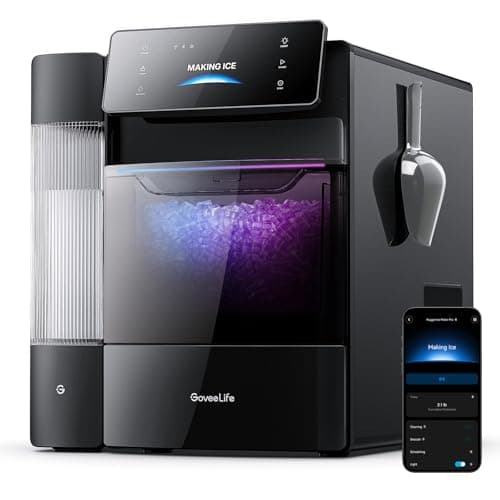 GoveeLife H8120 60 lbs a day published, the highest figure on this site, with the largest basket at 3.5 lbs. | Most ice per day, if it must be nugget | |
| 2 | 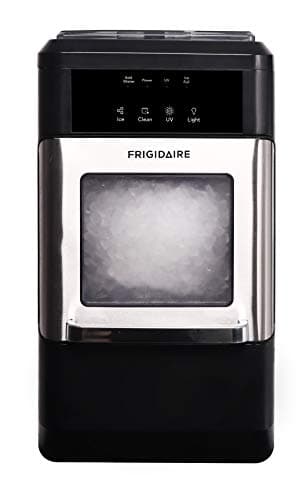 Frigidaire EFIC235 44 lbs a day of bullet ice, which is denser and melts far slower than nugget - the right trade for cold water. | Better ice for a plunge | |
| 3 | 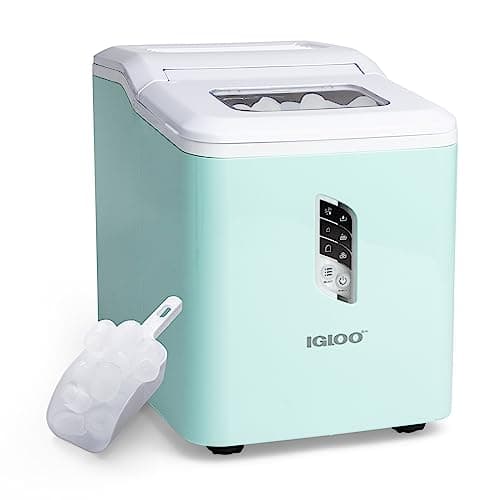 Igloo ICEB26AQ (manual covers ICEB26AQ, ICEB26BK and ICEB26RR) 26 lbs a day on 120 W with a published 2 lb bin, all from a manual, as a second machine feeding the freezer. | Cheapest way to add volume |
#ad We earn a commission on purchases made through this link. How this is funded. Prices last checked October 19, 2026.
How much ice a plunge needs, and why nobody knows
Start here, because this is the number everyone quotes confidently and nobody sources. There is no manufacturer figure and no standard. What exists is vendor guidance, and it does not agree with itself:
| Source | Scenario | Ice suggested |
|---|---|---|
| Cold Plunge Calculator | Standard bathtub, 70F tap to the 50s | 40 to 60 lbs |
| The Home Plunge | Comparable bathtub target | 20 to 40 lbs |
| Plunge Junkies | Rule of thumb, 1:3 ice to water | About 7.7 lbs per gallon |
| Larger dedicated tubs | 60 to 80 gallon tubs | 50 to 100 lbs |
What the machines actually produce
Against that, here is the supply side, from each manufacturer's own published figures. The column that matters is not the daily rating — it is what the machine holds, because that is what you can carry to the tub at any one moment.
| Machine | Published output | Per hour | Holds at once |
|---|---|---|---|
| GoveeLife H8120 (nugget) | 60 lbs/day | 2.5 lbs | 3.5 lbs |
| Frigidaire EFIC235 (bullet) | 44 lbs/day | 1.8 lbs | Not published |
| GE Profile Opal 2.0 (nugget) | 38 lbs/day | 1.6 lbs published | 3.0 lbs |
| Igloo ICEB26 (bullet) | 26 lbs/day | 1.1 lbs | 2.0 lbs |
Take the best case on this site and the most forgiving requirement. The GoveeLife publishes 60 lbs a day into a 3.5 lb basket. At the lowest plunge estimate anyone publishes — 20 pounds — that is eight hours of production and six separate harvests into a freezer, because the basket holds 3.5 pounds and is not refrigerated, so ice left in it is melting while you wait for the rest. At 40 pounds it is sixteen hours and eleven harvests. At 100 pounds, for a large tub, it is nearly two days of continuous running.
And that is the best machine here. The 26 lb Igloo needs nearly a full day to make 20 pounds. Why rated daily output is generally the wrong number to shop on, and bin capacity the right one, is the argument on how much ice you actually need.
Nugget ice is the wrong shape for cold water
Suppose you solve the volume problem with time and a freezer. There is a second, independent reason not to buy a nugget machine for this.
Nugget ice is compressed ice flakes: soft, full of trapped air, and enormous in surface area for its weight. That is precisely why it chills a drink in seconds and why it is lovely to chew. In a tub, the same property works against you — surface area is what drives heat exchange, so nugget ice absorbs its latent heat quickly and is gone. It brings the water down fast and then stops helping.
Bullet and cube ice are denser with far less surface per pound, so they melt more slowly and hold the water cold through a longer session. For a plunge that is the correct trade, and it is the opposite of the trade you want in a glass. The mechanism is set out on nugget ice versus bullet ice, and the shape-by-use table on bullet versus clear ice already rates nugget as poor for a cooler or an ice bath.
How these picks were judged
Given all of the above, the picks are ranked on criteria that are deliberately different from every other roundup on this site:
- Published pounds per day, because volume is the binding constraint here rather than bin capacity. This is the one page where the daily rating is the number that matters.
- Ice shape, with density preferred over chewability - the reverse of this site's usual order.
- Cost per pound of capacity added, because the sane version of this is a second machine banking surplus into a freezer rather than one premium machine.
| Machine | Rated output | Bin | Electrical | Max $/mo |
|---|---|---|---|---|
| GoveeLife H8120 | 60 lbs/day [src] | 3.5 lbs [src] | 210 W [src] | $4.54(published W) |
| Frigidaire EFIC235 | 44 lbs/day [src] | Not published | 200 W [src] | $4.32(published W) |
| Igloo ICEB26AQ (manual covers ICEB26AQ, ICEB26BK and ICEB26RR) | 26 lbs/day [src] | 2 lbs [src] | 120 W [src] | $2.59(published W) |
The GoveeLife Smart Nugget Ice Maker Pro is here only because it is the highest published output on the site and some readers will want nugget ice regardless. Its honest downside for this use is total: it is the wrong ice shape, it is the most expensive of the three, and at 210 W it is the costliest to run for the long hours this job demands.
The Frigidaire EFIC235 is the one we would actually buy for this, because 44 lbs a day of bullet ice is the better product for cold water. Its downside is that it publishes no bin capacity, so you cannot plan your harvest interval from documentation, and at 200 W it is nearly as thirsty as the GoveeLife.
The Igloo ICEB26 is the cheap-capacity option: 26 lbs a day on 120 W with a 2 lb bin, every figure from a manual rather than a listing, which makes it the most predictable machine of the three. Its downside is the obvious one — 26 pounds a day is the smallest supply here, so it only makes sense as a second machine feeding a freezer.
If you are banking ice in the freezer anyway
Every workable version of this plan involves harvesting the basket into a freezer repeatedly, and nugget ice has a specific failure mode when you do that: it fuses. The pellets are wet when they leave the machine, that surface water refreezes in the freezer, and what you pour out two days later is one block rather than twenty pounds of loose ice. Three things prevent it.
- Let the harvest drain before it goes in. A minute in the scoop or a colander sheds the surface water that does the fusing. Ice that goes into the freezer wet comes out welded.
- Use shallow lidded containers, not one deep tub. A deep container compresses its own lower layers and fuses them under weight. Several shallow ones also freeze through faster.
- Break it up once, early. Shake or stir each container after an hour or two, while any bonds are still weak. After that it holds.
A lid matters for a second reason: a freezer is dry and ice sublimates in open air, picking up whatever the freezer smells of as it goes. That is the same mechanism that makes ice taste wrong in a machine, covered on why ice tastes or smells bad.
What to do instead
- Buy bagged ice. It is bulk ice from industrial equipment and no countertop appliance competes with it on pounds per dollar or pounds per hour.
- Buy somewhere to keep it. A chest freezer is the actual appliance this problem needs, and it solves storage, which is the thing every countertop machine fails at.
- If you plunge daily, price a chiller. A recirculating chiller holds a tub at temperature with no ice at all, which is a different product class and the only one that actually solves the job.
- Buy an ice maker for drinks, not for the tub. Then let its surplus go into the freezer, and treat whatever accumulates as a bonus against the bags.
That last line is the only configuration in which a machine on this site belongs anywhere near a cold plunge, and it works because the machine was already paying for itself in glasses of ice. If you want the ice to simply be there, cold, without you harvesting anything, no countertop machine does that — see do countertop ice makers keep ice frozen and whether to leave one running.
The picks in full
1. Most ice per day, if it must be nugget
GoveeLife Smart Nugget Ice Maker Pro
The biggest published basket and daily figure of any nugget machine you can buy, and the only connected machine here from outside GE, documented on a product page rather than in a manual.
- Rated output
- 60 lbs/day
- Bin capacity
- 3.5 lbs
- Electrical
- 210 W published
- Ceiling at 4 hrs/day, $0.18/kWh
- $4.54/month (from published watts)
#ad We earn a commission on purchases made through this link. How this is funded. Prices last checked October 19, 2026.
GoveeLife's owner's manual exists but could not be retrieved for this page, so every value is from the maker's own product page and carries that lower source tier. Anything the page does not print, including refrigerant, clearance and an operating temperature range, reads Not published.
The product page describes two cleaning modes, a 10-minute quick clean and a 30-minute deep descale, with an app reminder after every 100 hours of ice-making. That is a usage-based interval rather than a calendar one.
GoveeLife advertises an average noise level 'as low as 40 dB' in its description copy with no test standard or measuring distance, so, as with Silonn's '35db', it is not recorded as a specification and the noise field reads Not published.
Skip this if
You want every specification backed by an owner's manual, or a machine that fits a normal counter. Every figure here is from GoveeLife's product page, and it is 21.3 inches deep and 42 lbs.
2. Better ice for a plunge
Frigidaire Countertop Bullet Ice Maker
A bullet-ice machine, not a nugget one — and the fastest route to a full bin if the ice shape does not matter to you.
- Rated output
- 44 lbs/day
- Bin capacity
- Not published
- Electrical
- 200 W published
- Ceiling at 4 hrs/day, $0.18/kWh
- $4.32/month (from published watts)
#ad We earn a commission on purchases made through this link. How this is funded. Prices last checked October 19, 2026.
44 lbs a day at 200 W published. Bullet machines make ice by freezing water onto chilled prongs, which is a far simpler and faster process than extruding nugget ice.
This is the machine to buy if you want a lot of ice for a cooler, and the machine to avoid if you want ice you can chew.
At 19 inches tall it does not fit under a standard 18-inch upper cabinet gap. Measure first.
Skip this if
You came here for chewable ice. Bullet ice is hollow, hard cylinders. It is not nugget ice and no setting will make it nugget ice.
3. Cheapest way to add volume
Igloo Automatic Countertop Ice Maker
The cheapest machine on this site with a full manual specification table, the widest published temperature window in the category, and the only one that does not run on R600a.
- Rated output
- 26 lbs/day
- Bin capacity
- 2 lbs
- Electrical
- 120 W published
- Ceiling at 4 hrs/day, $0.18/kWh
- $2.59/month (from published watts)
#ad We earn a commission on purchases made through this link. How this is funded. Prices last checked October 19, 2026.
For a machine at this price the manual is unusually complete: voltage, wattage, current, refrigerant, daily output, cycle time, basket capacity, reservoir volume, clearance and a recommended room-temperature range all appear in it.
The reservoir is printed as 3 quarts, which is the largest reservoir volume any manual on this site states - more than double the 1.2 liters Silonn prints for the SLIM21.
It makes bullet ice, not nugget, so it is a volume-and-cost machine rather than a chewable-ice machine. Igloo also documents a nugget dispensing model, the IGLICEND40SS, which we could not verify on sale new.
Skip this if
You want nugget ice, or you need to know how much counter it takes: Igloo publishes a wattage, a refrigerant and a temperature range but no dimensions or weight at all.
Questions people actually ask
Can a countertop ice maker fill an ice bath?
No, not on its own and not on the day. Vendor guidance for a cold plunge runs from about 20 pounds of ice for a bathtub to 100 pounds for a large dedicated tub. The highest-output countertop machine on this site publishes 60 pounds a day, which is 2.5 pounds an hour, into a basket holding 3.5 pounds that is not refrigerated. Even at the lowest requirement you are looking at eight hours of production and repeated harvesting into a freezer.
How much ice does an ice bath need?
Nobody authoritative publishes a figure and the vendor estimates disagree sharply. One calculator suggests 40 to 60 pounds to bring a standard bathtub from about 70F into the 50s; another suggests 20 to 40 pounds for a similar target; guides for larger dedicated tubs suggest 50 to 100 pounds. The rules of thumb they offer differ by nearly four times, from about 2 pounds of ice per gallon to about 7.7. Treat any single number you see as an estimate, because the people publishing them do not agree with each other.
Is nugget ice good for an ice bath?
It is the worst common shape for it. Nugget ice has a very high surface-area-to-volume ratio, which is exactly why it chills a drink fast and why it is pleasant to chew. In a tub that same property means it melts quickly and stops holding the temperature down. Bullet or cube ice is denser, has less surface area per pound, and keeps water cold for longer. If the plunge is the reason you are buying, do not buy a nugget machine.
What is the cheapest way to get ice for a cold plunge?
Bagged ice from a shop, by a wide margin, and a chest freezer to store it in. A countertop machine makes ice in pounds per day at a cost per pound set by your electricity rate and your descaling schedule; a bag of ice is bulk ice made by industrial equipment. If you plunge regularly, the economical setup is a freezer plus bagged ice, with a machine only if you also want nugget ice for drinks.
Could I run two or three countertop machines to fill a plunge?
You could, and it is still the wrong purchase. Three machines at 26 to 60 pounds a day gets you to plunge volume in a day, but you have bought three appliances, three descaling schedules and three sets of counter space to do a job a single chest freezer and bagged ice does better. The only version of this that makes sense is one machine for drinking ice whose surplus you bank in the freezer.
Does a countertop machine have any place next to a cold plunge?
One. If you already want chewable ice for drinks and you plunge occasionally rather than daily, a machine left running for a day or two and harvested into the freezer can contribute a useful fraction of a bathtub plunge, topped up with a bag or two. That is a supplement to bagged ice, not a replacement for it, and it only works because you were buying the machine anyway.
Sources
- Cold Plunge Calculator, ice calculator (40-60 lbs for a standard bathtub from 70F) (read 2026-10-17)
- The Home Plunge, DIY ice bath guide (20-40 lbs for a comparable target) (read 2026-10-17)
- Plunge Junkies, how much ice for an ice bath (1:3 ice-to-water rule of thumb, about 7.7 lbs per gallon) (read 2026-10-17)
- GoveeLife product page, Smart Nugget Ice Maker Pro (60 lbs/day, 3.5 lb basket) (read 2026-10-17)
- Frigidaire EFIC235 manual, p.9 (44 lbs/24h, 200 W) (read 2026-09-02)
- Igloo ICEB26 instruction manual, p.3 (26 lbs/24h, 120 W, 2 lb bin) (read 2026-09-02)
- GE Profile Opal 2.0 Owner's Manual 49-9000029 Rev. 6, p.17 (1.6 lb/hr) (read 2026-09-02)
Read next
- How Much Ice Do You Actually Need?
Why rated output is the wrong number to shop on, and what bin capacity really limits.
- Do Countertop Ice Makers Keep Ice Frozen?
No. The bin is unrefrigerated and the meltwater recirculates. What to do instead.
- Nugget Ice vs Bullet Ice
Two mechanisms, two products. What actually separates chewable ice from hollow cylinders.
- Bullet Ice vs Clear Ice Makers
Fast hollow cylinders against slow dense cubes, on published specs from both manuals.
- The Best Portable Ice Makers
Portable machines ranked on published output and draw, with what portable really means.
- Can You Leave a Nugget Ice Maker On All the Time?
Safe, yes. Sensible, usually not. What a machine left running actually does, and what it costs.
- How Long Does a Nugget Ice Maker Take?
First ice and full bin times, built from the one published hourly rate in the category.