Countertop Ice Makers
The Best Ice Makers for Home Use
Sized by how many people are actually drinking. Published output, published draw, and the counter space it takes to get either.
Disclosure: we earn a commission if you buy through our links. It never affects which machines we recommend or how we rank them, and we take no sponsored placements. Read the full disclosure.
Quick picks
| # | Machine | Best for | Price |
|---|---|---|---|
| 1 | 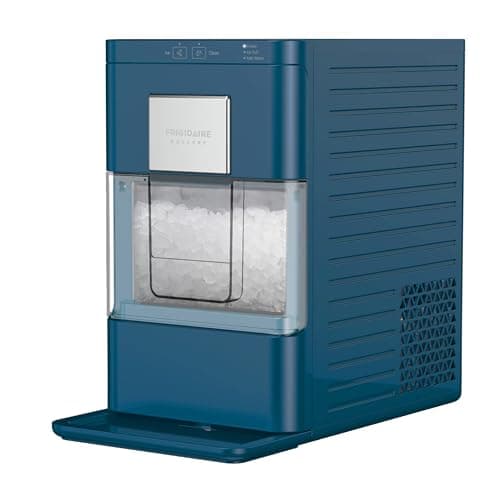 Frigidaire EFIC255 44 lbs a day, 185 W published, ten inches wide. | Best for most homes |
#ad We earn a commission on purchases made through this link. How this is funded. Prices last checked October 19, 2026.
Every machine on this page is rated to make more ice in a day than a household drinks. That sounds like it settles the question and it does not, because the rated figure describes a machine running flat out into an empty bin, and your kitchen is not that.
The numbers that actually decide the purchase are bin capacity, footprint plus clearance, and what kind of ice you want in the glass.
Sizing it properly
| Household | Iced drinks a day | Ice needed | Rated output needed |
|---|---|---|---|
| One or two people | 2 to 4 | About 1 to 2 lbs | Any machine here |
| Family of four | 6 to 10 | About 3 to 5 lbs | Any machine here |
| Frequent entertaining | 20+ in bursts | 10 lbs+ in an evening | Bin size matters more than rating |
| Home bar | Quality over volume | 1 to 3 lbs | Clear cube, not nugget |
The pattern that falls out: for steady daily use, every machine here is over-specified and you should buy on running cost and footprint. For bursts — a party, a barbecue, a full cooler — no countertop machine keeps up in real time and the answer is to make ice in advance and store it in the freezer.
The bin is the real limit
| Machine | Rated output | Bin | Electrical | Max $/mo |
|---|---|---|---|---|
| Frigidaire EFIC255 | 44 lbs/day [src] | 3 lbs [src] | 185 W [src] | $4.00(published W) |
| NewAir NIM044BS00 | 44 lbs/day [src] | 3.3 lbs [src] | 2.7 A [src] | $6.71(nameplate) |
| NewAir NIM030SS00 | 30 lbs/day [src] | Not published | 170 W [src] | $3.67(published W) |
| Frigidaire EFIC452 | 39.7 lbs/day [src] | Not published | 120 W [src] | $2.59(published W) |
| GE Profile XPIO13SCSS | 38 lbs/day [src] | 3 lbs [src] | 3 A [src] | $7.78(nameplate) |
Three pounds is the standard, NewAir's 3.3 lbs is the outlier, and the difference between them is about one extra tall glass. Nobody in this category ships a big bin, because a bigger unrefrigerated bin just holds more ice that is melting.
Counter space, honestly
The published footprints are modest — 9.7 to 11.3 inches wide, 14 to 17.6 inches deep — but the clearance requirement is not optional. GE asks for 3 inches at the sides and rear for the Opal 2.0 and the original Opal, and 4 inches for the Opal 2.0 Ultra. The original Opal manual allows 0 inches at the top.
So a machine 10 inches wide really occupies about 16 inches of counter run with its clearances, and you need to be able to open the lid. That is the measurement to take before ordering.
What to buy, by household
One or two people
The NewAir NIM030SS00. Thirty pounds a day is plenty for two, and at a published 170 W it is the cheapest machine on this site to run — about $3.67 a month at four hours a day. It is the deepest machine here at 17.64 inches, so check your counter depth.
A family
The Frigidaire Gallery EFIC255. Rated 44 lbs a day at a published 185 W in a ten-inch-wide body is the best combination of output, running cost and footprint in this comparison, and it makes the chewable ice that children and teenagers will actually use.
A household that empties the bin constantly
The GoveeLife Smart Nugget Ice Maker Pro, for the 3.5 lb basket its product page lists, the largest of any machine in stock and half a pound more than the full-size Opals. The cost of that basket is size: 21.3 inches deep and about 42 lbs.
A home bar
The Frigidaire EFIC452 and its clear cubes. Nugget ice is wonderful to chew and terrible in a spirit-forward drink, because the surface area that makes it pleasant to eat is the same surface area that waters down whisky. More on that in nugget ice for cocktails.
One caveat we cannot resolve
A home ice maker lives in the room you sit in. Noise matters more here than in any other use case, and no manufacturer in this category publishes a decibel rating. We are not going to invent one. What we can tell you about the four distinct noises these machines make, and which of them signal a fault, is on the quietest nugget ice maker page.
If the noise question is pushing you toward having the machine built into an appliance instead, one refrigerator now makes nugget ice and the rest of the brands marketed that way do not: do any refrigerators make nugget ice.
The picks in full
1. Best for most homes
Frigidaire Gallery Countertop Nugget Ice Maker
The only nugget machine here whose maker publishes an actual power consumption instead of a nameplate ceiling, and it is a low one.
- Rated output
- 44 lbs/day
- Bin capacity
- 3 lbs
- Electrical
- 185 W published
- Ceiling at 4 hrs/day, $0.18/kWh
- $4.00/month (from published watts)
#ad We earn a commission on purchases made through this link. How this is funded. Prices last checked October 19, 2026.
185 W published means the running-cost figure for this machine is not a derived ceiling — it is arithmetic on a number Frigidaire printed. That is the strongest cost data on the site.
It is rated at 20 kg a day, which is 44 lbs — higher than the Opal 2.0's 38. Both numbers are measured under ideal conditions the manual does not describe.
Ten inches wide and 16.5 tall makes it the narrowest full-size nugget machine in this set.
Skip this if
You need a manufacturer-published bin capacity. Frigidaire's specification table omits it, so the 3 lb figure on this page comes from a retail listing rather than the manual.
Questions people actually ask
How many pounds of ice a day does a household actually need?
A tall glass of ice is roughly half a pound. Two people having three iced drinks a day is around 3 pounds; a family of four doing the same is around 6. Every machine on this page is rated between 30 and 44 pounds a day, so rated output is almost never the constraint in a home. Bin capacity is: at 3 to 3.3 pounds, the bin holds about six glasses, and the machine refills it at its own pace.
Is a countertop ice maker better than the one in my fridge?
It makes a different product. A fridge ice maker gives you solid cubes and keeps them frozen because it lives in a freezer. A countertop machine gives you nugget, bullet or clear ice and does not keep anything frozen. If your complaint is the shape of the ice, a countertop machine solves it. If your complaint is running out, a countertop machine helps only while it is switched on.
How much counter space does an ice maker need?
More than its footprint. The published bodies here run from about 9.7 to 11.3 inches wide and 14 to 17.6 inches deep, but manuals specify 3 inches of clearance at the sides and rear (4 inches for the GE Opal 2.0 Ultra). Add that to the footprint before you decide it fits.
What does a home ice maker cost to run per month?
Between roughly $2.60 and $7.78 at four running hours a day and 18 cents per kWh, depending on the machine and whether the manufacturer publishes a real consumption figure or only a nameplate. Frigidaire's clear-cube EFIC452 is the cheapest at 90 to 120 W published; the GE Opal 2.0 ceiling is the highest at a derived 360 VA.
Sources
- Frigidaire EFIC235 User Manual, p.9 (product specifications) (read 2026-09-02)
- Frigidaire EFIC452 Use & Care Manual, p.10 (product specifications) (read 2026-09-02)
- Frigidaire EFIC255 Use & Care Manual, p.12 (product specifications) (read 2026-09-02)
- GE Profile Opal 2.0 Owner's Manual 49-9000029 Rev. 6, p.17 (read 2026-09-02)
- NewAir NIM044BS00 Owner's Manual, p.5 (specifications) (read 2026-09-02)
- EIA Electric Power Monthly, Table 5.6.A, June 2026 (read 2026-09-02)
Read next
- How Much Ice Do You Actually Need?
Why rated output is the wrong number to shop on, and what bin capacity really limits.
- The Best Countertop Ice Makers
The whole countertop category ranked by ice type, with sourced specs and running costs.
- Are Countertop Ice Makers Worth It?
When one earns its place and when it does not, with the cost computed rather than asserted.
- What a Nugget Ice Maker Costs to Run
Per-model monthly costs with the wattage sourced, the duty cycle stated and the arithmetic shown.
- The Best Nugget Ice Makers
Six machines ranked on published specs, each with a sourced monthly running-cost ceiling.
- Nugget Ice for Cocktails
Where nugget ice belongs behind a bar, and where a clear cube is the right answer.
- The Best Ice Makers for an Office
Throughput at the rush, who refills it, and who cleans it. The three things an office machine is actually judged on.
- Do Any Refrigerators Make Nugget Ice?
Whirlpool is the only one. Samsung's Ice Bites and LG's Craft Ice are not nugget ice, and GE sells none.