Countertop Ice Makers
The Best Ice Makers for a Garage or Outdoor Kitchen
Only a handful of these machines publish the one number a garage depends on. Here is the published field, what happens outside it, and why no machine here is rated to live outdoors.

Disclosure: we earn a commission if you buy through our links. It never affects which machines we recommend or how we rank them, and we take no sponsored placements. Read the full disclosure.
Quick picks
| # | Machine | Best for | Price |
|---|---|---|---|
| 1 | 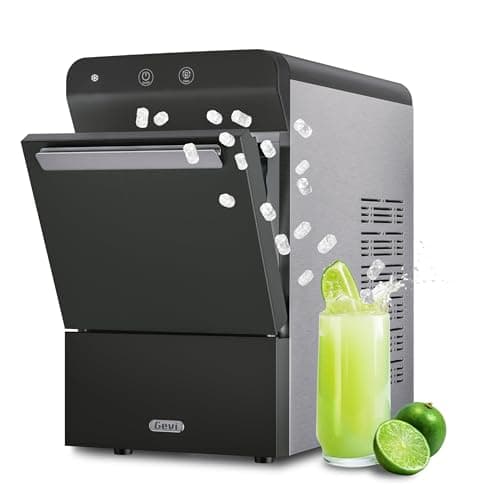 Gevi GIMN-1000B A published 50F to 90F range and a real 170 W, which is the pair of numbers a garage needs. | Best nugget machine for a garage | |
| 2 | 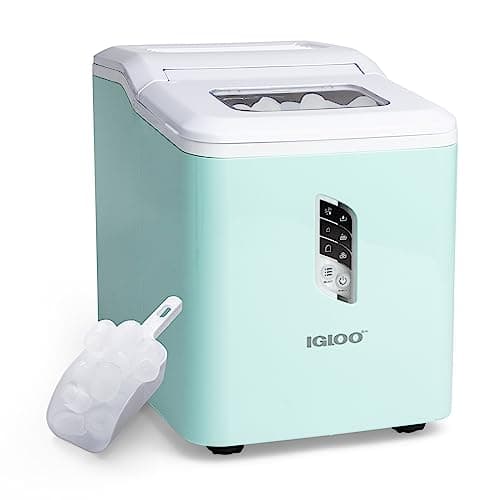 Igloo ICEB26AQ (manual covers ICEB26AQ, ICEB26BK and ICEB26RR) 45F to 90F, 120 W, and the only manual here with cold-room advice - for bullet ice, not nugget. | Widest published temperature window | |
| 3 | 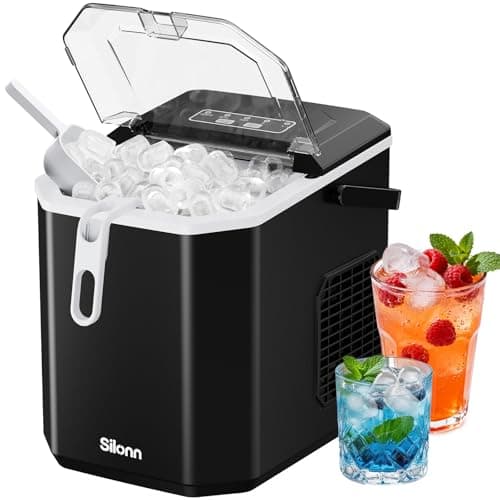 Silonn SLIM21 50F to 90F in the manual, 13.7 lbs, and a documented weekly clean cycle. | Cheapest with a published range | |
| 4 | 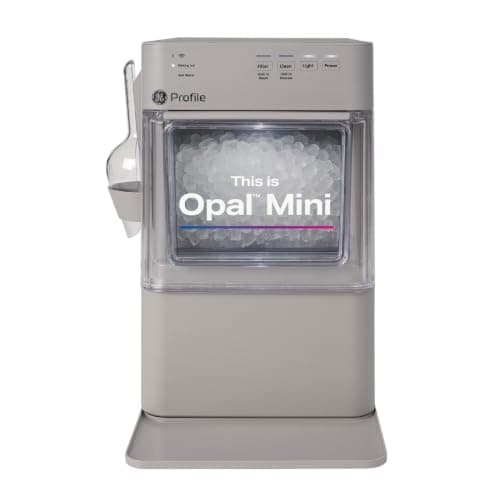 GE Profile P4NM20 series 55F to 90F, a 2.0 A nameplate and app alerts for the maintenance a garage machine never gets. | Best documented, narrower window |
#ad We earn a commission on purchases made through this link. How this is funded. Prices last checked October 19, 2026.
A garage ice maker sounds like a space question and is actually a temperature question. The counter is free, the noise does not matter, the refill trip is short — and then the room hits 95F in August and 40F in January, and the machine is being asked to work outside anything its maker committed to in writing.
This site is unusually well placed to answer that, because the one specification that decides it is the one we have cataloged across every manual: the published operating range. Here is the whole field, and what happens on either side of it.
What a garage actually demands
- A published operating range, first. Not a reviewer's opinion about heat — a range the manufacturer printed, which is the only thing that will matter if you ever need the warranty.
- Headroom at the hot end. Every published ceiling here is 90F. A garage that sits above it in summer will make less ice, and the bin will melt faster while it does.
- A plan for the cold end. Water in the lines, a pump full of water, and a room below freezing is the one combination that does real damage.
- Clearance you can actually give. A garage usually has room, which is the one place these machines get what they ask for: 3 inches for a full-size Opal, 4 for a Mini, 6 for the Gevi.
- An electrical figure you can plan with. Garage circuits are shared with freezers, compressors and power tools, so a real wattage is worth more than a nameplate ceiling.
- Maintenance you will not do. A machine out of sight gets descaled less often, so prefer one with a documented cycle or an alert.
Every published operating range on this site
| Machine | Published range | Source | In stock? |
|---|---|---|---|
| Igloo ICEB26 | 45F to 90F | Manual, safety and parts sections | Yes |
| Frigidaire EFIC189 | 50F to 90F | Manual, technical parameters p.25 | Yes |
| Gevi V2.0 | 50F to 90F | Manual, before first use | Yes |
| Silonn SLIM21 | 50F to 90F | Manual, first use section | Yes |
| GE Profile Opal Mini | 55F to 90F | Manual, specification table | Yes |
| GE Profile Opal Mini Pro | 55F to 90F | Same specification table | Yes |
| GE Opal, first generation | 55F to 90F | Manual, specification table | No |
| NewAir NIM030SS00 | Warns against running below 41F | Manual | No |
| Frigidaire Gallery EFIC255 | Not published | — | Yes |
| GoveeLife H8120 | Not published | — | Yes |
| Antarctic Star Z5815DN | Not published | — | Yes |
| Kismile nugget | Not published | — | Yes |
One machine now sits below all of them at the cold end. Igloo's 26 lb bullet maker publishes a recommended room temperature of 45F to 90F and tells you to select the small cube size below 60F, which is the only cold-room operating instruction in any manual on this site. It makes bullet ice rather than nugget, and it publishes no dimensions at all, but for an unheated garage it is the best-documented machine here — the detail is on the Igloo review.
A hot garage
Refrigeration works by moving heat from inside the machine to the room around it. In a 95F garage the room is a worse heat sink, the compressor runs longer for the same ice, and the ice you already made is melting faster in a bin that was never refrigerated in the first place. Nothing breaks; the machine just quietly does less.
Three things help, and all of them are free. Give the machine the clearance its manual asks for — the 6 inches Gevi asks for on all sides is the largest in the category and a garage is the one room where that is easy. Keep it out of direct sun through a window or a door. And empty the bin into a freezer rather than letting it sit melting, because meltwater goes back to the reservoir to be frozen again, which is the mechanism explained on do countertop ice makers keep ice frozen.
A cold garage, and the winter question
The cold end is where a garage can actually cost you a machine. Below the published floor the refrigerant cycle stops behaving predictably, and below freezing the water inside the machine — in the reservoir, the pump and the lines — is the problem rather than the refrigerant.
Only one manual on this site says anything explicit about it: NewAir's NIM030SS00 warns against running the machine in temperatures lower than 41F. Everyone else simply publishes a floor of 50F or 55F, or nothing at all.
The practical answer for an unheated garage is seasonal: drain the machine, dry it and shut it down rather than leaving it plugged in through a freeze. That routine — drain plug, reservoir, bin, dry, and how long to wait before switching it on again — is on how to drain and store a nugget ice maker.
Why none of these is an outdoor appliance
Searches for an outdoor ice maker usually end up at exactly these machines, so this needs saying plainly: not one manual on this site publishes an outdoor rating, a wet-location rating or an ingress rating. They are described as household appliances, they have exposed vents, and their electronics are not sealed.
That does not make an outdoor kitchen impossible. It makes it conditional:
- Under cover and dry. Rain and irrigation spray are not contemplated anywhere in these documents.
- Out of direct sun, which is both a temperature problem and a plastic problem.
- Within the published range, which in most of the country rules out afternoons in July and nights in December.
- On a protected circuit, and not on an extension cord, which manufacturers in this category advise against for refrigeration appliances. The wider electrical picture is on nugget ice maker electrical requirements.
- Brought inside for the season. If it lives outdoors permanently, you want an outdoor-rated undercounter machine, which is a different appliance class entirely and is compared on countertop versus undercounter.
The water question in a garage
A garage machine is usually filled from whatever is nearest: a utility sink, a hose bib, or a jug carried out from the kitchen. That choice matters more here than it does indoors.
- An outdoor spigot is usually unsoftened. If the house has a softener it is often plumbed to the indoor cold supply only, so the garage tap can be materially harder water than the kitchen. Hard water is what turns a three-month descaling interval into a monthly one.
- A hose left in the sun is not a water source. Gevi is the only maker here that states a water temperature at all, asking for 46F to 82F, and water standing in a black hose in July is well past that.
- Meltwater recirculates, so you refill less than you think. What leaves the machine is the ice you carry away, which is why a jug on a shelf is a workable routine for a garage machine used at weekends.
- Stale water is the taste problem. A machine that sits for a fortnight between uses is holding the same water the whole time. Empty it rather than topping it up.
Which water to use, and whether a filter earns its place, is on what water to use in a nugget ice maker, and the hardness-to-interval argument is on descaling.
Gevi V2.0, the best documented garage machine
It publishes both numbers a garage cares about: an operating range of 50F to 90F and a rated power of 170 W, which is about $3.67 a month at four hours a day. The 50F floor is five degrees better than GE's, and on a shared garage circuit a real wattage beats a nameplate ceiling for planning.
The honest cons: six inches of clearance on every side, which is fine in a garage and awful in a kitchen. No published ice rate at all, so the 38 lbs a day on the listing is a claim. And no bin capacity, which means you cannot plan how many glasses it holds. Full detail on the Gevi V2.0 review.
Silonn SLIM21, the cheap way to test the idea
The same 50F to 90F window, in the smallest and lightest machine this site documents: 13.7 lbs, 1.5 A, 26 lbs a day and a documented 30-minute clean cycle with a weekly interval. If the garage plan might not stick, this is the low-stakes version of it.
The honest cons: it makes bullet ice rather than nugget, so if chewable ice is the point this is the wrong machine. The 1.32 lb basket is two or three glasses. And its 26 lbs a day is the lowest published rate here, which matters more in a garage serving a workshop than in a kitchen.
GE Profile Opal Mini, if you want the paperwork
GE publishes the fullest specification table in the category — 2.0 A, a 2.6 lb bin, 4 inches of clearance and 55F to 90F — and the app does the one thing a garage machine genuinely needs, which is tell you when it wants descaling rather than waiting for you to notice.
The honest cons: the 55F floor is the narrowest of the three picks, which is the wrong direction for a cold garage. GE publishes no wattage, so its cost figure is a $5.18 ceiling rather than a bill. And it is the most expensive machine on this page.
What to skip, and why
- Anything with no published range. That includes the Frigidaire Gallery EFIC255, the GoveeLife H8120, the Antarctic Star and every Kismile machine. They may well cope; the point is that nobody has said so in writing, and a garage is exactly where that matters.
- A machine you have to carry far. Garage machines get filled from a utility sink or a hose bib, and a 42 lb body is a two-person job when it has to come indoors for the winter.
- Anything you cannot verify is on sale. The NewAir units document the cold end better than anyone and neither is currently purchasable new, so neither is ranked here.
Choosing, in three steps
- Measure the garage, not the machine: put a thermometer in it and read it on the hottest afternoon and the coldest morning you get. That number, not the spec sheet, decides whether this works at all.
- Then buy from the short list of machines whose makers published a range that covers it, because everything else is an assumption you are making on their behalf.
- Then plan the winter. Draining a machine in November is five minutes; a cracked pump is a new machine.
The picks in full
1. Best nugget machine for a garage
Gevi V2.0 Nugget Ice Maker
The best-documented budget nugget machine on this site, and the only one you can buy new besides the Frigidaire EFIC255 whose manual prints an actual power consumption.
- Rated output
- Not published
- Bin capacity
- Not published
- Electrical
- 170 W published
- Ceiling at 4 hrs/day, $0.18/kWh
- $3.67/month (from published watts)
#ad We earn a commission on purchases made through this link. How this is funded. Prices last checked October 19, 2026.
Gevi's technical parameters table prints a rated power, a nameplate current, the refrigerant and its 24 g charge, the housing steel grade and the climate class. For a machine at this price that is more than GE publishes.
It does not print an ice-making rate, a water tank capacity or a basket capacity. The 38 lbs a day on the retail listing is a claim, not a specification, and this site records the rate as Not published.
The 6 inch clearance is the practical catch. A machine 9.6 inches wide that wants 6 inches of air on each side occupies 21.6 inches of counter, which is wider than the largest machine here.
Skip this if
Your counter cannot give up six inches of air on every side, or you want a published ice rate. Gevi's table does not print one.
2. Widest published temperature window
Igloo Automatic Countertop Ice Maker
The cheapest machine on this site with a full manual specification table, the widest published temperature window in the category, and the only one that does not run on R600a.
- Rated output
- 26 lbs/day
- Bin capacity
- 2 lbs
- Electrical
- 120 W published
- Ceiling at 4 hrs/day, $0.18/kWh
- $2.59/month (from published watts)
#ad We earn a commission on purchases made through this link. How this is funded. Prices last checked October 19, 2026.
For a machine at this price the manual is unusually complete: voltage, wattage, current, refrigerant, daily output, cycle time, basket capacity, reservoir volume, clearance and a recommended room-temperature range all appear in it.
The reservoir is printed as 3 quarts, which is the largest reservoir volume any manual on this site states - more than double the 1.2 liters Silonn prints for the SLIM21.
It makes bullet ice, not nugget, so it is a volume-and-cost machine rather than a chewable-ice machine. Igloo also documents a nugget dispensing model, the IGLICEND40SS, which we could not verify on sale new.
Skip this if
You want nugget ice, or you need to know how much counter it takes: Igloo publishes a wattage, a refrigerant and a temperature range but no dimensions or weight at all.
3. Cheapest with a published range
Silonn Countertop Bullet Ice Maker with Handle
The smallest machine on this site and one of only three budget-brand ones whose maker publishes a real specification table, including a documented 30-minute self-clean cycle.
- Rated output
- 26 lbs/day
- Bin capacity
- 1.32 lbs
- Electrical
- 1.5 A at 115 V (172.5 VA nameplate)
- Ceiling at 4 hrs/day, $0.18/kWh
- $3.73/month (from the nameplate ceiling)
#ad We earn a commission on purchases made through this link. How this is funded. Prices last checked October 19, 2026.
Silonn publishes what almost no other budget brand does: voltage, ice-making and ice-harvesting current, working power, rate, basket capacity, weight and size, all in one table.
The self-clean cycle is documented in the same manual — hold the ON/OFF/CLEAN button for five seconds, run 30 minutes on plain water, weekly. That is a longer cycle and a clearer frequency than either GE or Frigidaire commits to.
Silonn advertises a '35db low-noise design' on its product page. There is no test standard or measuring distance behind that number, so it is not recorded as a specification here and the noise field still reads Not published.
Skip this if
You want nugget ice or a bin that holds more than a couple of glasses. It makes hard bullet cubes and the basket is 1.32 lbs.
4. Best documented, narrower window
GE Profile Opal Mini Nugget Ice Maker
The smallest and lowest-draw Opal GE has built, and the first one whose specification table omits the ice rate entirely.
- Rated output
- Not published
- Bin capacity
- 2.6 lbs
- Electrical
- 2 A at 120 V (240 VA nameplate)
- Ceiling at 4 hrs/day, $0.18/kWh
- $5.18/month (from the nameplate ceiling)
#ad We earn a commission on purchases made through this link. How this is funded. Prices last checked October 19, 2026.
2.0 A at 120 V is a 240 VA nameplate, against 360 VA for both full-size Opal 2.0 models. On the site's standard four-hours-a-day scenario that is roughly $5.18 a month as a ceiling rather than $7.78.
The 2.6 lb bin is smaller than the 3.0 lbs every full-size machine here publishes, which is about one tall glass less before the machine has to catch up.
GE's own specification table carries no ice-making rate for the Mini, exactly as it carries none for the Opal 2.0 Ultra. The 36 lbs a day in GE's press release and on the retail listing is a claim, not a published specification, and this site does not promote it to one.
Skip this if
You want a published ice-making rate. GE's specification table for the Mini prints no rate at all, so the 36 lbs a day on the box is a marketing figure with no spec-sheet backing.
Questions people actually ask
Can you put a countertop ice maker in a garage?
Yes, if the garage stays inside the machine's published operating range, and that is the catch: most makers publish no range at all. The ones that do cluster between 50F and 90F. A garage that drops below 50F in winter or climbs past 90F in summer is outside every published window on this site, which does not mean the machine explodes — it means production slows, the compressor works harder, and nothing the manufacturer has written covers you.
What temperature is too cold for an ice maker?
Below the published floor, which is 50F on the Gevi V2.0 and the Silonn SLIM21 and 55F on GE's Opal Mini. The only cold-end warning any manual on this site gives is NewAir's, which tells owners not to run its machine below 41F. Water left in an unheated machine can freeze in the lines and the pump, and no manual here treats that as a covered condition, so an unheated garage in winter means draining and shutting the machine down rather than leaving it plugged in.
Can a countertop ice maker live in an outdoor kitchen?
Not as an outdoor appliance. Every manual on this site describes a household indoor appliance, and not one publishes an outdoor, wet-location or weatherproof rating. An outdoor kitchen works only if the machine is under cover, dry, out of direct sun and within its temperature range, and if it comes indoors when the season turns. Treat it as an indoor machine you carry out for the afternoon.
Does a hot garage stop an ice maker from working?
It slows it down. These machines reject heat into the room they stand in, so a hot room makes every cycle work harder and the ice in the unrefrigerated bin melts faster at the same time. Above the published 90F ceiling you are outside what any maker here has committed to. Give the machine the clearance its manual asks for, keep it out of direct sun, and expect visibly less ice on the hottest days.
Which garage ice maker uses the least power?
Of the machines with a published range, the Gevi V2.0 prints a rated power of 170 W, which is about $3.67 a month at four running hours a day and 18 cents per kWh. The Silonn SLIM21's 1.5 A at 115 V is a 172.5 VA nameplate ceiling, about $3.73, and the Opal Mini's 2.0 A at 120 V is a 240 VA ceiling, about $5.18. A nameplate is a maximum rather than a measurement, which is why the Gevi's published wattage is the more useful number.
Should an ice maker be on a GFCI outlet in a garage?
Garage and outdoor receptacles are normally GFCI protected, and an appliance that holds water belongs on one. What manufacturers in this category do say is to avoid extension cords for refrigeration appliances, so site the machine within reach of a real outlet rather than running a cord across the floor.
Sources
- Gevi GIMN-1000B User Manual, p.9 (Before First Use: 50F to 90F, 6 in clearance) (read 2026-09-21)
- Gevi GIMN-1000B User Manual, p.17 (Technical Parameters: 170 W) (read 2026-09-21)
- Silonn SLIM21 Instruction Manual, p.11 (product specifications) (read 2026-09-02)
- Silonn SLIM21 Instruction Manual, p.7 (First Use: 50F to 90F) (read 2026-09-03)
- GE Profile Opal Mini Owner's Manual 49-9000083 Rev. 0, p.15 (55F to 90F, 4 in clearance) (read 2026-09-13)
- NewAir NIM030SS00 Owner's Manual, p.5 (specifications) (read 2026-09-02)
- Frigidaire EFIC255 Use & Care Manual, p.12 (product specifications) (read 2026-09-02)
- EIA Electric Power Monthly, Table 5.6.A, June 2026 (read 2026-09-02)
Read next
- What Temperature Does an Ice Maker Need?
Every published operating range in the category, and what happens above and below them.
- Gevi V2.0 Nugget Ice Maker (GIMN-1000B)
170 W published, 3.0 A nameplate, R600a with a 24 g charge, and 6 inches of clearance.
- How to Drain and Store a Nugget Ice Maker
Drain, dry, stow upright, and the manufacturer-stated wait before you switch it on again.
- Electrical Requirements for a Nugget Ice Maker
Published current ratings, dedicated circuits, and what a nameplate figure really means.
- The Best Ice Makers for an RV
Inverter load, published temperature limits and carry weight. The three numbers that decide an RV ice maker.
- Silonn Countertop Ice Maker (SLIM21)
26 lbs a day, a 1.32 lb basket, a documented 30-minute clean cycle, and a 50F to 90F operating window.