Countertop Ice Makers
The Best Ice Makers for a Dorm Room
Three things decide this and none of them is ice: what fits on the furniture you were given, what your housing contract allows, and how far away the nearest sink is.
Disclosure: we earn a commission if you buy through our links. It never affects which machines we recommend or how we rank them, and we take no sponsored placements. Read the full disclosure.
Quick picks
| # | Machine | Best for | Price |
|---|---|---|---|
| 1 | 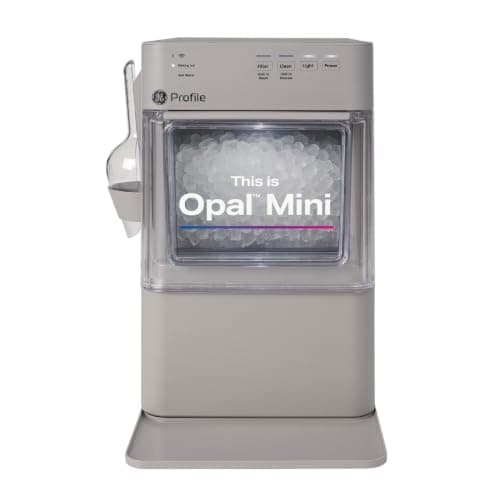 GE Profile P4NM20 series 8.59 inches wide and 14.56 tall, on the lowest nameplate of any Opal. | Best nugget ice for a dorm | |
| 2 | 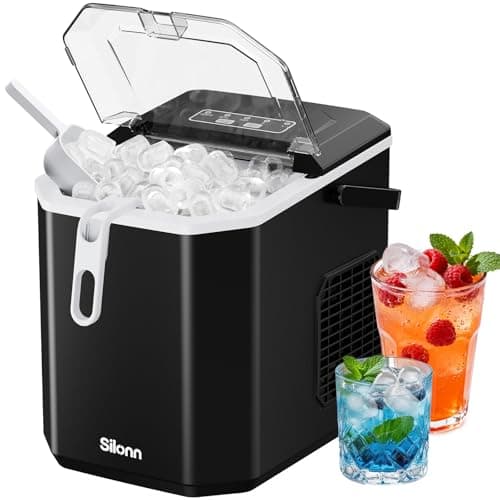 Silonn SLIM21 13.7 lbs, a 1.5 A ice-making current and a documented weekly clean cycle. | Best on a student budget | |
| 3 | 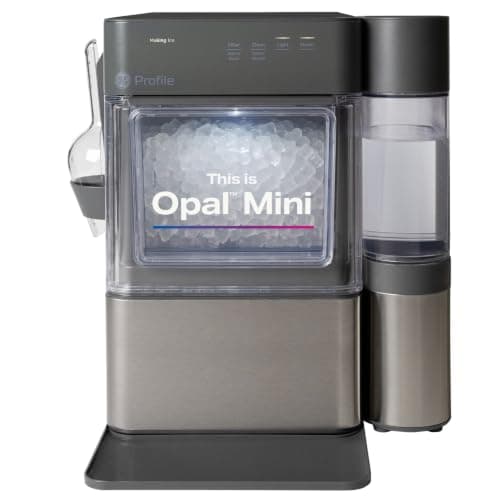 GE Profile P4NM series (Opal Mini Pro) The same Mini with a side tank, which is the refill trip you skip. | If the nearest sink is down the hall | |
| 4 | 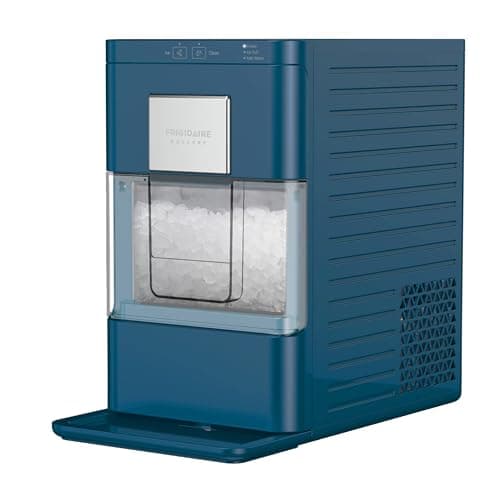 Frigidaire EFIC255 44 lbs a day on a published 185 W, in a ten-inch-wide body. | Most ice, if the desk can take it |
#ad We earn a commission on purchases made through this link. How this is funded. Prices last checked October 19, 2026.
A dorm room is the hardest environment this appliance gets asked to work in, and none of the reasons are about ice. The surface is a dresser or a desk that belongs to the university. The outlet is shared with a mini fridge, a laptop and a lamp. The nearest sink is down a corridor. And someone else sleeps eight feet away.
So this page is ordered by those constraints rather than by rated output, and every figure in it comes from a manufacturer document with a page number attached. Where a manufacturer publishes nothing, the page says so instead of guessing.
What a dorm room actually demands
- Height above the surface, first. Under a loft bed or a fixed shelf there is often less than 18 inches of air. That single measurement rules out more machines in this category than price does.
- Clearance, which is space you also lose. GE asks for 4 inches at the sides and rear of the Opal Mini. A machine 8.59 inches wide that wants 4 inches of air on each side is really 16.59 inches of dresser.
- A refill plan that survives a corridor. Every machine here is filled by hand. The question is how many trips a week, which is a function of tank size rather than ice rate.
- A current rating you can show somebody. If your hall office asks, you want the number from the manufacturer's specification table rather than from a listing.
- A clean cycle you will actually run. With a shared bathroom as your sink, the difference between a 30-minute documented cycle and an 18-hour soak decides whether the machine gets cleaned at all.
- Noise you can live beside, honestly caveated. No decibel figure exists in this category, so this page will not invent one and will not rank on it.
The four picks on published figures
| Machine | Rated output | Bin | Electrical | Max $/mo |
|---|---|---|---|---|
| GE Profile P4NM20 series | Not published | 2.6 lbs [src] | 2 A [src] | $5.18(nameplate) |
| Silonn SLIM21 | 26 lbs/day [src] | 1.32 lbs [src] | 1.5 A [src] | $3.73(nameplate) |
| GE Profile P4NM series (Opal Mini Pro) | Not published | 2.6 lbs [src] | 2 A [src] | $5.18(nameplate) |
| Frigidaire EFIC255 | 44 lbs/day [src] | 3 lbs [src] | 185 W [src] | $4.00(published W) |
Fit is the whole decision
Start with the tape measure, not the spec sheet. The useful numbers are the height of the machine, its depth on a shallow desk, and the air gap the manufacturer asks for around it.
| Machine | Published size (W x D x H) | Empty weight | Clearance asked for |
|---|---|---|---|
| Silonn SLIM21 | 8.7 x 11.4 x 11.6 in (axes not labeled in the manual) | 13.7 lbs | Not published |
| GE Profile Opal Mini | 8.59" W x 15.59" D x 14.56" H | 27 lbs | 4 in, sides and back |
| GE Profile Opal Mini Pro | Not published | Not published | 4 in, sides and back |
| Frigidaire Gallery EFIC255 | 10" W x 14.6" D x 16.5" H | Not published | Not published |
| Frigidaire EFIC235 | 9.8" W x 16.9" D x 19" H | Not published | Not published |
| GoveeLife Smart Nugget Ice Maker Pro | 13.98" W x 21.3" D x 17.01" H | 41.9 lbs | Not published |
Two of those rows deserve a sentence each. GE publishes one specification table for the whole Opal Mini range and never states what the side tank adds to the Mini Pro, so this site carries no dimensions for it at all — you are buying a machine whose footprint is not published, which in a room measured in inches is a real disadvantage. And the Silonn's 8.7 x 11.4 x 11.6 inch table does not label which figure is width, depth or height, so treat 11.6 inches as the height you must clear.
The wider fitting argument, including every machine on this site measured against a standard counter-to-cabinet gap, is on nugget ice makers for small kitchens.
The outlet, the mini fridge and the surge
Electrically these machines are small. The Opal Mini is rated 2.0 A at 120V AC, a 240 VA nameplate, the lowest of any Opal. The Silonn publishes an ice-making current of 1.5 A at 115 V, and a 1.8 A harvesting current. The Frigidaire EFIC255 publishes 185 W, which is a consumption figure rather than a nameplate and the most useful electrical number any manufacturer here prints.
| Machine | Published electrical figure | Monthly | What that number is |
|---|---|---|---|
| Silonn SLIM21 | 1.5 A at 115 V | About $3.73 | A nameplate ceiling |
| Frigidaire Gallery EFIC255 | 185 W | About $4.00 | A published consumption |
| GE Profile Opal Mini | 2.0 A at 120 V | About $5.18 | A nameplate ceiling |
| GE Profile Opal Mini Pro | 2.0 A at 120 V | About $5.18 | A nameplate ceiling |
None of that is a large load next to the mini fridge already in the room. The honest cautions are the two nobody prints: a compressor draws a brief startup surge that no manufacturer in this category publishes, and a dorm circuit is often shared with the room next door, so you cannot see the whole load. Plug the machine straight into a wall outlet, and note that manufacturers generally advise against extension cords for refrigeration appliances. The numbers behind all of this are on nugget ice maker electrical requirements.
Water in, water out, with no sink in the room
This is the constraint people underestimate, and it is the one that quietly decides whether the machine is still being used in November.
The good news is that these machines waste very little. The bin is insulated but never refrigerated, so ice melts and the meltwater drains back into the reservoir to be frozen again — what leaves the machine is only the ice you take out and use. A daily fill from a gallon jug covers one person comfortably, which means one trip to the bathroom tap or the water fountain rather than several. The mechanism is explained on how much water a nugget ice maker uses.
The Mini Pro exists precisely for this problem. It is the Opal Mini with a side tank bolted to it: the same 2.6 lb bin, the same 2.0 A, and a longer gap between trips. In a room where refilling means shoes and a corridor, that is worth more than it is in a kitchen.
Draining is the half nobody plans for. Every machine here has a drain plug, and before you leave for winter break the machine has to be emptied, drained and dried or it will greet you in January smelling of standing water. The routine is on how to store a nugget ice maker.
Noise, and the person sleeping eight feet away
Nobody in this category publishes a tested decibel rating — not GE, not Frigidaire, not Silonn — so this page cannot rank these machines on noise and will not pretend otherwise. What is knowable is the shape of the sound.
- Nugget machines run an auger. Flakes are frozen onto a chilled cylinder and scraped off by a turning screw, so the noise is mechanical and periodic rather than a constant hum.
- Bullet machines drop ice. The Silonn forms hollow cylinders on chilled prongs and releases them into a plastic basket, which is a clatter every few minutes rather than a grind.
- Both cycle. A machine left on overnight will wake up and make ice whenever the bin sensor says it can, which is the part that annoys a roommate.
The practical answer is a habit rather than a product: switch it off before bed. You lose nothing, because an unrefrigerated bin melts overnight whether the machine is running or not — the reasoning is on do countertop ice makers keep ice frozen. Our full argument about noise claims in this category is on the quietest nugget ice makers page.
Cleaning, when your sink is a shared bathroom
These machines hold standing water at room temperature and recirculate it. In a dorm that matters more than at home, because the room is warm, the machine is close to where you sleep, and the sink is not yours.
| Machine | The cycle | Stated interval |
|---|---|---|
| Silonn SLIM21 | Hold ON/OFF/CLEAN 5 seconds, 30 minutes on plain water | Once per week |
| GE Profile Opal Mini | Hold Clean 3 seconds for a 55-minute descale; tap Clean for a 3-minute rinse | Not stated for the Mini |
| GE Profile Opal Mini Pro | Same controls as the Mini | Not stated |
| Frigidaire Gallery EFIC255 | Press CLEAN, at least 20 minutes on plain water | Before first use and after a long idle period |
For a dorm the Silonn's 30-minute cycle with a weekly interval is the most realistic thing any manufacturer in this category asks of a student: a stated day, a stated length, plain water. GE's 55-minute descale is more thorough and needs a sachet of descaler you have to have remembered to buy. The cross-category comparison is on the self-cleaning roundup.
GE Profile Opal Mini, the best nugget machine for a dorm
The smallest and lowest-draw Opal GE has built, and the one whose specification table answers dorm questions: 8.59 by 15.59 by 14.56 inches, 27 lbs, 2.0 A and an operating environment of 55F to 90F. At 14.56 inches tall it clears shelves that a 19-inch machine does not, and the app that comes with it distinguishes "descale me" from "rinse me", which is the maintenance most people skip.
The honest cons: it costs several times what the Silonn does, which is real money for a student. GE publishes no ice-making rate for the Mini at all, the 2.6 lb bin is the smallest of any Opal, and the 4 inches of clearance it asks for eats much of the space its small body saved you. It also has a rear air filter GE says to check every two months. Full detail on the Opal Mini review.
Silonn SLIM21, the budget and space pick
The smallest, lightest and cheapest machine this site can document properly: 13.7 lbs, 1.5 A, 26 lbs a day and a full specification table from a brand at a price where almost nobody publishes one. It also publishes an operating range of 50F to 90F, which is wider at the cold end than any Opal, and a documented weekly clean cycle.
The honest cons: it makes bullet ice, not nugget, so if you came here for Sonic-style ice this is the wrong machine and no setting will change that. The basket holds 1.32 lbs, which is two or three tall glasses before you wait. And the manual does not label which dimension is which. The full write-up is on the Silonn SLIM21 review, and the cheaper nugget field is on the budget nugget roundup.
GE Profile Opal Mini Pro, if the sink is far
Mechanically the Mini with a side water tank, sharing one specification table with the rest of the range: the same 2.6 lb bin, the same 2.0 A, the same 4 inches of clearance and the same 55F to 90F window. The tank does not hold more ice, it lengthens the gap between walks to the bathroom tap, which in a dorm is the whole point.
The honest cons: GE never states what the side tank adds to the footprint, so there are no dimensions or empty weight for this variant on this site at all — in a room where you are measuring a dresser, buying an unpublished footprint is a genuine risk. It is also the most expensive machine on this page.
Frigidaire Gallery EFIC255, if you are stocking a floor
The volume option that still fits a desk: a ten-inch-wide body, 20 kg of nugget ice per 24 hours on 185 W, and the only running-cost figure among these picks that is arithmetic on a published consumption rather than a nameplate ceiling. If your room is where people end up on a Friday, this is the one that keeps up.
The honest cons: at 16.5 inches tall it is taller than both GE Minis and will not fit some shelves. Frigidaire publishes no operating temperature range, which matters in a hall with no air conditioning in September, and no clearance figure either. Its 3 lb bin figure comes from a retail listing rather than the manual, and this site flags that as its weakest source tier. The review is on the EFIC255 page.
What to skip for a dorm, and why
- The GoveeLife Smart Nugget Ice Maker Pro. The biggest basket in the category and an app with voice control, but its product page lists 21.3 inches of depth and about 42 lbs. That is deeper than many dorm desks and heavier than you want to carry up three flights in August. It is reviewed on its own page.
- The Frigidaire EFIC235. 19 inches tall, which is more than the gap under most fixed shelves and lofted beds.
- The full-size Opals. The Opal 2.0 Ultra is a 3.0 A machine at more than twice the nameplate of a Mini and a much higher price, and GE publishes no dimensions for it in the manual we read. In a dorm you are paying for capacity you cannot site.
- Anything you cannot actually buy. Several well-reviewed machines in this category — the NewAir nugget units, the KBice dispenser — are not currently on sale new, and this site does not rank what it cannot verify you can buy today.
A hot room in September is a real constraint
Ice makers reject heat into the room they stand in, and a dorm in late August with no air conditioning is exactly the environment that slows them down. Three of the four machines on this page publish an operating range: the Opal Mini and the Mini Pro, which share one specification table, at 55F to 90F, and the Silonn at 50F to 90F. Frigidaire publishes none.
Ninety degrees is not a hypothetical ceiling in a west-facing room in the first week of term. Give the machine its clearance, keep it out of direct sun, and expect slower production when the room is hot. The published ranges across the whole site are on what temperature an ice maker needs.
The short version
If you want nugget ice and the budget allows it, buy the Opal Mini: it is the smallest, lowest-draw machine on this site with a full specification table, and the app takes care of the maintenance you would otherwise forget. If money and space are tighter, the Silonn SLIM21 is the honest budget answer as long as you understand you are buying bullet ice. If refilling is the thing that will make you stop using it, pay the extra for the Mini Pro and its side tank. And if your room is the social one, the EFIC255 makes the most ice per published watt of anything here.
Whichever you choose, the two habits that matter are the same: switch it off at night, and drain it before you go home for a break.
The picks in full
1. Best nugget ice for a dorm
GE Profile Opal Mini Nugget Ice Maker
The smallest and lowest-draw Opal GE has built, and the first one whose specification table omits the ice rate entirely.
- Rated output
- Not published
- Bin capacity
- 2.6 lbs
- Electrical
- 2 A at 120 V (240 VA nameplate)
- Ceiling at 4 hrs/day, $0.18/kWh
- $5.18/month (from the nameplate ceiling)
#ad We earn a commission on purchases made through this link. How this is funded. Prices last checked October 19, 2026.
2.0 A at 120 V is a 240 VA nameplate, against 360 VA for both full-size Opal 2.0 models. On the site's standard four-hours-a-day scenario that is roughly $5.18 a month as a ceiling rather than $7.78.
The 2.6 lb bin is smaller than the 3.0 lbs every full-size machine here publishes, which is about one tall glass less before the machine has to catch up.
GE's own specification table carries no ice-making rate for the Mini, exactly as it carries none for the Opal 2.0 Ultra. The 36 lbs a day in GE's press release and on the retail listing is a claim, not a published specification, and this site does not promote it to one.
Skip this if
You want a published ice-making rate. GE's specification table for the Mini prints no rate at all, so the 36 lbs a day on the box is a marketing figure with no spec-sheet backing.
2. Best on a student budget
Silonn Countertop Bullet Ice Maker with Handle
The smallest machine on this site and one of only three budget-brand ones whose maker publishes a real specification table, including a documented 30-minute self-clean cycle.
- Rated output
- 26 lbs/day
- Bin capacity
- 1.32 lbs
- Electrical
- 1.5 A at 115 V (172.5 VA nameplate)
- Ceiling at 4 hrs/day, $0.18/kWh
- $3.73/month (from the nameplate ceiling)
#ad We earn a commission on purchases made through this link. How this is funded. Prices last checked October 19, 2026.
Silonn publishes what almost no other budget brand does: voltage, ice-making and ice-harvesting current, working power, rate, basket capacity, weight and size, all in one table.
The self-clean cycle is documented in the same manual — hold the ON/OFF/CLEAN button for five seconds, run 30 minutes on plain water, weekly. That is a longer cycle and a clearer frequency than either GE or Frigidaire commits to.
Silonn advertises a '35db low-noise design' on its product page. There is no test standard or measuring distance behind that number, so it is not recorded as a specification here and the noise field still reads Not published.
Skip this if
You want nugget ice or a bin that holds more than a couple of glasses. It makes hard bullet cubes and the basket is 1.32 lbs.
3. If the nearest sink is down the hall
GE Profile Opal Mini Pro Nugget Ice Maker
The Opal Mini with a side tank bolted to it, sharing one specification table with the rest of the Mini range and adding the refill capacity the Mini lacks.
- Rated output
- Not published
- Bin capacity
- 2.6 lbs
- Electrical
- 2 A at 120 V (240 VA nameplate)
- Ceiling at 4 hrs/day, $0.18/kWh
- $5.18/month (from the nameplate ceiling)
#ad We earn a commission on purchases made through this link. How this is funded. Prices last checked October 19, 2026.
GE's specification table names the P4NM20, P4NM25 and P4NM27 series together, so the electrical rating, bin, clearance and operating range on this page are GE's figures for the range the Pro belongs to.
Dimensions and empty weight are deliberately absent. The one set GE prints is for the machine without a side tank, and a side tank plainly changes both, so carrying those figures across would be an assumption dressed as a specification.
The side tank is the entire reason this variant exists. It does not make the bin bigger — that is still 2.6 lbs — it makes the gap between refills longer.
Skip this if
You want its footprint in writing. GE publishes one specification table for the whole Mini range and never states what the side tank adds to the depth, so this page carries no dimensions or weight at all.
4. Most ice, if the desk can take it
Frigidaire Gallery Countertop Nugget Ice Maker
The only nugget machine here whose maker publishes an actual power consumption instead of a nameplate ceiling, and it is a low one.
- Rated output
- 44 lbs/day
- Bin capacity
- 3 lbs
- Electrical
- 185 W published
- Ceiling at 4 hrs/day, $0.18/kWh
- $4.00/month (from published watts)
#ad We earn a commission on purchases made through this link. How this is funded. Prices last checked October 19, 2026.
185 W published means the running-cost figure for this machine is not a derived ceiling — it is arithmetic on a number Frigidaire printed. That is the strongest cost data on the site.
It is rated at 20 kg a day, which is 44 lbs — higher than the Opal 2.0's 38. Both numbers are measured under ideal conditions the manual does not describe.
Ten inches wide and 16.5 tall makes it the narrowest full-size nugget machine in this set.
Skip this if
You need a manufacturer-published bin capacity. Frigidaire's specification table omits it, so the 3 lb figure on this page comes from a retail listing rather than the manual.
Questions people actually ask
Are ice makers allowed in dorm rooms?
That is a question for your housing contract, not for us, and the rules genuinely differ between schools and sometimes between halls. What we can tell you is what the machines are: none of the machines on this page connects to plumbing, all of them run from a standard 120 V outlet, and published current ratings in this category run from 1.5 A to 3.0 A. Read the appliance clause in your contract before you buy, and if it lists a wattage cap, note that the only machine on this page with a published wattage is the Frigidaire Gallery EFIC255 at 185 W. Everything else publishes a nameplate current, which is a maximum rather than a consumption figure.
What size ice maker fits in a dorm room?
Measure the height above the surface first, because that is what rules machines out. The GE Profile Opal Mini is 8.59 inches wide, 15.59 deep and 14.56 tall per its specification table, and the Silonn SLIM21 is 8.7 by 11.4 by 11.6 inches. By contrast the Frigidaire EFIC235 is 19 inches tall and the GoveeLife Smart Nugget Ice Maker Pro is 21.3 inches deep. Then add clearance: GE asks for 4 inches at the sides and back of the Mini, which is real desk space you also have to give up.
Will an ice maker trip the breaker if I also have a mini fridge?
Published ratings in this category run from about 1.5 A to 3.0 A, which is a small share of a standard 15 A circuit, but a dorm circuit is often shared between rooms and you cannot see what else is on it. Compressor appliances also draw a brief startup surge that nobody in this category publishes. The practical version: plug the ice maker straight into a wall outlet rather than daisy-chaining it, and note that manufacturers generally advise against extension cords for refrigeration appliances. The detail is on our electrical requirements guide.
How do you fill and drain an ice maker without a sink in the room?
You carry water, but less often than the rated output suggests. These machines recirculate: the bin is not refrigerated, so the ice melts and the meltwater drains back to the reservoir to be frozen again. What actually leaves the machine is the ice you take out and use. A gallon jug refilled at the bathroom or a water fountain covers a normal day for one person. Draining is the part people forget: every machine has a drain plug and you will need a bucket or a shower for it before you leave for a break.
Are countertop ice makers loud enough to bother a roommate?
No manufacturer in this category publishes a tested decibel rating, so nobody can rank these honestly on noise, including us. What can be said is that they cycle rather than hum: a compressor runs, then the harvest is audible. On a nugget machine that is an auger turning; on a bullet machine it is hollow cubes dropping into a plastic basket. In one room with another person sleeping in it, the sensible habit is to switch it off at night, which costs you nothing because the bin melts overnight anyway.
Which dorm ice maker makes Sonic-style ice?
The nugget machines: the GE Profile Opal Mini and Opal Mini Pro on this page, and the Frigidaire Gallery EFIC255. Nugget, pebble, chewblet and Sonic-style all describe the same thing, which is compressed ice flakes. The Silonn SLIM21 is a bullet machine, so it makes hard hollow cylinders instead, and no setting changes that.
What does a dorm ice maker cost to run?
Between roughly $3.73 and $5.18 a month at four running hours a day and 18 cents per kWh. The Silonn's 1.5 A at 115 V is a 172.5 VA nameplate, about $3.73; the Opal Mini's 2.0 A at 120 V is 240 VA, about $5.18; the Frigidaire EFIC255's published 185 W works out at about $4.00 and is the only one of the three that is arithmetic on a real consumption figure rather than a ceiling. If you pay for electricity at all in a dorm, this is not the expense to worry about.
Sources
- GE Profile Opal Mini Owner's Manual 49-9000083 Rev. 0, p.15 (Ice Maker Product Specifications) (read 2026-09-13)
- Silonn SLIM21 Instruction Manual, p.11 (product specifications) (read 2026-09-02)
- Silonn SLIM21 Instruction Manual, p.7 (First Use, operating range) (read 2026-09-03)
- Silonn SLIM21 Instruction Manual, p.9 (self-cleaning procedure) (read 2026-09-02)
- Frigidaire EFIC255 Use & Care Manual, p.12 (product specifications) (read 2026-09-02)
- Frigidaire EFIC235 User Manual, p.9 (product specifications) (read 2026-09-02)
- GoveeLife product page, Smart Nugget Ice Maker Pro (H8120), Specs table (read 2026-09-16)
- EIA Electric Power Monthly, Table 5.6.A, June 2026 (read 2026-09-02)
Read next
- Nugget Ice Makers for Small Kitchens
Published dimensions plus required clearance, worked out as the counter space each machine really takes.
- Best Budget Nugget Ice Makers
The cheap end of the category, ranked by what their makers are willing to publish.
- The Best Ice Makers for an Office
Throughput at the rush, who refills it, and who cleans it. The three things an office machine is actually judged on.
- GE Profile Opal Mini (P4NM20 series)
2.0 A, a 2.6 lb bin, 8.59 inches wide, and no published ice rate at all.
- Silonn Countertop Ice Maker (SLIM21)
26 lbs a day, a 1.32 lb basket, a documented 30-minute clean cycle, and a 50F to 90F operating window.
- Electrical Requirements for a Nugget Ice Maker
Published current ratings, dedicated circuits, and what a nameplate figure really means.
- How to Drain and Store a Nugget Ice Maker
Drain, dry, stow upright, and the manufacturer-stated wait before you switch it on again.